|
|
|
|
|
|
|
|
|
Cranston Fine Arts  Aviation Art and Artists World War Two Squadrons UK and Commonwealth No.225 Sqn to No.269 Sqn Aviation Art and Artists World War Two Squadrons UK and Commonwealth No.225 Sqn to No.269 Sqn  No.225 Sqn No.225 Sqn |
[UP] - No.225 Sqn - No.228 Sqn - No.229 Sqn - No.234 Sqn - No.235 Sqn - No.236 Sqn - No.238 Sqn - No.240 Sqn - No.242 Sqn - No.243 Sqn - No.244 Sqn - No.245 Sqn - No.247 Sqn - No.248 Sqn - No.249 Sqn - No.253 Sqn - No.254 Sqn - No.257 Sqn - No.261 Sqn - No.262 Sqn - No.263 Sqn - No.264 Sqn - No.266 Sqn - No.269 Sqn |
We guide the sword
| No.225 Sqn Aviation Art Prints, Paintings and Drawings Aviation Prints |
|
| Text for the above items : |
The Scenic Route by Alan S Holt A 225 Squadron TAC/R pair returning from Bologna over the Apennines, January 1945. EN199, The Malta Spitfire is being flown by F/O A.S. Holt (the artist) with F/O Kurt Taussig weaving. |
| No.225 Sqn RAF Aircraft details |
 Lysander Manufacturer : Westland Aircraft Built : 1786 | Lysander The first Lysanders entered service in June 1938, equipping squadrons for army co-operation and were initially used for message-dropping and artillery spotting. When war broke out in Europe, the earlier Mk Is had been largely replaced by Mk IIs, the older machines heading for the Middle East. Some of these aircraft, now designated type L.1, operated with the Chindits of the British Indian Army in the Burma Campaign of the Second World War. Four regular squadrons equipped with Lysanders accompanied the British Expeditionary Force to France in October 1939, and were joined by a further squadron early in 1940. Following the German invasion of France and the low countries on 10 May 1940, the Lysanders were put into action as spotters and light bombers. In spite of occasional victories against German aircraft, they made very easy targets for the Luftwaffe even when escorted by Hurricanes. Withdrawn from France during the Dunkirk evacuation, they continued to fly supply-dropping missions to Allied forces from bases in England; on one mission to drop supplies to troops trapped at Calais, 14 of 16 Lysanders and Hawker Hectors that set out were lost. 118 Lysanders were lost in or over France and Belgium in May and June 1940, of a total of 175 deployed. With the fall of France, it was clear that the type was unsuitable for the coastal patrol and army co-operation role, being described by Air Marshal Arthur Barratt, commander-in-chief of the British Air Forces in France as "quite unsuited to the task; a faster, less vulnerable aircraft was required." Nevertheless, throughout the remainder of 1940, Lysanders flew dawn and dusk patrols off the coast and in the event of an invasion of Britain, they were tasked with attacking the landing beaches with light bombs and machine guns.[9] They were replaced in the home-based army co-operation role from 1941 by camera-equipped fighters such as the Curtiss Tomahawk and North American Mustang carrying out reconnaissance operations, while light aircraft such as the Taylorcraft Auster were used to direct artillery. Some UK-based Lysanders went to work operating air-sea rescue, dropping dinghies to downed RAF aircrew in the English Channel. Fourteen squadrons and flights were formed for this role in 1940 and 1941. In August 1941 a new squadron, No. 138 (Special Duties), was formed to undertake missions for the Special Operations Executive to maintain clandestine contact with the French Resistance. Among its aircraft were Lysander Mk IIIs, which flew over and landed in occupied France. While general supply drops could be left to the rest of No. 138's aircraft, the Lysander could insert and remove agents from the continent or retrieve Allied aircrew who had been shot down over occupied territory and had evaded capture. For this role the Mk IIIs were fitted with a fixed ladder over the port side to hasten access to the rear cockpit and a large drop tank under the belly. In order to slip in unobtrusively the Lysanders were painted matte black; operations almost always took place within a week of a full moon, as moonlight was essential for navigation. The aircraft undertook such duties until the liberation of France in 1944. The Lysanders flew from secret airfields at Newmarket and later Tempsford, but used regular RAF stations to fuel-up for the actual crossing, particularly RAF Tangmere. Flying without any navigation equipment other than a map and compass, Lysanders would land on short strips of land, such as fields, marked out by four or five torches. They were originally designed to carry one passenger in the rear cockpit, but for SOE use the rear cockpit was modified to carry two passengers in extreme discomfort in case of urgent necessity. The pilots of No. 138 and from early 1942, No. 161 Squadron transported 101 agents to and recovered 128 agents from Nazi-occupied Europe. The Germans knew little about the British aircraft and wished to study one. Soldiers captured an intact Lysander in March 1942 when its pilot was unable to destroy it after a crash, but a train hit the truck carrying the Lysander, destroying the cargo |
 Spitfire Manufacturer : Supermarine Built : 20351 | Spitfire Royal Air Force fighter aircraft, maximum speed for mark I Supermarine Spitfire, 362mph up to The Seafire 47 with a top speed of 452mph. maximum ceiling for Mk I 34,000feet up to 44,500 for the mark XIV. Maximum range for MK I 575 miles . up to 1475 miles for the Seafire 47. Armament for the various Marks of Spitfire. for MK I, and II . eight fixed .303 browning Machine guns, for MKs V-IX and XVI two 20mm Hispano cannons and four .303 browning machine guns. and on later Marks, six to eight Rockets under the wings or a maximum bomb load of 1,000 lbs. Designed by R J Mitchell, The proto type Spitfire first flew on the 5th March 1936. and entered service with the Royal Air Force in August 1938, with 19 squadron based and RAF Duxford. by the outbreak of World war two, there were twelve squadrons with a total of 187 spitfires, with another 83 in store. Between 1939 and 1945, a large variety of modifications and developments produced a variety of MK,s from I to XVI. The mark II came into service in late 1940, and in March 1941, the Mk,V came into service. To counter the Improvements in fighters of the Luftwaffe especially the FW190, the MK,XII was introduced with its Griffin engine. The Fleet Air Arm used the Mk,I and II and were named Seafires. By the end of production in 1948 a total of 20,351 spitfires had been made and 2408 Seafires. The most produced variant was the Spitfire Mark V, with a total of 6479 spitfires produced. The Royal Air Force kept Spitfires in front line use until April 1954. |
| No.225 Sqn RAF Pilot and aircrew signature details |
Flight Lieutenant Bryan Colston Our estimated value of this signature : £10 | Flight Lieutenant Bryan Colston Bryan Colston was born in Buckinghamshire on 27 May 1921 and was educated at St Pauls School. He joined the RAFVR in 1940, training on Tiger Moths, Oxfords and Lysanders, becoming a fighter reconnaissance pilot with 225 Squadron in 1941. He served with 225 Sqn until July 1943 and became a Flight Commander in 1942. He flew Lysanders, Tomahawks, Hurricanes, Mustangs and Spitfires serving throughout the Tunisian campaign and flying over a hundred operational sorties. He contracted typhoid fever at the end of the campaign and was invalided back to the UK, where, after periods of instructing at 61 OTU and some staff appointments, he commanded 695 Squadron flying Spitfire XVIs. |
Flight Lieutenant Alan Davies Our estimated value of this signature : £45 | Flight Lieutenant Alan Davies Joining the RAF in 1943, Alan Davies did his pilot training in America. Returning to the UK he flew Spitfire MkXIVs with an OTU, before joining 225 Tactical Reconnaissance Squadron flying Spitfire Mk IXs. At the end of the war, he remained with the squadron, first at Klagenfurt in Austria, then Udine in Italy, and served briefly with 253 Squadron. |
Squadron Leader Gordon Henderson DFC Our estimated value of this signature : £50 | Squadron Leader Gordon Henderson DFC Gordon Henderson joined the RAF in 1941, at Lords Cricket Ground, and after training in America returned home in 1943. He was then posted to 225 Squadron in North Africa, flying Spitfire Mk IXs in Tactical and Photographic Support to the First Army, completing a total of 105 sorties. For his second tour he rejoined 225 Squadron, becoming its Commanding Officer. |
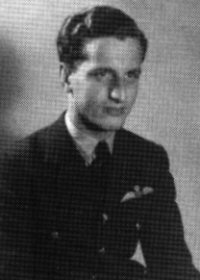  Flying Officer Kurt Taussig Our estimated value of this signature : £45 Died : 2019 | Flying Officer Kurt Taussig Czech Kurt was sent, age 15, by his parents on the Kindertrnsport to England from Czechoslovakia in June 1939 to escape the Nazi persecution of the Jews. Determined to fight the Germans he joined the RAF at eighteen in late 1942, and after training was posted to the Middle East to join 225 Squadron flying Spitfires on photo-reconnaissance duties in Tunisia, the Sicily landings, and in Italy. He died on 19th September 2019. |
|
Contact Details |
Sign Up To Our Newsletter!
This website is owned by Cranston Fine Arts. Torwood House, Torwoodhill Road, Rhu, Helensburgh, Scotland, G848LE Contact: Tel: (+44) (0) 1436 820269. Email: cranstonorders -at- outlook.com
|


