|
|
|
|
|
|
|
|
|
Cranston Fine Arts  Military Art and Artists More Military Artists B Berryman, Ivan  Original Paintings |
[UP] - Original Paintings |
|
|
|
|
|
|
|
|
|
|
|
|
|
|
|
|
|
| Text for the above items : |
The Spartan Lochagos (Captain) in the Acropolis by Ivan Berryman. (P) The Acropolis of Ancient Sparta was a strategic hilltop location that housed several important buildings including the sanctuary of Athena Chalkioikos, the Theatre of Sparta, and various stoas and administrative buildings. The Acropolis served as a central hub for public life and religious rituals, reflecting Sparta's military ethos. |
Julius Caesar by Ivan Berryman. (P) Julius Caesar was a Roman general renowned for his military prowess. He achieved notable victories in the Gallic Wars (58-50 BC), expanding Roman territory to include present-day France and Belgium. Caesars conquest of Gaul culminated in the decisive Battle of Alesia. His subsequent Civil War against Pompey (49-45 BC) saw him triumph in battles like Pharsalus and Munda, ultimately leading to his dictatorship over Rome. His military successes laid the groundwork for the transition from the Roman Republic to the Roman Empire. |
Into the Storm by Ivan Berryman. (P) Typical of the many hundreds of craft that took part in the 6th June 1944 landings at Normandy at the opening of Operation Overlord, these unarmed Royal Navy Landing Craft (LCAs) bravely transported many thousands of British and Canadian infantry to the beaches under the most intense fire. |
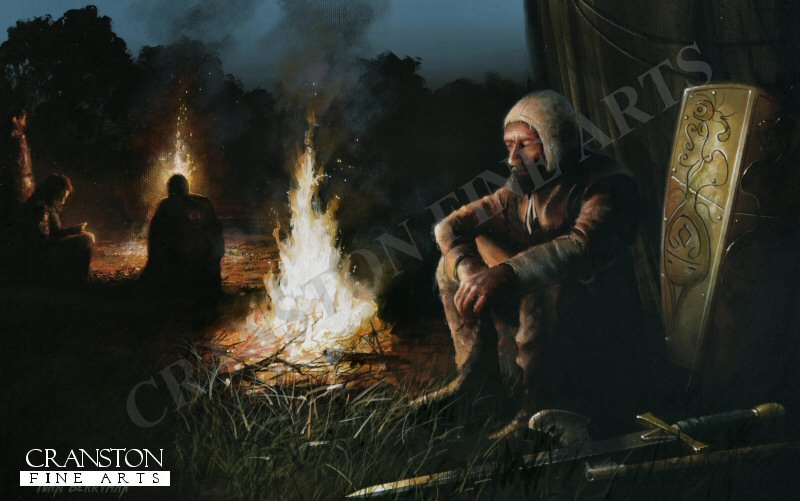
Quiet Contemplation - The Night Before Hastings by Ivan Berryman. (P) A Norman soldier takes a moments solace by the fire at camp, on the night prior to the Battle of Hastings. Fighting would commence at 9am on the 14th of October, 1066 and would be a momentous victory for the Norman forces. |
Richard the Lionheart by Ivan Berryman. (P) No text for this item |
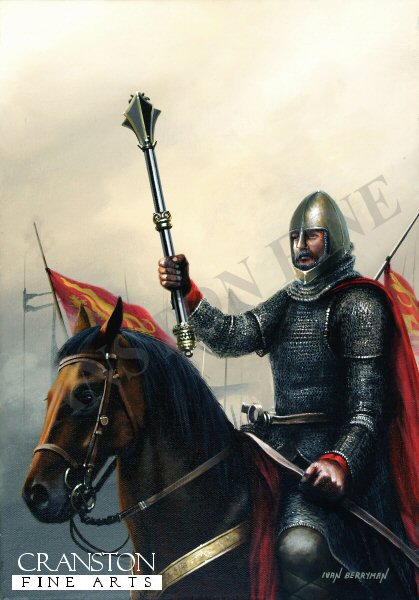
Henry V at Agincourt by Ivan Berryman (P) Henry V pictured here during the Battle of Agincourt, October 25th 1415. The triumphant victory for the English over the French would be one of the warrior-kings most legendary exploits during his reign and the victory would be met with large scale celebrations on his return to England, with parades and choirs heralding his arrival. |
William the Conquerer by Ivan Berryman (P) William the Conqueror, a formidable Norman duke with an iron will, crossed the Channel in 1066, launching his invasion of England. The crown was seized after the Battle of Hastings, with the death of Harold II on the battlefield signalling the dawn of a new age for England, one marked with many troubles as William would wage a constant conquest against English revolts and face a life-long struggle to consolidate his hold over the country. |
The Guardian by Ivan Berryman (P) No text for this item |
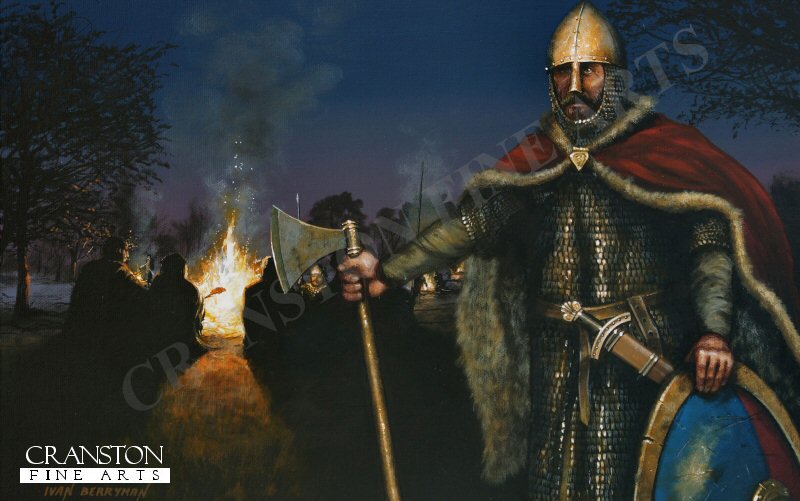
The Morning Watch, Hastings, 1066 by Ivan Berryman. (P) A Saxon guard, keeping watch on the morning of the battle of Hastings. The fighting would begin at 9am and conclude at dusk with a Norman victory against the overwhelmed Saxons, the death of King Harold being the final nail in the coffin that led to retreat. |
The Last Stand by Ivan Berryman. (P) The Romans used war elephants mainly after encountering them in battles against Pyrrhus of Epirus and Carthage. Initially, they struggled but adapted their tactics over time. Elephants were used in various campaigns, notably in Greece and during the Punie Wars. By the time of Emperor Claudius, their use declined serving more for psychological impact and ceremonial purposes. The last significant use of war elephants by the Romans was at the Battle of Thapsus in 46 BC. |
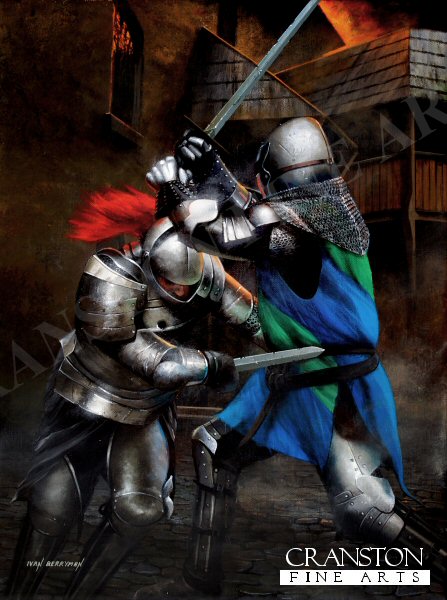
To the Death by Ivan Berryman. (P) No text for this item |
The Five by Ivan Berryman. (P) No text for this item |
One Minute to Juno by Ivan Berryman. (P) Landing craft head for Juno Beach in northern France on 6th June 1944 in support of the British landings at Sword Beach, packed with Royal Marine Commandos and the 3rd Canadian Infantry Division. Aside from their flanking action for the offensive on Caen, their mission was to capture the airfield at Carpiquet, but they would first have to drive through the defenses of two battalions of the German 716th Infantry and elements of the 21st Panzer Division. |
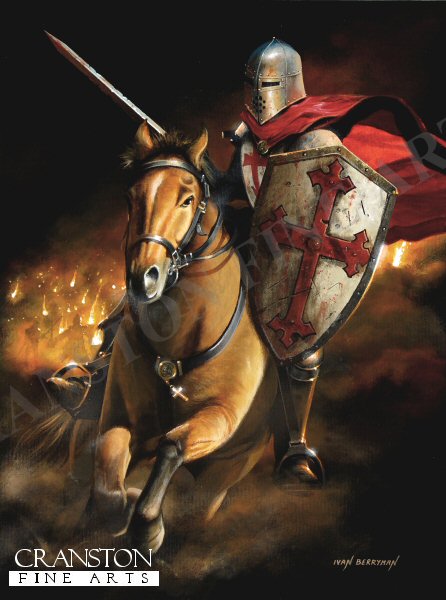
The Blood Red Cross by Ivan Berryman. (P) No text for this item |
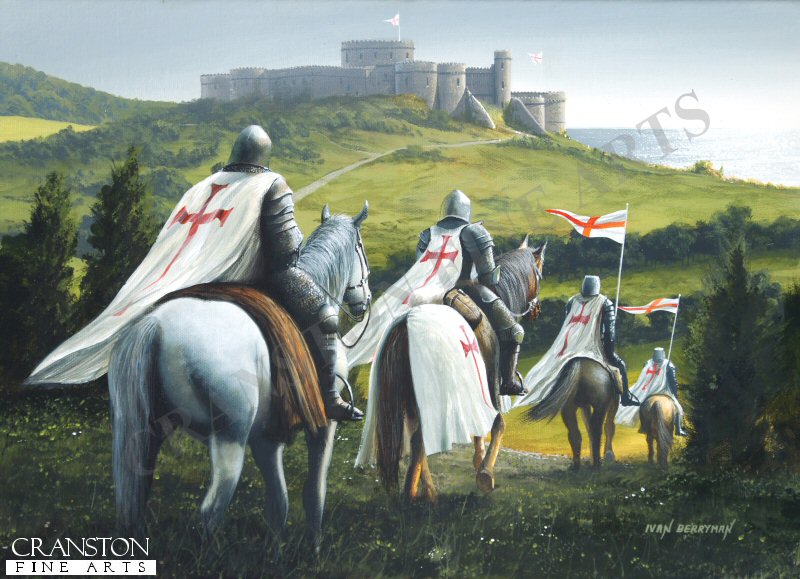
Home by Ivan Berryman. (P) Templar knights in their distinctive red cross laden garb return home. The castles of the Knights Templar would take on the form of de-facto independent lordships with their own political authority in the lands they stood on. |
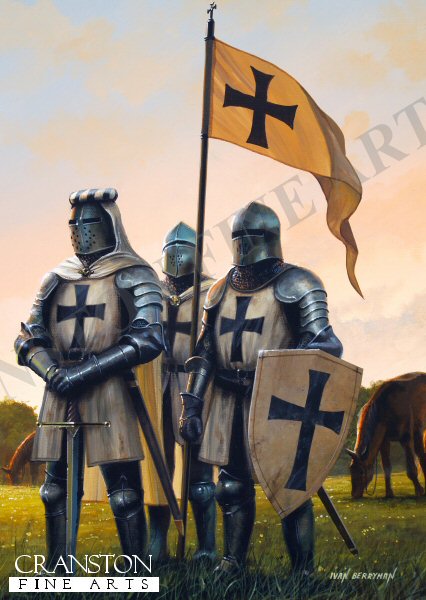
Knights of the Teutonic Order by Ivan Berryman (P) The Knights of the Teutonic Order were a Catholic military order founded around 1190 in Acre. Originally established to aid pilgrims in the Holy Land, the order later became a powerful military force, known for crusades in the Baltic region against pagan peoples, and also for fighting in Eastern Europe. After its initial base in the Holy Land was lost, the order moved to Eastern Europe, building a formidable state in Prussia. |
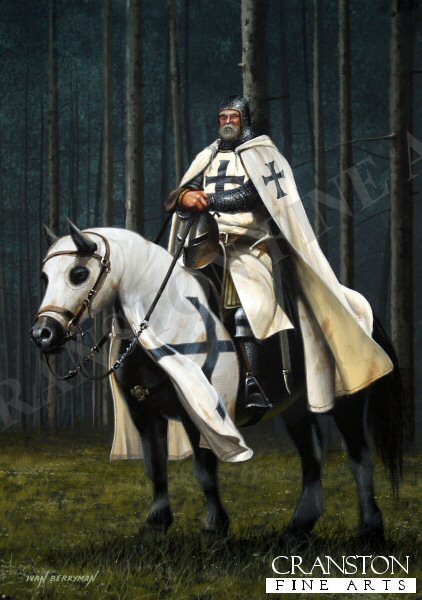
The Old Soldier by Ivan Berryman (P) An Old Knight of the Teutonic Order after many years of service, having fought the crusades in the Holy Land and returned to Europe to continue the battle against pagans in the Baltic states, he is shown wearing the distinctive black cross on his white cloak. |
|
Contact Details |
Sign Up To Our Newsletter!
This website is owned by Cranston Fine Arts. Torwood House, Torwoodhill Road, Rhu, Helensburgh, Scotland, G848LE Contact: Tel: (+44) (0) 1436 820269. Email: cranstonorders -at- outlook.com
|