|
|
|
|
|
|
|
|
|
Cranston Fine Arts  Aviation Art and Artists World War Two Aircraft Aviation Art and Artists World War Two Aircraft  Lancaster Lancaster |
[UP] - Beaufighter - Flying Fortress - Fw190 - Halifax - He111 - Hurricane - Lancaster - Liberator - P-38 Lightning - Me109 - Me262 - Mosquito - Mustang - Spitfire - Thunderbolt - More Aircraft |
| Navigation | |
| Page 1 of 12 | Page 1 .. Next |
| Lancaster Aviation Prints |
|
|
|
|
|
|
|
|
|
|
|
|
|
|
|
|
|
|
|
|
|
| Navigation | |
| Page 1 of 12 | Page 1 .. Next |
| Text for the above items : |
Distant Dispersal by Graeme Lothian. On an RAF airfield in the early evening, a squadron of Lancaster bombers of Bomber Command prepare for another bombing sortie against targets of the German war machine. A fitting tribute to all Bomber Command aircrew who flew in the Avro Lancatser. |
Lancaster by Frank Wootton. Published to mark the 50th anniversary of the maiden flight of the Avro Lancaster on 9th January 1941. |
Attack on the Sorpe by Ivan Berryman. Of the five Lancasters that formed the Second Wave of Operation Chastise, just one aircraft made it to the target, the Sorpe Dam, on the night of 16th/17th May 1943. American pilot Joe McCarthy had been forced to switch to the reserve aircraft due to technical difficulties and subsequently took off slightly later than his less fortunate comrades, all of whom fell either to German flak or to mishaps on their perilous journey. Upon arrival, McCarthy found the view of the dam itself to be unobscured, although mist in the surrounding valleys made it difficult to gauge his approach. As this was not a masonry dam, a different tactic was employed to the Möhne and Eder which involved flying along the length of the dam and dropping the Upkeep bomb, unspun, directly onto it. Their task was made all the more difficult by the fact that their approach necessitated McCarthy bringing AJ-T low over the hilltop village of Langsheid whose Church spire occupied the very point at which the aircraft had to pass to get a good run upon the dam. Undaunted and with great skill, ED825(G) made its run and released the bomb onto the dam, unassisted by the spotlight altimeter device that had proved so useful at the Möhne and Eder as AJ-T had not been fitted with this aid. Nevertheless, the Upkeep struck the dam and exploded as planned, sadly with little effect. McCarthy and his brave crew returned safely to Scampton, their landing made slightly difficult by a tyre that had been damaged by light flak on the return journey. The Sorpe was attacked again in the small hours of the morning when Flight Sergeant Ken Brown's aircraft, AJ-F of the Third Wave arrived, once more striking the dam successfully, but again without breaching it. |
Target Y The Eder Dam Raid, The Ruhr Valley, 17th May 1943 by David Pentland. At 0154am, Pilot officer Les Knight in Avro Lancaster AJ-N transmitted the codeword Dinghy, the signal that the Eder Dam had been successfully breached. Although the target was undefended by flak, its location made it extremely difficult to hit. In fact, four of the five aircraft involved in the attack failed in their attempts and Knight's was the last available aircraft carrying the last available bomb! |
Dambusters over the Mohne by Ivan Berryman. Tracer fire streaks past two Dambuster Lancasters of No.617 Sqn as the decisive Barnes-Wallace bouncing bomb skips towards the dam in the moonlit background. Fire from the already burning buildings lights up the front face of the dam and reflects off the aircraft as they throttle up to make good their escape. |
A Wing and a Prayer by Ivan Berryman. The Dams raids on the night of 16/17 May 1943 were notable not least for the incredible ingenuity shown by the Lancaster crews in their efforts to avoid detection by the enemy en route to their targets. P/O W C Townsend elected to fly his aircraft, ED886(G) O for Orange below tree-top height through a forest firetrap on his way to the Ennepe Dam, a feat carried out by moonlight alone. AJ-O made it successfully to its target where the Upkeep bomb was observed to hit the dam, but with no effect. Townsend returned to base at this perilous altitude, the crew observing that flak shells were bouncing off the sea in the German gunners' efforts to prevent the Lancaster's escape across the North Sea. AJ-O was one of eleven aircraft to return safely out of a total of nineteen that took part in the heroic raids under the codename Operation Chastise. |
Here Comes Another One, Skipper by Keith Aspinall. Lancasters of No.15 Squadron come under attack from night fighters as they return from another mission. |
Tallboy Raid by Keith Aspinall. Lancaster of No.617 Sqn on the Tallboy Raid - the final and successful mission by Allied aircraft to sink the German battleship Tirpitz in Faettenfjord. The Lancasters are escorted here by Spitfires. |
Operation Chastise by John Young. On the night of 16th May 1943, 18 specially modified Avro Lancasters of No.617 Squadron, led by Wing Commander Guy Gibson, breached the Möhne and Eder dams on the Ruhr, in the famous Dambusters raid. |
Lancaster Attack by David Pritchard.(B) 12th Janaury 1945 and the Lancatsers of 9 and 617 squadrons are once again taking their deadly cargo of Tallboy bombs over enemy territory. This time it is the turn of the U boat pens at Bergen in Norway. En route home the bombers are bounced by FW 190s of JG5. One of the Luftwaffe Pilots in White1, Heinze Owlowski, believes he has made a fatal attack on Lancaster KC-M piloted by Squadron Leader Tony Iveson. He salutes the crew before doing a victory roll in front of the badly damaged bomber. However, thanks to the bravery and skill of its young pilot the Lancaster would actually make it home to a force land on 3 engines at Dumburgh in the Shetland Isles. A feat for which the Squadorn Leader Iveson recieved his D.F.C. This Print was split into dfferent editions signed by different groups of crew, this edition is not signed by the artist. |
Bomb Away! The Third Assault by Robert Taylor. On the night of 16th - 17th May 1943 nineteen specially modified Lancasters of No.617 Squadron departed from RAF Scampton in Lincolnshire on one of the most secret and daring bombing operations undertaken during World War Two. The ultra-secret operation to destroy the huge hydro-electric dams that powered a significant part of Germany's industrial war machine in the Ruhr valley, codenamed Operation Chastise, had been planned in stealth for months. Using a revolutionary 10-ton 'bouncing bomb' designed by the brilliant designer Barnes-Wallis, a special squadron comprised of the most talented crews that RAF Bomber Command could muster would be formed to attack primarily the Möhne, Eder and Sorpe dams. Using highly modified Lancaster bombers to carry the secret bomb, Operation Chastise.was to become one of the most dangerous precision bombing raids ever undertaken, and Robert Taylor astutely captures all the atmosphere in his drawing Bomb Away!. At 00.38 hrs the attack on the Möhne dam is already well underway. The Commander of No.617 Squadron and leader of the raid, Wing Commander Guy Gibson, had made the first successful attack, but the dam wall held firm. Tragedy then struck as Flight Lieutenant Hopgood's Lancaster, hit by flak during his attack, exploded in a ball of flame. Gibson called in Flick Lieutenant Mick Martin to make the third assault. As enemy flak and tracer illuminate the night sky, Guy Gibson boldly attempts to draw the enemy's fire as Martin holds Lancaster AJ-P steady at 60ft above the waters of the Möhne dam to release the cylindrical, bouncing bomb and send it spinning towards the dam wall. In a few moments a huge explosion will erupt up into the night sky as the hydrostatic bomb detonates against this might granite wall. Once again though, the öhne dam held, but not for long. Following Martin, Squadron Leader Dinghy Young would approach in Lancaster AJ-A, his bomb also successfully hitting the target but this time the dam, already weakened, will slowly crack. Water will start to seep through the granite wall as Squadron Leader David Maltby in Lancaster AJ-J finishes the job. With a thunderous roar the Möhne dam was breached, its waters unleashed like a giant tidal wave sweeping through the valley below. |
Dam Busters Setting Off by Simon Atack. No text for this item |
Home Again England by Robert Taylor. By April 1945 everyone, except a few die-hard fanatical Nazis, knew the war in Europe was over; the end was only a matter of time. So when Bomber Command dispatched a force of over 300 Lancaster bombers to destroy Hitler's infamous Obersalzberg retreat at Berchtesgaden on 25th April, it would prove to be their last major raid of the war - just a few days later Hitler committed suicide as Berlin crumpled around him. In the early hours of 7th May General Alfred Jodl, Chief-of-Staff of German High Command, unconditionally surrendered all German armed forces and for the RAF the war in mainland Europe was finally over. The fight had lasted for nearly six years during which time its airmen had faced unmitigated dangers and often appalling flying conditions, with moments of exhilaration balanced by those of terror because victory had come at a terrible price; of the 125,000 aircrew to have served in RAF Bomber Command 55,573 had been killed whilst in Fighter Command 3,690 airmen had paid the ultimate sacrifice. Undoubtedly the aircrew who flew and fought with the RAF as it played its part in removing the tyranny of Nazi power and occupation from Europe were among the bravest of the brave and two aircraft above all others came to symbolise their heroic fight: the elegant Spitfire, magnificent in defence during the dark days of 1940, lethal in attack thereafter; and the awe-inspiring Avro Lancaster, the four-engined heavy bomber that from 1942 onwards formed the backbone of Bomber Command and allowed the RAF to take the war into the very heart of Hitler's Germany. In recognition of the role played by these two legendary aircraft and the men who flew them, Home Again England depicts a scene during those final few weeks of the war. A battle-weary Lancaster limps home along the Norfolk coast with its outer starboard engine feathered and out of action following one of Bomber Command's last daylight operations. Luckily a group of Mk.XIV Spitfires is on hand to provide close escort and will see the bomber safely back to base. |
Towards Victory by Philip West. The Avro Lancaster was undoubtedly the RAFs greatest bomber of World War 2. Stemming from the unsuccessful Avro Manchester, the Lancaster carried the night bomber offensive deep into occupied Europe. Over 7,300 Lancasters were built with the last being delivered in 1946. |
Tribute to the 617 Sqn Dambusters Crew of Lancaster AJ-P by David Pentland. The image shows Lancaster AJ-P attacking the Mohne dam. Alongside is the portrait of AJ-P pilot Flt Lt H B Martin. This aircraft was the third to attack the Mohne dam, and although the bomb was dropped successfully, it veered to the side of the dam and exploded off target. The aircraft returned safely. Crew of P for Popsie : Pilot : Flt Lt H B Martin Flight Engineer : Plt Off I Whittaker Navigator : Flt Lt J F Leggo Wireless Operator : Flg Off L Chambers Bomb Aimer : Flt Lt R C Hay Front Gunner : Plt Off B T Foxlee Rear Gunner : Flt Sgt T D Simpson. |
Dambusters - Moment of Truth by Ivan Berryman. This was the moment when the massive Möhne dam was finally breached on the night of 16th-17th May 1943 during the top secret Operation Chastise. The specially-converted Lancaster B MkIII of Fl/Lt David Maltby ED906(G) AJ-J roars between the towers of the dam, having released the Upkeep bouncing bomb that would ultimately cause a cascade of water to flood into the valley below. Fl/Lt Harold Martin's identical aircraft, ED909(G) AJ-P can be seen off Maltby's port wing with all of its light ablaze, drawing enemy fire from the attacking bomber. |
A Lincolnshire Sunset 1944 by Gerald Coulson. The Avro Lancaster was possibly the most versatile and successful bomber aircraft ever and certainly became the backbone of RAF Bomber Command during WWII. Being able to deliver a greater payload than any other aircraft of The War, the Lancaster was involved in nearly every night bombing raid on Europe and undertook some of the most famous bombing missions in History. Of all the crews of RAF Bomber Command 617 Squadron are perhaps the best known. Famed for their expertise in precision bombing they took part in some of the most daring raids of the War. Many of the crews such as Guy Gibson, Leonard Cheshire and Bill Reid became household names and their exploits are well documented. This superb painting by Gerald Coulson is a tribute to all those crews who flew with Bomber Command. Each print is personally signed by prominent crew who flew with 617 Squadron during WWII. Coulsons painting captures the moment perfectly. As the sun is setting in the early part of 1944 over their Lincolnshire airfield , groundcrews make final preparations to the Lancasters of 617 Squadron. Beneath the mighty aircraft crews ready themselves for a long , gruelling night operation over occupied Europe. |
Primary Target by Philip West. In 1943, the RAF's 617 Squadron set out to destroy three dams in Germany's Ruhr valley. They managed to breach two, giving a boost to Britain's war effort. On 16th May 1943, 19 aircraft set out to destroy the Mohne, Eder and Sorpe dams in Germany's industrial heartland. They used specially-designed drum-shaped bouncing bombs which skimmed across the water, rolled down the dam wall and exploded at depth. Only 11 of the aircraft returned from the perilous low-level mission in which they flew at just 150ft all the way from England before descending for the bombing run to defeat the German radar. It resulted in the largest awarding of medals at any one time during the war. The bouncing bombs were the brainchild of legendary aviation engineer Sir Barnes Wallis, who was knighted in 1968. Primary Target depicts the final seconds on 17th May 1943 as the bouncing bomb of Flight Lt. Maltby's Lancaster Squadron breached the giant Mohne dam. |
Inbound to Target - The Dambusters by Robert Taylor. The crews of 617 Squadron that took part in the epic Dambusters raid on the night of 16/17 May 1943 were among the finest in the RAF. They were the elite of Bomber Command, and when they left RAF Scampton that night, the skills of their pilots - some of the finest of the Second World War, would be tested to the limit. First, they must guide their aircraft across heavily defended enemy territory at altitudes often as low as fifty feet, dodging flak, trees, buildings and power lines. And then they must attack their targets with a precision unmatched in the annals of the RAF. Of all the pilots who took to the skies that night, no-one was more accomplished at low-level flying than Flight Lieutenant Mick Martin, and it is his aircraft, Lancaster AJ-P that is the subject of this artwork. In company with Flight Lieutenant John Hopgood in the distance, they follow one of the many canals of Holland, wingtips barely missing the sails of the windmills, en-route to the Mohne Dam. |
Jet Attack by David Pentland. Oberleutenant Schalls ME 262 of JG7 catches the Australian crewed Lancaster from 5 group dead astern as it lines up for its bombing run on the Hamburg U-Boat pens. Even at this angle the speed of the jet made it difficult to get off more than a few bursts of cannon fire before it passed through the British formation. The episode was witnessed by navigator Cecil Keys in the leading Lancaster QR/Y from 61 squadron on his last raid of the war. Lt. Schall, an ace with 117 kills, and 2nd highest jet ace of the war with 14 victories was killed the following day when his aircraft hit a bomb crater on landing at his base of Parchim. |
Last Long Shadow by Anthony Saunders. Lancaster CF-X (LM384) of 625 Squadron. On the Leipzig raid on the evening of 19th/20th February 1944 approx 47 Lancasters were shot down or failed to return, that is over 300 airmen. Lancaster CF-X (LM384) was taking part in the bombing raids that were a build up to the D-Day landings of June 1944. Leipzig was seen as a high value target due to its oil and synthetic fuel production. The Lancaster took off from Kelstern in Lincolnshire just before midnight. Unfortunately LM384 did not come back as was the case with many others - the aircraft was lost and crashed just outside the tiny village of Bledeln in Germany. The Pastor of the village, Herr Duncker, kept a diary throughout the war and has an account of the plane crash and the subsequent burial of the crew. All of the crew died in the crash except one - bomb aimer George Paterson who was interned in Stalag 357 Kopernikus. The rest of the crew were given a Christian burial and stayed there until the end of the war, when the war graves commission disinterred the crew and reburied them in the Hannover war cemetery. |
| Lancaster Pilot and aircrew signature details |
Flt Lt Phil Ainley DFC Our estimated value of this signature : £20 Died : 2011 | Flt Lt Phil Ainley DFC Phil was 15 when war was declared on the 3rd September 1939. He had always wanted to be a pilot and the only way to do this was to join the RAF or the RAF Volunteer Reserve. However, he couldn't join until he was 17 and so he took up an engineering apprenticeship. When Phil tried to join up again he was told he couldn't because he was in a reserved occupation. Phil finally joined the RAF in November 1941 when he opted for aircrew as this was the only way he could get out of his apprenticeship. However, he couldn't start his flying training until he was 17½. In November 1942, Phil was sent to St John's Wood, to the Air Crew Receiving Centre. Here he was given a uniform and white flashes to put in his cap to show that he was aircrew. He and his colleagues spent five weeks marching around London and having inoculations. After St John's Wood, Phil was sent to Manchester's Heaton Park. This was a holding centre for volunteer aircrew and from here everyone was sent for specialist training as pilots, navigators, bombardiers and wireless operators. Phil was sent for pilot training in Silloth, Cumbria. Here he received just a few hours of flying in Tiger Moths and then when he was safe to fly he was passed back to Manchester. From here, Phil was selected for pilot training and was sent with a batch of naval ratings to the US Air Base Gross Ille, Michigan, USA. It was extremely cold, but even so physical exercise had to be carried out at 5.30 in the morning and in singlet and shorts! Phil passed out from his basic flying training and then proceeded to the US Aviation Base, Pensacola, Florida. Here, Phil learned to fly single engine aircraft of various types. In December 1942, Pearl Harbour was attacked and American patriotism was everywhere even on the pats of butter. Any Britons were treated as honoured guests and were adopted by local families. It was decided that Phil was better suited to multi-engine rather than single-engined aircraft and so he was sent to train on Catalina, flying boats. In May 1943 he passed out as a pilot and was awarded his American Naval Gold Wings. The advantage of Phil's training was that he learned seamanship as well as airmanship. Once back in Great Britain Phil went to Moss Bros to purchase his brand new Pilot Officer's uniform. His pay had gone up from 5 shillings a day to 10 shilling and 6 pence and beer was only 9d to 10d (old pence) a pint! Unfortunately, there was no need for more flying boat pilots but as Phil had multi-engined experience, he was sent to fly 4 engined aircraft. This meant further training as landing aircraft on land rather than the sea required a different technique. Once this new technique had been mastered Phil was sent to a Wellington Operation Training Unit. Here people were either picked or they did the picking of aircrew. Phil picked a Pilot Officer from the Canadian airforce as his Navigator and a fellow British Pilot Officer as his bomb aimer. It was when training on Short Stirling aircraft that Phil met the rest of his crew; a wireless operator, a Canadian mid-upper gunner, a rear gunner and a flight engineer. Phil's wireless operator was only 17 ½ as was his rear gunner. Although they had flown in the aircraft for only a few hours, they were seen to be ready to fly Lancaster bombers and were sent to Nottinghamshire for training. This consisted of 14 hours flying time on the Lancaster, 7 hours during daylight and 7 hours at night. On the 15th May 1944, Phil and his crew were sent to 57 Squadron East Kirby, Lincolnshire. He then experienced his first operational flight, sitting alongside a 'veteran' pilot. They flew to Amiens where they were due to deposit bombs on marshalling yards. However, they returned with their bomb load! Phil's first operational flight with his crew was on the 24th May. Their target was the marshalling yards in Antwerp. Things were building up for the D Day landings and so the aim of the bombing raids was to cause maximum disruption to the Germans. Although the crew were not told when D Day was to happen, they returned from a mission in the early morning on the 4th June and saw numerous ships and barges, so they knew something was occurring. By July, Phil and his crew had flown 14 missions and they were flying almost every other night. After the troops had been landed in France there were more trips into Germany and more aircraft went missing. In the summer of 1944, Phil's logbook recorded two trips, one with 31 missing and one with 49 missing and each of those aircraft had a crew of 7 men. On the 16th August 1944 the crew were briefed to do a 'gardening' mission. Gardening was code for dropping sea mines. The area to be mined was the Stettin Bay Canal in Germany. The mines had to be dropped from only 250 feet and this area was fiercely guarded. Only 6 crews had been detailed to fly down the canal and Phil's was one of them. Command had laid on an attack on the town of Stettin itself to draw attention away from the Canal. However, the bombing was delayed as the marking for the bombs was off track and the aircraft had the terrifying prospect of orbiting the target at only 250 feet, whilst marking was relaid. The aircraft in front of Phil was blown up and they had to negotiate the debris. Out of the 6 aircraft earmarked to bomb the Stettin Canal, one was blown up, one did not reach Stettin and one went missing. It was for this mission and pressing home the attack that Phil was awarded the Distinguished Flying Cross. Having successfully completed 33 missions Phil and his crew left the Squadron on the 6th October. In 2002, after 58 years Phil was re-united with his Navigator at a Re-union at East Kirkby, the Station from where they flew during the war. Sadly, Phil Ainley passed away on 19th September 2011. |
Flight Lieutenant John Atkins Our estimated value of this signature : £10 | Flight Lieutenant John Atkins He was an Air Gunner and then Navigator on Lancasters initially joining 166 Sqn and later 7 Sqn. After his aircraft was badly damaged he was forced to bale out over the Dutch coast in October 1944 and spent time in Stalag Luft VII & IIIA. |
  Flight Lieutenant Tom Austin DFC AE Our estimated value of this signature : £40 | Flight Lieutenant Tom Austin DFC AE After joining the RAF in 1941 Tom Austin qualified as a pilot on Harvards, then converted into Halifaxes. During the war years other aircraft he flew included Wellingtons, Stirlings and Lancasters. While flying Wellingtons as part of 199 Squadron during a raid over Dortmund, his aircraft was badly damaged but Tom managed to limp home, crash landing at Mildenhall. |
 Flight Sergeant Charles Avey Our estimated value of this signature : £10 | Flight Sergeant Charles Avey Joining the RAF in 1944 he was posted to 617 Sqn as a Mid Upper Gunner on Lancasters and flew on the last 11 Operations of the war, dropping Grand Slam and Tall Boy bombs. |
J Bain DFC AE WOP AG Our estimated value of this signature : £10 Died : 2007 | J Bain DFC AE WOP AG WOP/AG 44 & 49 Squadrons. 54 ops. Born 28th May 1919 Hamilton Ontario. Died 2nd April 2007 Lincoln, UK. Married Helen Bettie Patricia Wright on 19th September 42 in Doncaster. Initially WOP/AG from 1940 to 1942. Retrained in Sth Africa as Pilot, returned to Transport Cmd Dakotas in 1944, and left service in 1946. Started out as Sgt aircrew, won DFC as Mid Upper turret gunner in Lancaster over Brest harbour by shooting down an ME109 Early 1941. Commissioned mid 1941, ended war as Flt Lt. Tours on 49 Sqn Hampdens - 5 Grp Bomber Command as Grp Gunnery Officer - 44 Sqn Lancasters, then pilot training and 2 different Dakota Sqns of Transport Command. |
Flying Officer Laurence W Baker Our estimated value of this signature : £15 | Flying Officer Laurence W Baker Laurie Baker joined 467 Sqn RAAF at Waddington in Nov 1944, flying his first sortie in Sugar as Second pilot, before a further six sorties as Captain, including Sugars last operational sortie on 21 April 1945. |
Warrant Officer John Banfield Our estimated value of this signature : £10 | Warrant Officer John Banfield Trained as a Bomb Aimer and Navigator with 207 Sqn he was shot down in a Lancaster on 3rd January 1943 whilst on a raid to Essen. After spending 4 weeks in a hospital near Amsterdam he was moved to various PoW Camps including Stalag Luft III until Liberation in May 1945. |
  Marshal of the Royal Air Force Sir Michael Beetham GCB CBE DFC AFC FRAeS Our estimated value of this signature : £40 Died : 2015 | Marshal of the Royal Air Force Sir Michael Beetham GCB CBE DFC AFC FRAeS Marshal of the RAF Sir Michael Beetham, who has died aged 92, was, with the exception of the RAFs founder, MRAF the Lord Trenchard, the longest serving Chief of the Air Staff (CAS). In a career that took him from flying bombing raids to Berlin during the Second World War to overseeing the RAF's successful role in the Falklands War he was never less than personally courageous and a tenacious champion of the Force. Beetham became CAS on August 1 1977 after Sir Neil Cameron had been promoted to be Chief of the Defence Staff following the untimely death of Marshal of the RAF Sir Andrew Humphrey. He inherited the appointment at a difficult time and at a relatively young age. Recognising the seriously impaired morale of the service following the heavy cuts his predecessors had been compelled to accept, he set about restoring some stability and improving the terms of service of RAF personnel. Along with his fellow Chiefs, he had to address the severe problems of service pay, which were seriously hindering recruitment and causing an exodus of skilled people. The need for the military to meet the demands of the fireman's strike at the end of 1977 brought the issue into the public domain. By the middle of April 1978, the Labour Government had not addressed the matter, so the four Chiefs released details to the national press. The story was covered in considerable detail and it attracted much public support but it earned the Chiefs a very sharp public reprimand from the Prime Minister. Within a few weeks the Armed Forces Pay Review Board recommended a significant pay increase. On his first visit to an RAF station after this result, Beetham earned a spontaneous round of applause. Soon after the election of Margaret Thatcher's government in 1979 he faced further serious challenges when it was decided to carry out a major defence review. Beetham had ensured that the senior appointments on the Air Staff were filled by the brightest men of that RAF generation. Thus he was well-equipped to fight the RAF's corner, which he did with considerable skill, tenacity and resolve, during the Nott Review. While major issues such as the purchase of Trident and the deployment of cruise missiles were being debated at Chiefs of Staff level, there were many RAF matters also engaging his attention. The Tornado had just entered service and he had to defend it against much unjustified criticism in the early days. The RAF's air defence posture was also far from satisfactory and the purchase of helicopters and development of the transport force were other important issues. He was also determined to build up the RAF Regiment and the revived Royal Auxiliary Air Force which had been cut in the 1957 Defence White Paper. He was nearing retirement when the Argentine forces invaded the Falkland Islands on April 2 1982. As Admiral Sir Terence Lewin was in Australia for defence talks, Beetham was acting Chief of Defence Staff. He was undoubtedly vexed by the direct approach made by Admiral Leach, the First Sea Lord, to the Prime Minister, without any prior consultation with his fellow Chiefs, during which he convinced her that the islands could be retaken by an amphibious-led assault. He put this episode aside, however, and set about energetically drawing up plans on how the RAF could be involved most effectively. At the heart of this was Beetham's concern that the RAF should make a direct operational contribution and not be confined solely to the re-supply of men and materials. He put the whole of the RAF's transport fleet on standby, despatched Nimrods to Ascension Island and pressed successfully for the employment of RAF Harriers from the Navy's aircraft carriers. With his knowledge of strategic bombing and his expertise on air-to-air refuelling, he instructed his staffs to assess if a bombing attack against Port Stanley Airfield was feasible. He appreciated that there was little prospect of inflicting lasting, or major, damage but he believed such an attack, mounted at extreme range – the longest bombing operation from base to target at the time – would send a clear message to the Argentines that air power based on Ascension Island could pose a major threat to mainland Argentina, in addition to boosting the morale of the islanders. He realised that such an attack was an especially demanding undertaking for his Vulcan bomber and Victor tanker crews but he pushed for it in the face of some scepticism in Whitehall. For Beetham, the operation was a potent illustration of the case for the strategic impact and flexibility of air power which he had argued for during the previous year's defence review, and a confirmation that the qualities of daring and courage which he had experienced in Bomber Command during his time as a Lancaster pilot in the Second World War were still present in the service which he led. His personal staffs later recalled that at the moment he learned of the success of the operation, his eyes filled with tears and he beat his hand with his fist, a rare display of emotion. A few months after the end of the Falklands conflict, Beetham handed over the reins to his successor and retired from the service. The son of Major G C Beetham MC, Michael James Beetham was born on May 17 1923 in London and educated at St Marylebone Grammar School. He volunteered for the RAF in 1941 and trained as a pilot in the USA under the US/UK bi-lateral Arnold Scheme. On his return to England, Beetham trained on Lancasters, an aircraft he would describe later in his life as the one for which he had the greatest affection. He joined Bomber Command's No 50 Squadron in November 1943 just as the Battle of Berlin had got under way and flew his Lancaster to the city no fewer than ten times. He also flew on the disastrous raid to Nuremberg on the night of March 30/31 1944 when 96 of the bomber force failed to return. Such losses had a profound affect on the 20-year-old Beetham. Although his bomber was damaged by anti-aircraft fire on a number of occasions, he faced his greatest danger on a training flight when he and his crew were forced to bale out of their burning Lancaster. He went on to survive 30 operations over Germany when the losses were at their highest. Assessed as an outstanding pilot, he was awarded the DFC for his gallantry and leadership. After a period training bomber crews, he returned to operations as the war ended and dropped food supplies to the starving Dutch population during April and May 1945. Offered a permanent commission in the peacetime RAF, Beetham served at HQ Bomber Command. In August 1949 he assumed command of No 82 Squadron flying Lancasters on photographic survey and aerial mapping for the Colonial Office in East and West Africa. In 1953 he moved to the operational requirements branch in the Air Ministry where the issues of bringing the three V-bombers into service took up much of his time. He was closely involved in drafting the specification for the TSR 2 aircraft, and its subsequent cancellation was, in his view, a grave mistake. During this period he attended the 1956 atomic weapons trials at Maralinga, Australia, where he witnessed the four tests. This experience had a major influence on his later strategic thinking and the employment of nuclear weapons. Beetham joined the V-Force in 1958 when he was given command of No 214 Squadron operating the Valiant. The squadron was about to embark on air-to-air refuelling trials. He recognised the strategic significance this capability afforded for projecting air power at extreme range and he strove to perfect the flying techniques and procedures. A year later he felt ready to demonstrate the value of this additional capability with a number of special long-distance flights. On July 9 1959 he and his crew took off from Marham in Norfolk and headed for South Africa. Refuelling in flight twice, they arrived over Cape Town after a flight of 11 hours 28 minutes. A few days later they returned in just over 12 hours. These two non-stop flights broke the speed record for the distance and provided a convincing demonstration of the feasibility and potential of air-to-air refuelling. For his work, Beetham was awarded the AFC. Then almost totally a Bomber Command man, Beetham spent the next four years in senior staff appointments working for some of the Command's most dedicated and forthright commanders. These challenging times included the Cuban missile crisis and the shooting down of Gary Powers over the Soviet Union, an incident which exposed the vulnerability of the Valiants and other V-force aircraft to a new generation of Soviet Missiles. The cancellation of Skybolt and the acquisition of Polaris, which led to the transfer of the UK's strategic nuclear deterrent capability to the Royal Navy, had major implications for Bomber Command and he was deeply involved in the staff work. Identified as heading for the top of his service, there was a need to broaden his experience. So, in 1964, he was sent to Aden to command Khormaksar, then the RAF's largest operational base, operating a wide variety of tactical and transport aircraft, but no bombers. His arrival coincided with the start of a major terrorist campaign against British forces and his squadrons were in action over Radfan and in support of ground forces throughout the troubled colony. After two years as the Director of Strike Operations in MOD, Beetham took command of the RAF's Staff College at Bracknell. In August 1972, he became Assistant Chief of Staff (Plans and Policy) at SHAPE, an appointment that over a number of years attracted the RAF's most capable senior officers. He worked under the charismatic and bullish American General Al Haig and his work was at the heart of Nato policy making, in particular the nuclear planning aspects. This unique opportunity to work in the international arena was to prove a great asset in his future appointments. After a period as the Deputy C-in-C at Strike Command, he left in January 1976 to be the C-in-C of RAF Germany and Commander Second Allied Tactical Air Force. His RAF squadrons were in the midst of a major aircraft re-equipment programme and there was great emphasis on the ability of his airbases to survive any pre-emptive attack. This exposure to tactical operations and integrating his squadrons' capabilities with those of other Allied air and land forces was invaluable when he took up his appointment as CAS. Beetham always maintained that his time in Germany was one of his most challenging and satisfying. Throughout his career, Beetham was determined to keep flying and remain abreast of current capabilities and tactics. He was a very determined man who dominated his service during his time as CAS giving it strong leadership. He fought tenaciously for the RAF's cause and was unafraid of taking a combative stance if he felt it necessary. No detail escaped his attention, and he was always the master of his brief. At heart, and more privately, he was an intensely loyal and compassionate man. He was, however, a product of his generation in not overtly displaying that latter quality. Indeed, he was seen by some as an authoritarian figure, not a natural communicator, and he never sought popularity but he was considered by many to be one of the RAF's strongest and most influential Cold War chiefs. After retiring from the RAF, Beetham's services and experience were much in demand. For four years he was chairman of GEC Avionics but the RAF remained his greatest love. For many years he continued to have an influence on numerous service issues, all with a view to improving its capabilities and public image. He joined the Board of the RAF Museum at Hendon in 1984 at a time when it was emerging from the growing pains of early expansion. The addition of the Battle of Britain and the Bomber Command Halls had over-extended its finances. Beetham was determined to ensure the debts were covered but the fund-raising strategy he inherited was fatally flawed. In characteristically vigorous style, and with the help of key trustees, he negotiated for the debt to be paid through a loan agreement with HM Treasury. With the survival of the museum in question, Beetham's consistent support of the organisational changes introduced by a new director secured its future. With the foundations laid, he retired in 2000 after 15 years as chairman. In recognition of his significant service the Trustees named their new conservation centre at RAF Cosford after him in 2002. Determined to put the RAF's history on a formal footing, he was a leading instigator in the formation of the RAF Historical Society in 1986 and remained the society's president until his death. He also gave great support to the RAF Club in Piccadilly and was a long-serving president who took a close interest in the club's affairs. For many years he was president of the Bomber Command Association. He was instrumental in the erection of a statue to his wartime chief, Sir Arthur Harris, at the RAF Church of St Clement Danes in London. After it became apparent that successive governments would not sanction a Bomber Command Medal, he poured his energy and influence, into the creation of a major memorial to all the lost aircrew of the Command. Despite failing health, he was determined to see the culmination of his efforts and he was able to attend the dedication of the memorial by the Queen in Green Park in July 2012. Beetham never forgot his lost comrades. In 1981 he unveiled a memorial on the site of his old airfield at Skellingthorpe near Lincoln, which commemorates the 1,984 men killed flying from the airfield. He was assiduous at attending annual reunions, on one occasion meeting up with four men of his old crew who had not seen each other since the end of the war. A keen golfer and tennis player in his younger days, and in retirement a captain of the Royal Norfolk Golf Club, Beetham was appointed CBE (1967), KCB (1976) and GCB (1978). He was a Deputy Lieutenant of Norfolk, was elected as a Fellow of the Royal Aeronautical Society (1982), and was an Honorary Liveryman of the Guild of Air Pilots and Air Navigators. He was awarded the Polish Order of Merit in 1998. Michael Beetham married Patricia Lane in 1956 and she survives him with their son and daughter. A Clipped Signature is Available |
Flight Lieutenant James Bell DFC Our estimated value of this signature : £10 | Flight Lieutenant James Bell DFC Joining the RAF as a pilot in 1941, Jim Bell flew 32 operations with 576 Sqn, 31 of these were done in Lancaster ED888, the aircraft that flew 140 operations, more than any other in Bomber Command. His first op as skipper on ED888 was on its one hundredth trip. |
 Wing Commander John Bell Our estimated value of this signature : £10 | Wing Commander John Bell After initially training as a Navigator he went on to complete most of his 50 ops in Lancasters as a Bomb Aimer with 617 Sqn, including all the raids against the Tirpitz. |
 Tom Bennett DFM Our estimated value of this signature : £45 Died : 2013 | Tom Bennett DFM Born in 1919, Tom Bennett was a specialist navigator with 30 ops with 49 Sqn Lancasters followed by selection for Leonard Cheshires elite Mosquito Marker Force within the legendary 617 Sqn. Following the D-Day landings on 5 - 6th June, there was a very great danger that the Germans would reinforce their troops with their reserves Panzer tank corp. These had been stationed at Calais due to the Germans belief that the invasion would come at that point. The only way to get the Panzer through to the Beachhead at Normandy was via the French Saumur tunnel. 617 squadron were assigned to destroy this and were led by the famous Leonard Cheshire VC OM DSO DFC. He used 3 Mosquitoes as a marker force for the main 617 Bomber Force and the dropping of flares was so accurate that one of the Lancasters put a 12000 tall boy straight through the roof of the tunnel and the tunnel was not reopened until 1946. Thomas Ben Bennett was born in 1919 in Poplar. After a civilian career as a clerk he volunteered for military service in 1939. Called up in the spring of 1940, he was told that he did not qualify for pilot training as his maths was not sufficiently strong to enable him to cope with aerial navigation. Instead he would train as a wireless operator/air gunner. Tom's Morse skills were insufficient, with the result that he only qualified as an Air Gunner. Service life being what it is, he was then offered, and took, an opportunity to re-muster a navigator. (There were later to be a number of times over Germany when he wished he had taken the advice of the Wing Commander at Uxbridge). After an initial course on Ansons and Blenheims at Jurby, Isle of Man, in April 1942 he was transferred to No. 19 OTU, Kinloss, where he would team up with his pilot Gerry Fawke. His first operational posting was to No. 49 Sqn at Scampton in June 1942. He considered himself fortunate in that they had just declared Manchesters non-operational as he arrived and that the Squadron was converting to Lancasters. On an early operation to Duisburg, their aircraft was coned and only violent evasive action by Fawke saved the day. During a low level operation against Wismar in September 1942, he received a slight flesh wound from shrapnel and was admitted to RAF Hospital Rauceby Fawke and Bennett took part participated in the daylight Le Creusot attack of 24 October 1942 During that month Tom was recommended for the DFM and subsequently awarded a commission. Further trips followed, to include Berlin and targets in Italy. The crew were just about to depart on their 30th operation, against Bremen, when they were prevented from taxying out by Charles Whitworth, Scampton's Station Commander, who told them that they would not be going, and that their tour was over. Tom was then screened and posted for duties at No. 1661 CU, thence to HQ No. 5 Group at St Vincents, Grantham, before being sent to No. 1654 CU, Wigsley as an instructor. Promoted to Flying Officer in April 1944, he had just arrived on No. 83 Sqn at Wyton, a Pathfinder Squadron, when he received a phone call informing him that he was to team up with his former captain at the Mosquito Training Unit at Warboys, prior to transfer to 617 Sqn. As one of the Mosquito Marker crews Tom and Gerry Fawke were to help perfect the low level marking technique against increasingly defended targets, starting with the French rail yards of Juvisy and La Chapelle, then targeting targets in Germany, including Munich. Returning to their forward operating base at Manston after the latter trip on 24/25 April, the crew discovered to their chagrin that their markers had hung up and were still there suspended in the bomb bay.Transferring to the Lancaster for Operation Taxable, Tom was one of the key navigators responsible for perfecting the pattern of overlapping orbits and perfect timing that were vital to the operation's success. Such was Tom's desire to see recognition for ALL the Squadron's navigators that he was later to lobby Leonard Cheshire to campaign for a retrospective award, but without success. Reverting to the Mosquito and their marking role, the crew participated in the attack on the Saumur tunnel, and Le Havre. The Squadron then switched to daylight attacks on the large V-weapon sites at Watten, Wizernes, Mimoyecques and Siracourt, before again targeting U-boat pens and port facilities. During one of the latter operations, an attack on the Gueydon at Brest, after diving to low level Fawke opened fire on a vessel with the Mosquitos cannon and machine guns, prompting Tom to comment You've just killed four German sailors in LA PALLICE. Later operations also saw the crew armed with cameras to photograph proceedings, and he made the only known image of one of the Squadron s Mustangs as he used up footage filming Wg Cdr Cheshire formating on his Mosquito. With the Squadron's marker role now firmly established with No. 627 Sqn, Gerry Fawke and Tom returned to the Lancaster. Tom became Squadron Navigation Officer during August 1944, and was responsible for overseeing navigation for the first two Tirpitz operations and the attacks on West Kapelle and the Kembs dam. The latter would be Tom's final operation on the strength of 617 Sqn. Posted as Station Navigation Officer, Woodhall Spa at the end of October 1944, he was still able to keep an eye on his successor and in February 1945 flew with the Squadron on two further operations. He would later recall: I flew 62 trips, that's why I tell people I'm lucky to be alive. But I lost a lot of friends and you always remember them as they were - young men.Post war Tom remained in the RAF, serving with the RAF Delegation in Greece in 1949 and later with No. 38 Squadron, flying Lancasters on Maritime Reconnaissance in the Mediterranean. His final posting saw him as Wing Adjutant of the RAF's Initial Training School before he left the Service, as a Squadron Leader, in March 1955. |
The Lord Mackie of Benshie CBE DSO DFC Our estimated value of this signature : £45 | The Lord Mackie of Benshie CBE DSO DFC George Mackie joined the RAF in February 1940, training as a Navigator in Bomber Command. He first joined 15 Squadron in 1941 flying Wellingtons, before going to the Middle East to join 148 Squadron. He later served with 149 Squadron on Stirlings, and 115 Squadron on Lancasters. Squadron Leader George Mackie completed three full tours on heavies, the last two as aircraft Captain. |
Warrant Officer Jim Booker Our estimated value of this signature : £15 | Warrant Officer Jim Booker A Navigator on 625 Sqn Lancasters, flying operationally from late 1944, he flew on the last bombing mission of the European war to Berchtesgaden and supplied relief drops to the Dutch in Operation Manna. |
Flight Lieutenant Albert R T Boys DFC Our estimated value of this signature : £25 | Flight Lieutenant Albert R T Boys DFC Reg Boys was posted to 467 Sqn RAAF during June 1943, and navigated S for Sugar for three different Captains, including the Squadron C/O, W/Cdr Hay. On 7th May 1945, he navigated Sugar as the first aircraft to bring POWs out of Germany to the UK. |
  Flt Sergeant Stan Bradford DFM Our estimated value of this signature : £45 Died : 2017 | Flt Sergeant Stan Bradford DFM A mid-upper gunner on Lancaster ED308 D-Donald of 57 squadron RAF Bomber Command, then based at Scampton. By the end of his tour in March 1944 Stan had become an air Ace, credited by 5 Group with the shooting down of 6 enemy fighters, including a Bf109 over France on his very first operation on the night of August 27th 1943. He died on 22nd June 2017. |
  Sub Lieut (A) Stanley T Brand RNVR Our estimated value of this signature : £60 | Sub Lieut (A) Stanley T Brand RNVR Although in a reserved occupation volunteered on his 18th birthday to train as pilot in the Fleet Air Arm. He flew open cockpit biplane Swordfish aircraft from Merchant Aircraft Carriers called 'Macships'. These were 8000 ton grain ships or oil tankers fitted with a flight deck, carrying their usual cargo and manned by a Merchant Navy Master and crew. They sailed in convoy back and forth across the North Atlantic in all the extreme weather conditions experiened on that ocean. The oil tankers lacked a hangar, so maintenance was carried out on open deck exposing the aircraft, ground crew and aircrew to the fury of the sea, ice and gales. By keeping U-boats submerged instead of allowing them free range on the surface, in 24 months only two merchant ships were sunk by the enemy in convoys protected by Macships. This was in spite of there being greater numbers and more efficient U-boats at sea in this period than at the time of our greatest losses in the Battle of the Atlantic. |
Warrant Officer M Ben Brennan DFM AFM Our estimated value of this signature : £45 | Warrant Officer M Ben Brennan DFM AFM Ben Brennan volunteered for the RAF in 1941, qualifying as a Flight Engineer in early 1943. Converting to Lancasters, he was posted to join 619 Squadron at Woodall Spa. In late 1943 he went to 83 Squadron at Wyton, as part of the Lancaster Pathfinder Force, before joining No 5 Group at Coningsby. He flew a total of 80 operations during the war. |
Flight Lieutenant Boris Bressloff DFC Our estimated value of this signature : £15 | Flight Lieutenant Boris Bressloff DFC Having completed his training as a Bomb Aimer he joined 635 Sqn serving with W.O. Ernie Patterson and W.O. Harry Parker on over 50 Ops in Lancasters with Pilot Alex Throne DSO DFC. |
 A de Breyne Our estimated value of this signature : £35 | A de Breyne Pilot of 'Mynarski's Lanc', the Lancaster in which Andrew Mynarski earned his VC after attempting to rescue the rear gunner of the Lancaster, which was on fire as it lurched towards its doom after losing two engines to a Ju88. After allowing time for the crew to escape, De Breyne parachuted out of the doomed Lancaster at about 800ft. |
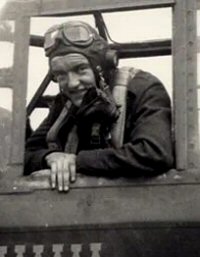  Flt Lt Don Briggs DFM Our estimated value of this signature : £45 Died : 2018 | Flt Lt Don Briggs DFM Don Briggs spent two years at RAF Halton qualifying as an engine fitter before serving on RAF flying units until he volunteered in December 1943 for the new aircrew trade of Flight Engineer. After a period of training he joined No.156 Squadron equipped with the Lancaster. The unit was part of Bomber Command's Pathfinder Force. The flight engineer was the pilot's mate who managed the engines, fuel systems and the ancillary equipment. He teamed up with Flying Officer Bill Neale and they were to complete sixty-two bombing operations together. Their first sortie was on June 11th, 1944 when Bomber Command was attacking targets in support of the Allied landings in Normandy. Railway marshalling yards, supply dumps and construction sites for the V-1 flying bombs and storage sites for the V-2 rocket were their primary targets. By late August, Bomber Command resumed its campaign against the industrial cities in Germany and Briggs attacked Russelheim, Kiel, Stettin and cities in the Ruhr. His crew marked targets with flares to allow the main force to mount accurate attacks. After the war, Briggs flew long-range transport sorties in York aircraft (based on the Lancaster) before spending three years at the Empire Test Pilot's School at Farnborough. In July 1951 he started training as a pilot and, after converting to jets, he joined the newly-formed No.10 Squadron to fly the twin-engine Canberra bomber. In August 1955 he trained on the first of the RAF's V-bombers, the Valiant. He joined the first squadron, No.138, and a year later he transferred to No.49 Squadron, which was being formed for the task of conducting the nuclear weapons trials in the Pacific. Operation Grapple was mounted in 1957 to test Britain's first thermonuclear megaton weapon, the Hydrogen Bomb. The site chosen for the test was Malden Island 400 miles south of Christmas Island in the South Pacific. Briggs was the second pilot in the crew of Squadron Leader Arthur Steele. They flew their Valiant bomber to the newly constructed airfield on March 18, 1957 and began a period of intensive training. On May 15th, No.49 Sqn's commanding officer, Wing Commander Ken Hubbard, dropped the first weapon successfully. For the second drop on May 31st, Steele, Briggs and their crew flew the reserve aircraft and for the third and final test, they were tasked for the sortie. On June 19th, they took off and climbed to 45,000 feet, and carried out a practice run over the target before clearance to drop the bomb was given. Fifty seconds after release, the bomb exploded at the pre-determined height of 8,000 feet. Steele and Briggs had erected the anti-flash screens in the cockpit of their aircraft before making a precisely executed turn away from the explosion and before the shock wave was felt in the aircraft. The drop was completely successful. A few days after their flight, the squadron returned to Wittering. By the end of the year, Briggs had completed a Valiant captain's course and he transferred to No.138 Squadron where he spent the next three years. This was followed by almost three years as a pilot instructor on Valiants and it was during this period he also converted to the Victor bomber. In 1964 he trained as a flying instructor and spent three years instructing trainee pilots at an RAF flying school near Newark. In January 1967 he converted to the third of the RAF's V-bombers, the Vulcan, and was to spend the next five years as an instructor on the iconic delta-wing aircraft before joining No 9 Squadron shortly before it moved to its new base in Cyprus. After 34 years service, he retired at the end of 1973. There were 88 Vulcan 2s produced and Briggs flew 57 of them during his seven years with the force. He spent 15 years at the Oxford Air Training School training pupils to become commercial airline pilots. He retired aged 65 when he joined the RAF Microlight Association at Halton where his RAF career had begun and where he became the chief flying instructor. Finally, at the age of 84 he decided to finish his flying career having flown 71 different types of aircraft and gliders. He died in July 2018. |
Flight Lieutenant George Britton Our estimated value of this signature : £30 | Flight Lieutenant George Britton Joining the RAF in 1941, George trained on Wellington and Stirlings as a Wireless Operator and Air Gunner. Converting to Lancasters he was posted to 90 Squadron for his first operational tour, and then to 186 Squadron, still on Lancasters. George then found himself designated to be an Intelligence Officer at Lossiemouth, interrogating Italian POWs Finally, before leaving the service in 1946, he served in Sunderland flying boats, flying to West Africa, Europe and Scandinavia. |
Sgt Jim Brookbank Our estimated value of this signature : £15 | Sgt Jim Brookbank Born in a Victorian terrace in the back streets of Kilburn in North West London and had yet to reach his sixteenth birthday at the outbreak of war. Having experienced the 'Blitz' and already obsessed with flying since the age of 12, he - in keeping with many aspiring young aviators - wanted to be a Spitfire pilot. He volunteered as U/T pilot at the age of 18, trained in Canada and qualified as a Bomb Aimer. Jim joined IX Squadron at Bardney in August 1944 and flew on Operations with them until VE Day. He attacked specially selected daylight targets with the Barnes Wallis 12,000lb 'Tallboy' bomb, including the final raid of the war on Berchtesgaden on 25th April 1945. Jim completed 23 ops. |
P Brophy Our estimated value of this signature : £40 Died : 1991 | P Brophy Brophy was the rear gunner in 'Mynarski's Lanc', the Lancaster in which Andrew Mynarski earned his VC after a failed attempt to save the trapped tailgunner. Mynarski, with his parachute and clothing on fire, jumped clear of the aircraft, mortally burned. Brophy survived the subsequent crash without injury, being thrown miraculously clear of the fully laden bomber. Pat Brophy died in 1991. More recollections of the Lancaster crash : They took off and joined up with a large group of aircraft before heading for German occupied France. They crossed the English Channel loaded with bombs to be dropped at a predetermined target. However, this operation soon took a different turn from the previous twelve. Soon the sky came alive with searchlights and anti-aircraft gunfire. Brophy, being the rear gunner, was busy trying to see if there were any enemy aircraft trying to attack them from behind. At the same time, Andy Mynarski was busy trying to defend the aircraft from the mid-upper gun turret. I might add the rear gunner's entry to the turret is a very small slit and when he moves left or right during firing, his exit to the fuselage is totally cut off. If the hydraulics fail, the only way to turn the turret is by a hand crank operated within the turret. They hadn't gone far when they sustained a direct hit. The pilot told the crew to bail out because, 'Our big girl has been hurt and she will not be taking us home.' Andrew Mynarski immediately knew Brophy was in trouble, with no hydraulic power. How could he help free Brophy from the tail turret? He went back to see if the crank would work the turret, but the turret was jammed tight. During the hit, the lines that carried brake fluid were ruptured and they were pouring fluid down the side of the aircraft which was now burning along with the engines. Mynarski had stayed too long trying to free Brophy and save his life. Mynarski's clothes were getting so hot that he had to leave. He saluted his buddy and mouthed, 'Good night Broph' and proceeded to leave the aircraft. As soon as he hit the outside air, his clothes started to burn and in turn, started burning his parachute as he descended. Brophy was now alone on a burning aircraft and steadily going down with the aircraft which was still loaded with bombs. He thought his time was near, so as a Catholic, he repeated, 'Hail Mary, full of grace' over and over again as fast as he could. He could make out tall trees even although it was dark as the burning aircraft gave him enough light to see. Suddenly, he could feel the aircraft breaking up as the aircraft hit trees. He felt as if he was still in his turret but somehow he was flying in a different direction than the main part of the aircraft. All Brophy felt before he lost consciousness was the ground shaking twice probably from some of the bombs they had on board. When Brophy regained consciousness, he took stock of his body and everything seemed to be okay. He was lying in a small ditch with no water. He then checked to see if he still had his revolver and his toothbrush, the only personal things he took with him when flying on an operation. No need for an overnight bag!! As he became more familiar with his situation, he removed his helmet and noticed all of his hair remained in it. At that moment, he thought nothing of it. Off in the distance, he saw lights of a small village. He stumbled along, moving carefully as it was nearing daylight. When he arrived at the village, he found himself on a street with homes built close together. Each door was indented from the rest of the walls and in from the sidewalk. He guessed the time to be close to six a.m. From around the corner he heard approaching steps, much like marching soldiers. He stepped back into one of the doorways and drew his revolver. Suddenly, he felt a strong arm around his neck and another covering his mouth and he was yanked into the house. The man spoke English and told him to be quiet. He informed him that he was a member of the French Underground. Days went by slowly as Brophy came to be more acquainted with the man who saved him and it also gave him time to mentally review all that had happened to him on the day of their mission that ended like a bad dream. He quickly found out just how the Underground worked when he was told that they were already working on getting him out of the area and back to England before the Germans found him and made him a prisoner of war. He knew now that three of his comrades were already being held as prisoners. So the Underground put a plan into motion. The man that saved Brophy, took him the first leg of the journey, moving by darkness only and sleeping during the daylight hours. A second man took him on the longest journey yet, travelling by night and sleeping during daylight hours. A third man knew his way well so they covered their trip somewhat faster, again travelling by night and sleeping during daylight. Then the smell of salt water told Brophy that they were near the end of their trip. They stayed back from the water as daylight was approaching. They waited well into the next night before they left their hiding place, entering near waters-edge. It seemed forever until they could make out a boat. Soon, Brophy was leaving France behind. A second, much larger boat took Brophy to England. He was guided back in daylight by an Englishman to a drop off point, close to Brophy's home base in England. Back at home base, there was a pub nearby and at this pub, one of the tables was considered by Pat and his buddies to be 'theirs.' He just had to go back and see if it was the same. As he approached the table, sitting alone was his pilot, sipping a beer. The pilot looked up and thought he saw a ghost and asked Brophy to, 'Go away, don't bother me'. After all, Brophy was still listed as missing. He knew that Mynarski had stayed to help Brophy but there Pat stood, bald, his black curly hair gone. In a short while Pat was able to settle the pilot down. He ordered a round, sat down and started telling him the story about how close he came to losing his life but had been lucky enough to return in one piece. Brophy was sent to Scotland with the RCAF for nearly two months of Rest and Relaxation. Soon after he returned to duty. He was sent back to Canada, where he managed to get a leave to see his loved ones. Soon after, he was back flying and preparing to enter the Japanese theatre of war. However, luckily the war ended before he had to enter a war zone again. |
  Squadron Leader Ken Brown CGM RCAF Our estimated value of this signature : £85 Died : 2002 | Squadron Leader Ken Brown CGM RCAF Born 20th August 1920. Joined the Canadian Air Force in 1941, and joined No.617 Sqn in 1943. Pilot and Captain of Lancaster AJ-F, he attacked the Sorpe Dam. Ken Brown died 23rd December 2002. |
Warrant Officer Ron Brown Our estimated value of this signature : £10 | Warrant Officer Ron Brown Initially served as a Fitter on Hurricanes and Harvards, then joined Aircrew in 1942 and served as a Flight Engineer on Stirlings with 218 Squadron where he towed gliders on D-Day. He went on to complete another Tour with 75 Squadron on Lancasters, completing 64 Operations by the end of the War. |
Warrant Officer William Jock Burnett Our estimated value of this signature : £15 | Warrant Officer William Jock Burnett Jock Burnett (Flight Engineer) volunteered at the age of 18 as a Direct Entry in Edinburgh F/E and served in the RAFVR from 25th May 1943 until 19th February 1947 following a F/E course at St Athans, South Wales. On passing out from this course Jock was posted to Swinderby on Stirlings heavy conversion unit 1660 before being transferred to Syerston and Lancasters. In early August 1944 Jock joined 617 Sqn at Woodhall Spa and was subsequently posted with the squadron to Waddington and Digri, India. He completed 30 missions, all with Lawrence Benny Goodman as the pilot. Notable raids Jock took part in were on the Tirpitz, 29th October 1944, dropping the Grand Slam 22,000 bomb on the Arnsberg Viaduct, 19th March 1945, and the attack on Berchtesgarten Eagles Nest, 25th May 1945. |
Group Captain Dudley Burnside DSO OBE DFC* Our estimated value of this signature : £25 Died : 2005 | Group Captain Dudley Burnside DSO OBE DFC* Dudley joined the RAF in 1935 and in 1937 went to India flying on the North West Frontier, and Iraq. At the outbreak of war he went to Burma and in 1942 was fortunate to escape when his airfield was overrun by the Japanese. Escaping back to England he took command of 195 Squadron RCAF flying Wellingtons. In 1943 he became CO of 427 Squadron on Halifaxs, later converting to Lancasters. In the Korean War he commanded a Flying Boat Wing operating Sunderlands. He retired from the RAF in 1962. He died 20th September 2005. |
Flight Lieutenant Nat Bury DFM Our estimated value of this signature : £15 | Flight Lieutenant Nat Bury DFM With 207 Sqn he completed a full operational tour as a Flight Engineer on Lancasters including attacks on the German coastal village of Peenemunde where the V-1 and V-2 projects were being developed. |
W. O. G. T. M. Caines Our estimated value of this signature : £20 | W. O. G. T. M. Caines Volunteered and joined the RAF at age 18 and was called up on 4th December 1940. He subsequently joined 9 Squadron and after 7 Operational sorties was granted four days compassionate leave to visit his wife, who had just given birth to a son in a temporary maternity hospital in Taunton. He returned to find his crew reported missing. He carried on flying with 9 Squadron as a spare Wop but after 13 ops crewed up with F/O Manning who had lost his Wop after five trips. On 23rd March 1944, on his twenty-fifth trip, in Lancaster LM430, WS-B, on the way home from Frankfurt they were hit in the bomb bay by a fighter. Badly on fire and in a steep dive they blew up. The aircraft broke her back and Caines was thrown clear of the wreckage, landing in a little village called Lembeque, near Brussels. He finished the war in captivity and was repatriated a week or so before VE Day. Unfortunately he was the only one to survive the crash. |
Warrant Officer Ken Calton Our estimated value of this signature : £30 | Warrant Officer Ken Calton Joining the RAF in late 1940, he served as a Flight Engineer with 7, 156 and 12 Squadrons before finally joining 635 Sqn, Pathfinder Force on Lancasters who acted as Master Bombers for this final raid of the war in Europe. |
Squadron Leader Pat Carden DFC AE Our estimated value of this signature : £45 Died : 2008 | Squadron Leader Pat Carden DFC AE Joining the RAF in 1932, after qualifying as a pilot, he served as an instructor until 1942, when he joined 15 Squadron at Mildenhall, flying Lancasters. Volunteering for the Pathfinder Force he joined 35 Squadron at Gravely on Halifaxes, followed by 582 Squadron on Lancasters, taking part in many bombing sorties over Normandy, including two missions on D-Day. He finished the war having completed 66 operations. Pat Carden sadly died 28th June 2008, aged 96. A Clipped Signature is Available |
Flying Officer Don Carruthers Our estimated value of this signature : £40 | Flying Officer Don Carruthers Joining the RAF in 1941 he trained as a wireless operator and completed his ops training at Lossiemouth on Wellingtons where he formed up with a crew that was to stay together for his entire operational career in Bomber Command. In 1943 he was posted to 466 squadron at Leconfield on Wellingtons before converting to the Halifax. He and his crew volunteered for the Pathfinder Force and joined 35 squadron on Halifax's and then Lancasters. In 1945 having completed a total of 63 operations he moved to Transport Command flying Dakotas in India with 238 squadron and then Calcutta with 52 squadron. He left the RAF in 1946. |
  Squadron Leader J R Cassels DFC* Our estimated value of this signature : £50 Died : 2008 | Squadron Leader J R Cassels DFC* Nos 14, 29, 98, 106, 125, 139 (Jamaica), and 162 Squadrons. April, 1941 - Enlisted in Edinburgh and accepted for pilot training. April 1941 to April 1942 - No 4 I.TW. Paignton, No 9 E.F.T.S. Ansty, Coventry, No 12 S.F.T.S. Spittlegate, Grantham, (22/01/1941 Received wings as Sgt. Pilot) No 14 O.T.U. Cottesmore flying Hampdens. April 1942 - No 106 Squadron, RAF Coningsby commanded by Wing Commander Guy Gibson, DSO, DFC. I was second pilot on Manchesters and did 4 operational sorties. Converted to Lancasters as first pilot and did 26 operational sorties, including Le Creusot raid on 17 October '42, between June and December 1942. Final sortie on 8 December 1942. December 1942 to March 1943 - Survived several attempts to turn me into a flying instructor. March 1943 - No 1485 Conversion Unit ie. No 5 Group Gunnery Flight training air gunners. October- November 1943 - No 1655 Mosquito Training Unit. November 1943 to June 1944 - No 8 Group, Pathfinder Force - No 139 (Jamaica) Squadron. H2S Mosquito Marking Squadron, RAF Wyton and Upwood. Completed 44 operational sorties before ending up interned in Sweden. 12 June 1944 to 20th September 1944 interned at Falun, Sweden. October 1944 to June 1945 - rejoined No 139 (Jamaica) Squadron at RAF Upwood after an air crew medical where a Group Captain M.0. told me that, as I was warm and my goolies didn't drop oftwhen I coughed, I was back to war. Completed 46 operational sorties before V.E. day. Total sorties on 139 squadron 90. June 1945 to July 1946 - Transport Command, No 162 Squadron flying Mosquitos (ALDS ic, Air Delivery Letter Service) RAF Blackbush. August 1946 to February 1950 - No's 14 and 98 Squadrons, No 139 Wing, RAFO, at RAF Wahn and Celle. February 1950 to August 1950 - abortive EIPS Course. August 1950 to October 1951 - Air Traffic Controllers Course and ATC Officer at RAFWest Raynham. November 1951 to October 1952 - No 29 Night Fighter Squadron, RAF Tangmere. Meteor NFXI. October 1952 to April 1953 - Air Ministry and All Weather Wing, RAF West Raynliam. April 1953 to November 1955 - No 12 Group Headquarters, Group Accidents Officer. November 1955 to April 1957 - No 125 Night Fighter squadron, RAF Stradishall, Meteor NFM and Venom NF. April 1957 to August 1959 - Eastern Sector Operations Centre, Recovery Executive. RAF Neatishead. October 1959 to July 1962 - Hg FEAF, Joint Intelligence Staff. Commissioner Generals Office and RAF Changi. July 1962 to March 1965 - No 3 Group Hg, OC HQ Unit and RAF Liaison Officer to USAF Mildenhall. Retired from RAF as Squadron Leader March 1965. Employed by Airwork Services Ltd, as pilot. March 1965. March 1965 to August 1970 - No 3 (Civilian Anti Aircraft Unit) Exeter Airport. Vampire TX1 and Meteor T=. September 1970 to April 1977 - FRADU ( Fleet Requirements Air Defence Unit) RNAS Yeovilton. Hunter GAII and Mk 8. September 1977. Aged 55. RN age limit for fast jet flying. September 1970. Commissioned in RA17VR M. September 1970 to May 1982 - No 4 AEF, Exeter Airport, Chipmunk. Retired from RAFVRM aged 60, May 1982. Total Flying Hours - 11,300 Ins. Sadly passed away 19th December 2008. |
  Flight Lieutenant J Castagnola DSO DFC Our estimated value of this signature : £50 | Flight Lieutenant J Castagnola DSO DFC Joining the RAF in 1941 he graduated as a pilot after completing his training in America. Returning to England he joined 51 Squadron in early 1943 flying from RAF Snaith. Born in 1922 in Islington, Cass as he was known to all, enlisted in 1941 and trained in North America. Returning to England he crewed up at OTU and after completing their HCU course the crew, captained by a newly commissioned Cass, joined 57 Squadron in December 1943 for their first tour of operations. They were to be blooded with a series of attacks against Berlin, completing three operations against this target in four nights during January 1944. In all Cass was to visit the Big City eight times during his tour. During the Nuremberg operation of 30/31 March 1944 his Lancaster's rear turret guns froze up but a burst from the mid-upper caused an approaching Me 210 to break away. On return his gunners also claimed one Ju 88 destroyed and another damaged. On 5 April 1944 the crew were one of six attached along with their aircraft to the Squadron at Woodhall Spa, to provide an H2S capability. After an initial trip as passenger with Fg Off Fearn for the attack against the Luftwaffe Depot at St Cyr on 10 April to observe the Squadron's methods, Cass found himself non-operational for a month as the Squadron trained intensively for Operation Taxable. Teamed up with Nick Knilans he completed the D-Day deception operation and three nights later he was operating against the Saumur railway tunnel. Unable to carry Tallboy, his H2S equipped aircraft was loaded with thousand pounders to be aimed at the adjacent railway bridge across the Loire. His next three trips were as an additional member of Knilans'crew. By July Cass had been posted back to 57 Sqn at East Kirkby and would complete his first tour with them.He was not away from Woodhall for long, arriving back on the Squadron on 15 August to start his second tour. This was to be much more satisfying. With his trademark 'operationally battered' cap, Cass and his crew soon proved themselves a popular and valuable asset to the Squadron. Starting with a trip to Brest on 27 August and now carrying Tallboy they were part of the high level force for the attack on the Kembs Dam, and took part in all three operations against Tirpitz, claiming a direct hit in the middle of the superstructure during the final attack. During the attack on Bergen on 12 January 1945 his aircraft came under fighter attack and Cass dived to within the range of the flak batteries; the fighter deigned to follow. Heading out to sea he spotted Ian Ross' aircraft at low level, on fire and under fighter attack. With his bomb aimer manning the front turret and without thinking of his own safety Cass dived to offer whatever assistance he could. He was successful in driving the fighter away, but Ross was forced to ditch, while Cass circled overhead dropping an emergency radio wrapped in Mae Wests when it was seen that Ross' dinghy had not deployed. Climbing to 500 feet they signalled the ditched Lancaster's position and remained in the area, seeking cloud cover when a German fighter came too close. With fuel running low he was eventually forced to leave the stricken crew to their fate. The remaining months saw a new routine develop, railway viaducts replacing U-boat pens as targets during February and March, before returning to April's target list, along with other naval targets during the last month of hostilities. After a total of 62 operations Cass' war came to an end on 19 April 1945 with an attack on the island fortress of Heligoland. The latter part of 1945 saw him as the Squadron's Inspector Pilot as they worked up for 'Tiger Force' – the RAF's projected contribution to the Pacific War but, with the squadron prepared to go overseas to India, in January 1946 he was posted to RAF Snaith, to conduct aircrew training. Having been awarded the DFC for his time on 57 Sqn, Cass was to receive a bar in March 1945 for his service with 617 and a further award of the DSO in October 1945.Awarded a permanent commission in 1947, he was posted to the Central Flying Establishment, RAF West Raynham, flying Mosquitos, Vampires and Meteors, before transferring to the Empire Test Pilots School, RAE Farnborough, in March 1950. After qualifying as a test pilot his experience was put to good use for four years at the Aeroplane and Armament Experimental Establishment, Boscombe Down. Cass transferred to fighters in April 1954 and served in the Middle East and Germany before becoming Officer Commanding No. 41 Sqn, Biggin Hill, flying the Hunter F 5. In keeping with a number of pilots following their fighter tour, at the beginning of 1958 he was sent on a radar control course prior to being posted to Neatishead radar station, Norfolk, as Control Executive. After a final tour as a Staff Officer with HQ No. 13 Group, at Ouston, he left the RAF in November 1961 as a Squadron Leader, joining British Airways as a captain on Comets and Tridents until his retirement in 1980. We have learned that James Castagnola has died, but have no information as to when. |
  Flight Lieutenant George Chalmers DFC DFM Our estimated value of this signature : £65 Died : 2002 | Flight Lieutenant George Chalmers DFC DFM George Alexander Chalmers was born on February 12 1921 at Peterhead in Scotland. He was educated at Aberdeen Academy before working briefly at a local Crosse & Blackwell factory and joining the RAF as a boy entrant. After boy's service and qualifying as a wireless operator and air-gunner, Chalmer joined the RAF in 1938. Geogre Chalmers was posted to No 10, a two-engine Whitley bomber squadron at Dishforth, Yorkshire, from where he took part in leaflet-dropping operations over Germany after the outbreak of war. In August 1940 Chalmers transferred to No 7, the RAF's first four-engine Stirling bomber squadron which was operating from Leeming. There followed a spell with No 35, a four-engine Halifax bomber squadron, with which Chalmers was fortunate to survive an attack on the battle cruiser Scharnhorst at La Rochelle - his captain managed to make base despite being severely wounded and piloting a badly-damaged aircraft. When he joined 617 Squadron he was a Flight Sergeant and served as wireless operator on Lancaster AJ-O during the Dambusters raid which was piloted by Bill Townsend. Awarded the DFM for his part in the attack on the Ennepe Dam he was commissioned a few months later and awarded the DFC after 65 operations. In 1946 Chalmers was granted an extended service commission, and served in No 617 and No 12 Squadrons until 1950, when he was posted to No 38, a Lancaster squadron in the Middle East. He was released as a flight lieutenant in 1954, and served in the Reserve until 1961. Meanwhile, he had joined the civil service at Harrogate, where he worked for the Ministry of Defence dealing with the RAF's technical requirements. In this period his advice was much valued in the sphere of flight refuelling. On his retirement from the MoD in 1984, the company Flight Refuelling hosted a farewell party for him at which he was hailed as an expert in specialised spares procurement, especially in relation to a refuelling system of outstanding value used by the RAF in the Falklands conflict. Sadly, George Chalmers passed away in August 2002 aged 81. A Clipped Signature is Available |
Flight Lieutenant Mike Chatterton Our estimated value of this signature : £15 | Flight Lieutenant Mike Chatterton RAF pilot Mike Chatterton flew the Battle of Britian Memorial Flight Lancaster in the 1990s, amassing over 500 flying hours, and also is an experienced Nimrod pilot. He is the son of wartime Lancaster pilot John Chatterton and managed to take his father and some of his surviving crew for a flight in the restored Lancaster. |
  Group Captain Leonard Cheshire VC OM DSO** DFC* Our estimated value of this signature : £75 Died : 1992 | Group Captain Leonard Cheshire VC OM DSO** DFC* One of the most courageous and determined bomber leaders of World War II, Leonard Cheshire flew four operational tours, starting in June 1940 with 102 Squadron on Whitley bombers at RAF Driffield. In November 1940, he was awarded the DSO for getting his badly damaged aircraft back to base. He completed his first tour in January 1941, but immediately volunteered for a second tour, this time flying Halifaxes with 35 Squadron. He became Squadron Leader in 1942, and was appointed commanding officer of 76 Squadron later that year. Leonard Cheshire ordered that non-essential weight be removed from the Halifax bombers in a bid to increase speed and altitude, hoping to reduce the high casualty rates for this squadron. Mid-upper and nose turrets were removed, and exhaust covers taken off, successfully reducing the loss rate. In July 1943 he took command of 617 Squadron. During this time he led the squadron personally on every occasion. In September he was awarded the Victoria Cross for four and a half years of sustained bravery during a total of 102 operations, leading his crews with careful planning, brilliant execution and contempt for danger, which gained him a reputation second to none in Bomber Command. Sadly, Leonard Cheshire died of motor neuron disease on 31st July 1992, aged 74. |
Ronald Clark DFC Our estimated value of this signature : £10 | Ronald Clark DFC Volunteered for flying duties in 1941 and after interviews completed initial training in Paignton. A flying grading course followed at Kingstown near Carlisle surprisingly near my family, before being sent as Ambassadors for Britain across the Atlantic to be trained by the USAAF. After more initial training to learn the American way, not a bad way, we embarked on the flying training and after receiving the silver wings, the next port of call was Bournemouth in a hotel which shortly afterwards was demolished by the Luftwaffe. Several courses preceded our arrival at Lindholme heavy conversion unit before joining the Battle of the Ruhr with No 100 Squadron based at Waltham near Grimsby. My crew and I were assigned a brand new Lancaster III EE139 which we almost did for on our twenty-fourth trip with her to Manheim, but she went on to complete 120 operations before being unceremoniously scrapped. Little did we think that over 60 years later she would be recalled to life by the Battle of Britain Memorial Flight. After a period of instructing I was then posted to No 7 Sqdn for deployment to the Far East, which was stymied by the dropping of the atomic bomb, I did a lot more instructing before applying for a secondment to BOAC. |
 Air Commodore Charles Clarke Our estimated value of this signature : £30 Died : 2019 | Air Commodore Charles Clarke A pilot on Lancasters he served with 619 Sqn but was shot down in February 1944 by a German night fighter whilst on a mission to Schweinfurt, it was his 18th ‘Op. He subsequently spent time as a Pow in Sagen, North Camp. He would pass away on May 7th, 2019. |
Flight Lieutenant Bill Cleland DSO DFC Our estimated value of this signature : £15 | Flight Lieutenant Bill Cleland DSO DFC Having qualified as a Pilot he was posted to 12 Sqn in early 1944 before transferring to 156 Pathfinder Squadron. By the end of the war he had completed 77 Ops in Lancasters. |
Warrant Officer Colin Cole Our estimated value of this signature : £35 Died : 2016 | Warrant Officer Colin Cole As a Wireless Operator, he flew on Wellingtons, Stirlings and Ansons and flew 18 Ops on Lancasters with 617 Sqn including raids to sink the Tirpitz and the final raid of the war in Europe on Berchtesgaden. Colin enlisted at 18 in 1942 and joined the Royal Air Force. He underwent intensive training at Warrington and a number of training facilities at Blackpool and Yatesbury. As well as studying to be a wireless operator he also learned to be an air gunner. This was because it was an 'insurance policy' of sorts that if the aircrew onboard the Lancaster Bomber lost their first gunner the 'wireless op' would take over. Colin and his fellow aircrew were first involved in several practice bombing raids. At this time he was also carrying out a role as an inspector of the aircraft, specifically ensuring the batteries and electronics were up to scratch. He was sent on his first operation aboard a modified Lancaster bomber. The Lancasters had been specially modified with the removal of their mid-upper gun turrets and other equipment to lighten them, and they flew with a crew of six rather than the usual seven men. Carrying extra fuel and the 12,000lb 'Tallboy' bomb it was to carry. At 3am on November 12th, as part of a force of 18 Avro Lancasters of 617 Squadron and 13 from 9 Squadron, Colin and the rest of the Lancaster crew left the Scottish base and headed into the night across the North Sea to Tromso on a 2,200 mile round trip, taking 13 hours in total. Initially they flew low at only 1,000ft to avoid enemy radar but 100 miles from that target the entire aerial assault climbed up to their bombing altitude of 14,000ft. Colin and the crew of the modified Lancaster Bomber delivered their payload bang on target, and along with the rest of the bombers were successful in sinking the German Navy's flagship. He flew 18 missions as a wireless operator aboard Lancaster bombers, targeting shipping, U-boat pens, viaducts and cities on the German mainland. Ironically, one was the town of his grandparents - Koblenz. Colin was demobbed in 1946. After the war, he flew missions to India to dispose of surplus weapons and flew in the very Lancaster Bomber flown by Guy Gibson, the wing commander who led Operation Chastise, the Dambusters raid. Colin Cole passed away in May 2016 aged 93. |
Flight Lieutenant John A Colpus DFC Our estimated value of this signature : £25 | Flight Lieutenant John A Colpus DFC Posted to 467 Sqn at Bottesford in Sept 1943, Jack Colpus flew 4 operations on S for Sugar, including the trip to Berlin on 26 Noc 1943, where Sugar collided with another Lancaster over the target. With exceptional skill, Jack brought Sugar safely home. |
Warrant Officer James Coman DFC Our estimated value of this signature : £10 | Warrant Officer James Coman DFC As a WOP/Air Gunner he flew with both 149 and 90 Squadrons on Wellingtons, Stirlings and Lancasters completing 52 Ops including one of the first raids on Berlin made in a Wellington. |
 Warrant Officer James Copus Our estimated value of this signature : £35 | Warrant Officer James Copus Joined the RAF in 1940 on Lancasters with 97 Sqn Pathfinders. He baled out on a bombing raid over Hanover and was captured and taken PoW and interned at Stalag Luft I. |
Flight Lieutenant John Cox DFC Our estimated value of this signature : £15 | Flight Lieutenant John Cox DFC Born in 1923, after reaching eighteen, John Cox joined the RAF in March 1942. He soon found himself on the Queen Mary en-route to Canada for pilot training, returning to become operational on Lancasters with 622 Squadron based at Mildenhall, whom he joined in July 1944. His tour of 30 operations included the successful raid on Walcheren Island in Holland, whose objective was to breach the sea wall in order to flood the island, forcing a full scale German retreat. After hostilities he flew for BOAC, followed by 27 years service with BA, becoming senior captain on 747s. |
Warrant Officer Lou Crabbe Our estimated value of this signature : £10 | Warrant Officer Lou Crabbe Served on 49 Sqn as a Flight Engineer on Lancasters from 1944. This was the same squadron with which Wg Cdr Roderick Learoyd won his VC. He flew a total of 33 Ops including raids on Dresden, Munich and the mighty Battleship Koln. |
Squadron Leader Lawrence Curtis DFC* Our estimated value of this signature : £40 Died : 2008 | Squadron Leader Lawrence Curtis DFC* Joining the RAF in 1939, he was posted as a wireless operator firstly to 149 Squadron and then 99 Squadron on Wellingtons. He then joined OTU on Whitleys before moving firstly to 158 Squadron, and then 617 Squadron on Lancasters, where he was Unit Signals Leader for 18 months. After bomber operations he joined Transport Command in 1944. He died on 21st June 2008. |
Miss Lettice Curtis Our estimated value of this signature : £20 | Miss Lettice Curtis Joined the Air Transport Auxiliary (ATA) in July 1940 having been taken on to ferry Tiger Moths. Although we were later allowed to ferry other training types such as Oxfords and Masters, it was not until the autumn of 1941 that women were allowed to fly operational aircraft types. I flew my first Hurricane in August 1941 and my first Spitfire a couple of weeks later. After a brief course on a Blenheim I was cleared to fly without any further training, twin-engine bombers up to the Wellington. In November 1943 I was sent on a Halifax course, which due to unserviceability and bad weather closed, restarting in February 1943 at Pocklington where I was cleared for ferrying Halifaxes. After that without further training, I ferried Lancasters and over 100 Stirlings. In November 1945 I ferried 14 Liberators. |
Squadron Leader Ron Curtis DSO DFC Our estimated value of this signature : £45 | Squadron Leader Ron Curtis DSO DFC Qualifying as an Observer in 1941, Ron joined 144 Squadron on Hampdens before transferring to 44 Squadron at Waddington as a Navigator on Lancasters to replace the Lancaster crews lost on the Augsburg Raid and was awarded his first DFC at the end of the tour. At the end of the 1942 he moved to Marham, converting to Mosquitos, and in 1943 was posted to 109 Squadron equipped with Oboe as part of the Pathfinder Force. He flew 104 Oboe operations and 139 ops in total, and was widely credited with helping advance development of the Oboe system. A Clipped Signature is Available |
Wing Commander Arthur Doubleday DSO DFC MID Our estimated value of this signature : £10 | Wing Commander Arthur Doubleday DSO DFC MID Flying Wellingtons then Lancasters on his 1st tour, Arthur Doubleday began his second tour on Lancasters at Waddington with 467 Sqn RAAF. From April 1944 he commanded 61 Sqn RAF Lancasters. He finished the war as Chief Instructor 75 OTU. |
Warrant Officer Ken Duddell Our estimated value of this signature : £10 | Warrant Officer Ken Duddell Completed a full Tour with 103 Sqn as a Flight Engineer on Lancasters during 1944 and went on to be Chairman of the 103 Squadron Association, leaving the RAF in 1968 as a Master Engineer. |
Lishman Y Easby Our estimated value of this signature : £10 | Lishman Y Easby Lishman Y. Easby (Wireless Operator) joined the RAF in 1941 after service in the Home Guard. He was selected for training as a Wireless Operator/Air Gunner but after training as a W/Op he was posted to Coastal Command 159Gp HQ, Liverpool, and served in 1942 as a ground wireless operator. Later in the year he was called for training as a W/op (air) which was followed by an air-gunner course. Following this he was posted to an Operational Training Unit and joined Ron Clark and his crew as a W/op on 4 engined aircraft – the two jobs were separate. The crew were later posted for further training, first on Halifax and then on Lancasters; then posted to 100 Sqn, Waltham, near Grimsby, where they were given a brand new Lancaster which they named the Phantom of the Ruhr. Their Flight Engineer, Harold Bennett DFM painted its name and insignia on the nose of the aircraft. The same name today adorns the Lancaster which flies as part of the Battle of Britain Memorial Flight. In the Phantom they completed 21 ops to Germany and two to Italy, after which the Phantom was taken in for extensive repairs due to enemy damage. The crew completed a further four ops which then completed their tour. For their 27th op the crew were transferred to 625 Sqn Kelstern (Lincs) which turned out to be their final operation and they were then disbanded. Lishman Easby was then posted to OTU near Shrewsbury to help with the training of new crews. Later he was posted to 298 Sqn Transport Command with another pilot (Ian Forbes) and crew where they received training in towing Horsa Gliders in preparation for an airborne attack on Singapore. However, the war ended suddenly and the Sqn was posted to India and eventually to Burma to take part in Operation Hunger. This entailed dropping sacks of rice on isolated villages thus saving them from famine. This ended his service and he was released from service in 1946. He agreed to his name being held in reserve as a Minute Man until aged 45. During this time he could be called back in an emergency for immediate service. However, this never happened. |
Warrant Officer Jock Elliott Our estimated value of this signature : £10 | Warrant Officer Jock Elliott Jock completed a full tour during the Spring/Summer of 1944 as a Wireless Operator/Air Gunner with 550 Squadron on Lancasters. Returning from a trip to Revigny his Lancaster ran out of fuel and the crew bailed out safely over England. |
Flying Officer John Elliott Our estimated value of this signature : £10 | Flying Officer John Elliott During the Summer of 1944 from June to September, G for George completed a full tour of operations from North Killingholme, carrying out many bombing raids in support of the Normandy Landings, including the bombing of Caen on the 7th July. Five days later on the 12th July after a raid on Revigny, the Lancaster ran out of fuel on the way back and the whole crew made a successful bail out over England, and then continued operations through the war. |
Wing Commander Mac England DFC Our estimated value of this signature : £55 | Wing Commander Mac England DFC 'Mac' England joined the RAF in 1938 and after qualifying, posted as a pilot into Lancasters. In 1941 he was transferred from Bomber command to fighter Command-flying Spitfires on coastal sweeps. After a short period of time on Spitfires he was transferred back again to bomber Command, and in 1943 completed 30 Operations on Lancasters. When he retired in 1974 he had flown a total of 36 different aircraft including Hunters and Canberras. |
Warrant Officer Eric Evans Our estimated value of this signature : £30 | Warrant Officer Eric Evans After qualifying as a Rear Gunner he served with 463 RAAF Sqn serving on Lancasters from Waddington. In November 1944 his Lancaster was shot down by a German night fighter whilst on a mission over Germany and he served the rest of the War as a PoW. |
  Group Captain William Farquharson DFC Our estimated value of this signature : £35 Died : 2012 | Group Captain William Farquharson DFC William Farquharson was a pilot with 115 Squadron and flew Lancasters with 195 Squadron. William Farqharson was born om September 28th 1919 in Malacca, Malaya. His father was a police officer in the Colonial Service. His early schooling was in Malaya and Australia, and he completed his education at Harris Academy, Dundee, and later went to the Birmingham Central Technical College. In January 1941 William Farqharson enlisted in the Royal Air Force to become a pilot. William Farqharson joined No 115 Squadron in July 1942 and flew his first bombing operations in the Wellington before the squadron converted to the four-engine Stirling. Farqharsons first sorties were to drop mines in the Kattegat, the Baltic and off the French Biscay coast. Farquharson also bombed targets in Germany and in northern Italy, the latter involving very long flights over the Alps. On April 20 1943 he and his crew attacked Stettin at low level in full moonlight. Dissatisfied with the first attempt, he made a second bombing run despite heavy opposition. His Stirling was badly damaged, but he then made a third run to photograph the results of his attack before turning for the long flight home. He was awarded his first DFC. After a period training bomber crews, Farquharson returned to operational flying in October 1944 when he joined No 195 Squadron. Bomber Command was concentrating on attacks against the German oil industry and he bombed many targets in the Ruhr. Farquharson and his crews also wre involved in Operation Manna these humanitarian operations which saw them dropping food to the starving population in the Netherlands and also took his Lancaster to Belgium and France for Operation Exodus to pick up prisoners of war recently released form German PoW camps. In total William Farqharson completed 63 operations as a pilot in Bomber Command. He recalled on one occasion the engine of his Wellington caught fire and he ordered his crew to bail out. As the last man left, he realised that the aircraft would be too low for him to survive a jump and he was forced to crash land into the tops of some trees before hitting a farm in the Cotswolds. The wings sheared off and he ended up, badly concussed, in the fuselage section. The farmer's son rushed into the house shouting, there's an aeroplane in the greenhouse. On another occasion his bomber was damaged by anti-aircraft fire. On landing he discovered a large piece of shrapnel embedded in the parachute he had been sitting on. Farquharson remained in the RAF and much of his early service was involved in training pilots. After attending the Central Flying School he commanded flying training squadrons and in 1953 led a large formation of aircraft in the Coronation Flypast. Later he was the chief instructor at an advanced flying school equipped with the Meteor jet fighter. After appointments in the Far East and as station commander at RAF Episkopi in Cyprus, Farquharson was appointed air attaché in Warsaw at the height of the Cold War. There all his activities were closely monitored by the secret police. Having shown no previous interest, he suddenly became an expert in birdwatching when he 'discovered' that the most interesting sites were close to military airfields. After retiring from the RAF in 1976, Farquharson worked in the sales division of a company manufacturing flight simulators and was for a period of time chairman of the Bomber Command Association. He was later made an honorary vice-president and worked hard seeking recognition for his fellow veterans. With his wife, a former WAAF operations officer on his bomber station, he was able to attend the unveiling of the Bomber Command Memorial by the Queen in July 2012. Sadly Group Captain Bill Farquharson, died on September 20th 2012. A Clipped Signature is Available |
Flying Officer C B R Fish Our estimated value of this signature : £30 | Flying Officer C B R Fish Leaving university early he joined the RAF in November 1941 to train overseas and qualified as a navigator in the summer of 1942, remaining with OTU for a period. Due to his expertise in high altitude bombing he was called up to 617 Sqn in July 1944 on Lancasters and took part in many of the squadrons precision bombing raids, including the attack on the Tirpitz. He remained with 617 Sqn until he left the RAF in 1946 to return to university. |
Flight Liutenant M B Flatman Our estimated value of this signature : £25 | Flight Liutenant M B Flatman Joining the RAF in 1942, with pilot training in the USA, Mark Flatman is unusual in that his first operational posting was direct to 617 Squadron in September 1944. The final Tirpitz operation was his first as Captain of Aircraft, having done three operations as second pilot, including the previous Tirpitz attempt with Tony Iveson. He was to stay with 617 Squadron until November 1946. Granted an extended service commission he went on to the Bomb Ballistic Unit at Martlesham Heath flying Lancasters, Lincolns and Mosquitoes on experimental work. He left the RAF in 1949 to return to farming, for which he was originally trained. |
Flight Lieutenant Les Fletcher DFC* Our estimated value of this signature : £10 | Flight Lieutenant Les Fletcher DFC* Initially trained as a pilot in America and was posted to 100 Squadron in the spring of 1943 on Lancasters. Completing a full tour and after a spell training he was posted to 571 Squadron Light Night Strike Force, where he completed two tours on Mosquitos. He finally ended the war flying Yorks for the Diplomatic Service. |
Warrant Officer Jack Forrest Our estimated value of this signature : £10 | Warrant Officer Jack Forrest Flight Engineer on 619 Sqn flying Lancasters. On his 29th Operation, having already completed an Operation on the eve of D-Day, he flew again in the afternoon of the 6th June 1944 and was shot down over Caen, ending up as a PoW in Stalag Luft 7. He took part in the Long March with Doug Fry. |
W/O Ray Francis Our estimated value of this signature : £10 | W/O Ray Francis A Flight Engineer with 622 Sqn on Lancasters, flying from Mildenhall from January to August 1944. Ray completed 30 Ops, surviving the trip to Nuremberg in March 1944, and he flew over the D-Day beaches in June 1944. |
Warrant Officer Stanley Franks Our estimated value of this signature : £10 | Warrant Officer Stanley Franks A Flight Engineer with 15 Squadron from December 1944. He still went on to complete 30 Operations in a Lancaster 'Burns Bomber Boys'. After his Tour was finished he was posted to 'Tiger Force' in India. |
Flying Officer Norman A. Gampe RAAF Our estimated value of this signature : £20 | Flying Officer Norman A. Gampe RAAF Norman Gampe joined the RAAF in September 1942. After training as a pilot in Australia, he sailed to the UK, and in the later half of 1944 attended 19 OUT, then converted to Lancasters. In January 1945, Norman was posted to 619 Squadron equipped with Lancasters, based at Strubby. On ANZAC Day-25th April 1945, Flying Officer Gampe completed his 13th and final Operational Sortie of the war with 619 Sqn when he bombed Hitler's Eagles Nest at Berchesgarden. |
Squadron Leader John Gant DFM MBE Our estimated value of this signature : £10 | Squadron Leader John Gant DFM MBE As Bomb Aimer, John flew on Lancasters with 12 Sqn from Wickenby and completed a full tour during 1944-45. During an Air Gunnery exercise the mid- upper turret locked on firing and shot the plane down! All the crew successfully baled out. |
Warrant Officer Laurie Godfrey Our estimated value of this signature : £10 | Warrant Officer Laurie Godfrey As a WOP/Air Gunner he joining 408 Sqn, only the second RCAF squadron formed overseas, serving on first Halifaxes and Lancasters completing 32 operations. |
  Squadron Leader L S Benny Goodman Our estimated value of this signature : £40 Died : 2021 | Squadron Leader L S Benny Goodman Benny Goodman (Pilot) volunteered for aircrew at 18 years of age and was called up in 1940. After basic training he went to RAF Abingdon - a Whitley OTU - for what he was told would be straight through training. This did not materialise and he found himself in the role of a Ground Gunner. In 1941, a posting eventually came through to the Initial Training Wing followed by Elementary Fyling School at Peterborough and an instructors course at Woodley, Reading; then to Clyffe Pyparde, a holding unit. A sea journey to Canada followed and Service Flying Training School on Ansons. On completion he was posted to Kingston, Ontario, to instruct Acting Leading Naval Airmen on the Royal Navy tactics of the time, e.g. jinking after take off, dive bombing, etc. Eventually he returned to the UK and OTU on Wellingtons at Silverstone and Heavy Conversion Bomber Unit at Swinderby on Stirlings, followed by a short course at the Lancaster Conversion Unit. After an interview Benny and his crew were surprised and delighted to find they had been selected for 617 squadron - this was in 1944 and they had stayed together as a crew on 617 squadron until the war in Europe ended. He completed 30 missions - all with Jock Burnett as his flight engineer. Notable raids Jock took part in were on the Tirpitz, 29th October 1944, dropping the Grand Slam 22,000 bomb on the Arnsberg Viaduct, 19th March 1945, and the attack on Berchtesgarten Eagles Nest, 25th May 1945. Benny Goodman died in July 2021. |
Flight Lieutenant John M. Grant RAAF Our estimated value of this signature : £15 | Flight Lieutenant John M. Grant RAAF John Grant joined the RAAF in October 1942. He trained as a pilot in Australia, and then attended OUT and HCU in the UK. In October 1944 John was posted to 619 Squadron equipped with Lancasters, and based at Strubby. Grant went on to complete his tour of 30 sorties with the squadron. After this, flight Lieutenant Grant was assigned to Tiger Force, where he was to lead 619 Squadron in the planned RAF component of MacArthur's proposed invasion of Japan. |
  Sergeant Raymond E. Grayston Our estimated value of this signature : £65 Died : 2010 | Sergeant Raymond E. Grayston Ray Grayston had been serving in 50 Squadron when he was posted to 617 Squadron in March 1943. The flight engineer of Les Knights Lancaster AJ-N, they attacked and successfully breached the Eder Dam, Ray was shot down on 16th September 1943, and was taken to Stalag Luft III as a POW. Sadly, we have learned that Ray Grayston passed away on 15th April 2010. A Clipped Signature is Available |
Flight Sergeant Arthur Hale Our estimated value of this signature : £10 | Flight Sergeant Arthur Hale Serving as a Flight Engineer on Lancasters with 463 Sqn as past of the RAAF his aircraft was shot down in November 1944 on a raid to Dusseldorf and he spent the rest of the war as a PoW in Staleg Luft VII. His aircraft on the night of 2nd - 3rd November 1944 was Lancaster PD338 (JO-C) of 463 Sqn. Of the seven crew, two were killed in the crash and the other five were taken prisoner. |
Squadron Leader Malcolm Mac Hamilton DFC* Our estimated value of this signature : £60 Died : 2008 | Squadron Leader Malcolm Mac Hamilton DFC* After joining Coastal Command in 1943, Mac converted to Lancasters, and was posted to Bomber Command, joining 619 Squadron at Woodall Spa for his first tour. Here he flew sorties mainly to Berlin andthe Ruhr. For his second tour he joined Cheshires 617 Squadron, again at Woodall Spa, where he flew precision operations, including the raids on the Saumur rail tunnel, the U-boat pens, V1 sites and V2 rocket bases, and the raids against the German battleship Tirpitz. He died in April 2008. |
Flying Officer Sir Michael Hanham DFC Our estimated value of this signature : £35 Died : 2009 | Flying Officer Sir Michael Hanham DFC He joined the RAF straight from school in 1942 and initially qualified as a navigator but then retrained as a flight engineer in 1943. He volunteered for the Pathfinder Force and joined 35 squadron as a flight engineer on Halifaxes and Lancasters, completing 55 operations with this unit. In May 1945 he became a Flying Control Officer and was posted to India, leaving the RAF in 1946. Died 20th May 2009. |
  Flt Lt George Harris DFC Our estimated value of this signature : £50 Died : 2018 | Flt Lt George Harris DFC George Harris went to an Operational Training Unit flying old Wellingtons and, on his last flight of the course, a night practice bombing and fighter affiliation trip, suffered an engine fire just after take-off. He came down in darkness in Sherwood Forest and came to in hospital. A wooden propeller had shattered on impact, sheared through the airframe and his seat, taking a slice out of his back and leaving him with several broken ribs, a punctured lung and lacerated kidney. His parents were warned he may not survive but within six weeks he was flying again, back in Wellingtons, then on Halifaxes, before finally moving on to Lancasters and a posting, along with three other crews, to No 1 Group 101 Squadron in Ludford Magna, Lincolnshire. It had taken three years of training and frustration and now he and his crew were replacements for those recently killed in action. The squadron's Lancasters were equipped with the radio jamming system known as the Airborne Cigar, or ABC. It covered the frequencies used by the Luftwaffe but its presence also deprived them of a vital navigational aid which heightened their vulnerability. On average only one in four crews survived and that was the case with those Harris had been posted with: all were lost, the first on its first operation. His missions ranged from major night attacks on Germany and tactical support attacks on German troop strongholds, communication centres, V-1 flying bomb sites and airfields in France and the Low Countries. He was subsequently invited to take his crew to the Pathfinder Force but turned down the opportunity as it would have meant leaving behind his German-speaking Special Operator, which he felt was wrong. Anyway, he regarded 101 as a very special squadron with huge spirit and said the Lancaster was 'a simply splendid' aircraft to fly. Among his hair-raising exploits were coping with another engine fire – resulting in an emergency landing on three engines with a full bomb load – braving electric storms which could throw the Lancasters around like corks and dodging the searchlights above enemy territory. On one occasion, returning from a night raid on Brunswick on 12th August 1944, the searchlights locked on him and he desperately performed a violent corkscrew manoeuvre to escape the beams. Failing to shake them off, he dived at full bore with a full bomb load, descending so rapidly the navigator said he had exceeded the plane's reported break-up speed. The slipstream and engine noise was like a banshee, he recalled. Miraculously they remained in one piece to tell the tale and, after debrief, took an idyllic stroll back to their quarters as the sun rose and the dawn chorus began. That night 24 of their men did not return and 101 maintained its reputation as a 'chop' squadron. Reflecting on the end of his operational tour with his Lancaster Z-Zebra, he said he felt strangely flat, rather old and empty but had gained much, including the sheer freedom and joy of flying, the magic of cloud hopping and, as a flight commander, the responsibility for life and death decisions over other men. His award of the DFC, for valour in the face of the enemy, was announced in February 1945. Seventy years later he received the Legion D'honneur for his part in the operations to liberate Caen. After the war he completed a BA in modern languages and economics at St John's College, Cambridge and took posts at Liverpool and Glasgow universities before moving to the Mobil Oil Company in 1954. Four years later he joined PA Management Consultants and in 1967 established executive search company Canny Bowen and Associates, the UK arm of the US firm Canny Bowen, undertaking searches at chairman, managing director and director level for major British and international companies. George died on 17th January 2018 in Tunbridge Wells, aged 95. |
 Warrant Officer John Harrison Our estimated value of this signature : £35 | Warrant Officer John Harrison While flying with 106 Squadron on Lancasters, John's plane was shot down on 19th February 1944 while on a raid to Leipzig. After capture he was interned in Stalag Luft VI. |
 Fl. Lt. Thomas Harvell RAF Our estimated value of this signature : £40 Died : 2012 | Fl. Lt. Thomas Harvell RAF Flight Engineer and Co Pilot Lancaster Bombers, N.514 Sq. RAF Bomber Command based in Cambridgeshire England. He completed 11 missions over Germany, before being shot down at Domremy (S.W. Nancy) in France. He then joined the FFI (French resistance) at Neuf Chateau. The mayor of the town later awarded Thomas Harvell the Medal of Honour in recognition of his wartime services an 50 years of continued friendship with his former resistance colleagues. He moved to another area, Doubs, near the Swiss border and helped the resistance liberate the town of Pierrefontaine. he was again awarded and became a 'Citizen of Honour'. The Resistance Veterans Association proposed him for the 'Legion of Honour' but as Thomas Harvell was still RAF/British he never received this award. The RAF did, however, award him several combat medals. Sadly, Thomas Harvell passed away in Southampton on 3rd June 2012. |
Squadron Leader Hedley Hazelden DFC* Our estimated value of this signature : £20 Died : 2001 | Squadron Leader Hedley Hazelden DFC* Hedley was born in 1915 at Sevenoaks, Kent. Leaving school in 1933 he joined Standard Life. In November 1938 he joined the RAFVR and in June 1939 he reported to 6 E and RFTS at Sywell where he began his flying career on the Tiger Moth later moving to Redhill flying Hinds, Harts and Audax. Called to full time service on the day before war was declared in September 1939 and after brief training at Cambridge University he was posted to 12 SFTS at RAF Spittlegate flying Ansons. Moving to 14 OTU at RAF Cottesmore he converted to the Hampden before being posted to 44 (Rhodesia) Squadron at RAF Waddington early in 1940. He was commissioned in December 1940. April 1940 saw the end of his tour with 43 operations to his credit and a Distinguished Flying Cross. Back to RAF Cottesmore for 6 months as an instructor on 14 OTU then to RAF Finingley with 25 OTU for conversion to the Manchester and crewing. Christmas 1941 saw him posted to RAF Scampton with 83 Squadron flying the Manchester before converting to the Lancaster. His first Lancaster operation was the thousand bomber raid on Cologne. After 22 operations and a bar to his DFC he was posted to RAF Bassingborn 11 OTU as an instructor. He moved to RAF Oakley as Station Commander with 39 Wellington 1cs of 11 OTU. His rank by this time was Squadron Leader. In June 1943 he joined the newly formed Test Pilots School at RAF Boscombe Down. Of the 18 who started the No.1 Course Headley was one of the 13 who passed in January 1944. After spending a month at Avro at Woodford production testing Lancasters he joined the Heavy Test Squadron A and AEE as its commanding officer in which time he flew every heavy bomber type before it entered RAF service. Following the end of the war he commanded the newly formed large civil aircraft squadron. He move to Handley Page in April 1947 as Chief Test Pilot working on the Hastings and Hermes. He was a development consultant on the Victor, eventually taking it on its maiden flight on Christmas Eve 1952. Many Victor flights followed and he flew the maiden flight of the Herald on the 15th of August 1955. Headley left Handley Page in 1966, and having gained his civil licence he flew Heralds for Autair International and BAC-111s for Court Line. He finally retired in January 1981. He died in August 2001. |
Warrant Officer Richard Basher Hearne Our estimated value of this signature : £20 | Warrant Officer Richard Basher Hearne 'Basher' Hearne joined the RAF in 1942 and trained as a Flight Engineer. His first operational posting was to 622 Squadron at Mildenhall in Suffolk, equipped with Stirlings, and then, in November 1943, he transferred to 15 Squadron, also flying from the same base. The squadron re-equipped with Lancasters the following month. |
 Flt Eng William (Bill) Higgins Our estimated value of this signature : £20 | Flt Eng William (Bill) Higgins Flt Eng William (Bill) Higgins Born in Plymouth, Devon, joined the RAF at the age of 17 and became a flight engineer on Lancaster with 195 Squadron.in October 1944. whihc flew from RAF Wratting Common. Bill Higgins flew on most missions that 195 Squadorn took part in including there last mission on the 24th April 1945 the bombing of Railway facilites at Bad Oldesloe. and also took part in the supply drops to the Dutch at The Hague on the 7th May 1945. After the war end Bill transferred to air traffic control in Occupied Germany durign the Belrin Airtlift. and after leaving the RAF, Joined the civil servcie and worked onRadar, including the intallation of radar on HMS Cavalier in Singapore. |
Warrant Officer Jeff Hildreth Our estimated value of this signature : £10 Died : 2017 | Warrant Officer Jeff Hildreth A Wireless Operator/Air Gunner who joined the recently reformed 170 Sqn at Hemswell in October 1944. He went on to complete 28 Ops on Lancasters over North West Europe before the War finished in May 1945. He died in 2017. |
Wing Commander B.E. Dick Hogan Our estimated value of this signature : £25 | Wing Commander B.E. Dick Hogan Pilot, transferred from the Army to the Royal Air Force in May 1941 and was trained as a pilot on Tiger Moths at Brough on Humberside and on Air Speed Oxfords at Grantham, Lincs. After qualifying in December 1941, he served at several flying stations in the UK, before being posted to Army Cooperation at Old Sarum, Salisbury, as a Flying Instructor. It was here in the Officers' Mess one night after dinner, that he first met the legendary Group Captain Charles Pickard DSO, DFC. who had recently assumed command of 140 Mosquito Wing in 2 Group. Group Captain Pickard was on the lookout for suitable pilots to join his wing, and was personally recruiting likely chaps in his travels around the flying stations and at the RAF Club in Piccadilly, London, as casualties had been high and replacements too slow coming from the Mosquito Operational Training Unit. After a late night drink Group Captain Pickard asked Dick Hogan two questions, Have you flown 1000 hours and also twin-engined aircraft? After receiving an affirmative reply, he wrote Hogan's name on the back of an envelope and left the Mess. At the time it was every pilot's ambition to fly the Mosquito, particularly the Mark V1 Fighter Bomber on low-level operations. The competition was fierce and Hogan's expectations were none too high after this informal late-night encounter with Pickard. However a few days later he was posted direct to 140 Wing at Sculthorpe, Norfolk where, on arrival, he found great activity on the Wing as they were preparing for the first low-level- raid on the V1 Flying Bomb sites in France. The first attack was to be led by Air Vice Marshal Basil Embry, DSO, DFC, AFC. the Air Officer Commanding 2 Group. His navigator was to be Francis Chichester the famous navigator and yachtsman. Soon after this raid the Wing moved to a new airfield at Hunsdon just north of London. Here Hogan was able to complete a couple of conversion flights and was teamed up with navigator Alan Crowfoot, a splendid, imperturbable Australian. After 10 training flights they were launched into Operation No Ball the code name for the systematic low-level bombing of all the known flying bomb sites, located mainly in the Pas De Calais area. It was tree and wave top flying to keep under the German radar. On approach to the target the boxes of 4 Mosquitoes would climb to about 400 feet, then a shallow dive followed at approximately 50 feet with the bomb release by the pilot of 4 x 500 lb. 11 second delay bombs. (The pilot's stick head had four separate controls for the operation of; (1) 4 x 20MM Canon (2) 4 x .303 Machine Guns (3) V.H.F. Transmit Button 4) Bomb Release Button.) In the heat of the moment errors could occur! Following 140 Wing's raid on the prison at Amiens on 18th February 1944, low-level raids were phased out and the Wing tried high-level bombing with a lead aircraft from the Pathfinder Force, followed thereafter by night interdiction. The Germans had re-calibrated their gunsights and the low-level daylight strategy was now too expensive. In the spring of 1944 Hogan spent some months in RAF Hospital, Ely before being returned to duty with a limited medical category. Then followed ground appointments at the Central Fighter Establishment, Tangmere and Air Ministry, London, before being posted overseas to the British Military Mission in Budapest in 1946. This was the beginning of a series of Special Duty assignments, which were followed by attaché posts at the British Embassies in Baghdad, Bonn, Berne and Rome. Hogan also flew Wellingtons, Lancasters and the earlier post-war jets and qualified from the Central Flying School in November 1955 as a jet instructor. From there he took over the University of Birmingham Air Squadron and then as C.O. RAF Staging Post at Hickham A.F.B. Hawaii, the support unit for the atomic test base on Christmas Island. In August 1973 he was recruited by the International Red Cross to coordinate the medical and relief aid in Vietnam, Cambodia and Laos. Wing Commander Hogan retired from the RAF after 33 years of service. |
 Flying Officer Eric Hookings Our estimated value of this signature : £20 | Flying Officer Eric Hookings Joining the RAF in 1940 as a Pilot he flew Wellingtons and then Lancasters with 619 Sqn but was forced to bale out over Holland after being hit by Fw190 Night Fighters. He spent the remainder of the war in Stalag Luft III taking part in The Long March before his liberation. |
  Group Captain Ken Hubbard, OBE DFC AFC Our estimated value of this signature : £30 Died : 2004 | Group Captain Ken Hubbard, OBE DFC AFC On 15 May 1957 Valiant XD818 captained by Wg Cdr Ken Hubbard, OC No 49 Sqn, dropped Britain's first H-bomb at Christmas Island in the South Pacific. Awarded the DFC during WWII whilst flying Wellington bombers in Italy with No 70 Sqn, he later flew Liberators and commanded No 104 Sqn with Lancasters. He commanded RAF Scampton during the height of the V-Force build-up with the Blue Steel equipped Vulcan B2s and has flown numerous types including the Victor and Vulcan. He died 21st January 2004. A Clipped Signature is Available |
Flying Officer Bernard T. Hucks DFC RAAF Our estimated value of this signature : £20 | Flying Officer Bernard T. Hucks DFC RAAF Bernie Hucks joined the RAAF in October 1941. He trained as a Wireless Operator in Australia, and then attended 14 OUT in the UK. In June 1943, Hucks was posted to 619 Squadron equipped with Lancasters, and based at Woodhall Spa. After completing his tour of 27 sorties, Warrant Officer Hucks was awarded the DFC for skill and fortitude against the enemy. After instructing Bernie flew one last sortie with 463 Squadron RAAF on ANZAC Day – 25th April 1945. |
Flight Lieutenant Mervyn Ingmire DFC Our estimated value of this signature : £15 | Flight Lieutenant Mervyn Ingmire DFC As a young man, Mervyn Ingmire witnessed the great air battles over London and Kent during August 1940 from his home in Margate. He volunteered for the RAF and while waiting to be called for aircrew training he saw the huge German raids being intercepted by RAF fighters and watched Ju87s dive-bombing Manston airfield. He joined 115 Squadron in 1941 at Marham, flying Wellingtons and had completed a full tour of operations by April 1942. After a spell on Whitleys in the Western Desert and Mediterranean theatre during 1943, he joined 83 Squadron at Coningsby, part of the 5 Group Lancaster Pathfinder Force. In late December 1944, his aircraft, PB533 OL-Q, was diverted to Metheringham on return from a mission to bomb the synthetic oil refineries at Politz. Short of fuel, the Lancaster crashed while attempting to land in early morning fog, killing the other seven crew of the Lancaster (Squadron Leader Leslie Hatcher DFC AFM, Flight Sergeant H J Naldrett, Flight Lieutenant A J Booker DFC, Pilot Officer E Marron, Wireless Operator R F Goodman, Flight Lieutenant C Summerscales DFC and Wireless Operator F J Bell), but Ingmire was rescued from the wreckage and despite terrible injuries, he survived. After the war Mervyn Ingmire enjoyed a career in the motor industry before retiring to live in Norfolk and sharpen his bridge-playing skills. |
  Squadron Leader Tony Iveson DFC Our estimated value of this signature : £45 Died : 2013 | Squadron Leader Tony Iveson DFC Tony Iveson fought in the Battle of Britain with RAF Fighter Command, as a Sergeant pilot, joining 616 Squadron at Kenley flying Spitfires on 2 September 1940. On the 16th of September, he was forced to ditch into the sea after running out of fuel following a pursuit of a Ju88 bomber. His Spitfire L1036 ditched 20 miles off Cromer in Norfolk, and he was picked up by an MTB. He joined No.92 Sqn the following month. Commissioned in 1942, Tony undertook his second tour transferring to RAF Bomber Command, where he was selected to join the famous 617 Squadron, flying Lancasters. He took part in most of 617 Squadrons high precision operations, including all three sorties against the German battleship Tirpitz, and went on to become one of the most respected pilots in the squadron. He died on 5th November 2013. A Clipped Signature is Available |
  Warrant Officer Norman Jackson VC Our estimated value of this signature : £80 Died : 1994 | Warrant Officer Norman Jackson VC Norman Jackson joined 106 Squadron as a flight engineer, and his 30th operational raid earned him the Victoria Cross. While climbing out of the target area over Schweinfurt, his Lancaster was hit by an enemy night-fighter and the inner starboard engine set on fire. Although injured by shrapnel he jettisoned the pilots escape hatch and climbed out on to the wing clutching a fire extinguisher, his parachute spilling out as he went. He succeeded in putting out the fire just as the night-fighter made a second attack, this time forcing the crew to bale out. Norman was swept away with his parachute starting to burn but somehow survived the fall to spend 10 months as a POW in a German hospital. Sadly, Norman Jackson died on 26th March 1994. A Clipped Signature is Available |
Flight Sergeant Ken Jenkinson Our estimated value of this signature : £10 | Flight Sergeant Ken Jenkinson Initially on Lancasters with 57 Sqn, as Radio Operator to pilot Ian Ross, he remained with the crew when they joined 617 Sqn and their aircraft crash landed in Russia after the first raid on the Tirpitz. |
  Flight Lieutenant Edward Johnson Our estimated value of this signature : £65 Died : 2002 | Flight Lieutenant Edward Johnson He joined the RAFVR early in the war, serving with 50 and 106 Squadrons. When he joined 617 Squadron in 1943 he was the bomb aimer on Lancaster AJ-N piloted by Les Knight on the Dambusters raid. During that raid they first attacked the Mohne Dam and then went on to attack and actually breach the Eder Dam, for which he was awarded the DFC. Later in 1943 he was shot down but evaded capture and during a two month journey returned to England via Holland, France, Spain and Gibraltar. Sadly, Edward Johnson died 1st October 2002. A Clipped Signature is Available |
  Squadron Leader George L. Johnson DFM Our estimated value of this signature : £45 Died : 2022 | Squadron Leader George L. Johnson DFM Joining the RAF in 1940, George Johnson served with 97 Squadron before joining 617 Squadron. Bomb aimer on American Joe McCarthys Lancaster AJ-T, they attacked the Sorpe Dam, for which he was awarded the DFM. Commissioned a few months later, George retired from the RAF in 1962. The last surviving Dambuster, he died aged 101 on 7th December 2022. A Clipped Signature is Available |
Wing Commander George Walter Johnson Our estimated value of this signature : £40 Died : 2004 | Wing Commander George Walter Johnson Wing Commander George Walter 'Johnnie' Johnson flew more than 60 operations against targets in Germany before becoming one of the Royal Air Force's most experienced test pilots. After leaving the RAF, he embarked on a career in the aviation industry and played a leading role in the success of overseas sales of the Harrier and Hawk jets. Johnson joined No 158 Squadron, flying Halifax bombers, at the height of the Battle of Berlin early in 1944. On his first operation over the 'Big City', the radio communications with his two gunners failed immediately after take-off. He could justifiably have returned to base; but, conscious of the stigma of being thought 'LMF' (lacking moral fibre) on his first operation, he decided to press on to the target, using light signals to keep in contact with his crew. Flying the same aircraft the next night, the fault recurred. Reflecting that he had got away with it the night before, he stayed with the bomber stream and dropped his bombs. By the end of March, Johnson and his crew had flown 16 operations and losses had been so high - 16 crews in four operations - that they were the senior crew on the squadron. They were then transferred to the Pathfinder Force to fly Lancasters with No 635 Squadron at Downham Market. Priorities for Bomber Command had changed in the build-up to the D-Day landings, and supply dumps, marshalling yards and transportation targets in France were attacked. Returning from one target early on June 15, Johnson and his crew were crossing the Thames Estuary at low level 'when something overtook us going very quickly and apparently on fire'. They had seen one of the first V-1s launched against London. The Pathfinder force marked targets for the main bomber attack supporting the breakout from Normandy. Johnson flew as a marker against the V-1 sites in the Pas de Calais and the huge construction site at Wizernes before the bombing offensive against Germany was resumed. His aircraft was hit by flak over Kiel and then by night fighters. Despite the damage to his Lancaster, he landed safely. By the end of October, Johnson had completed 62 operations, including 46 as a Pathfinder. He was awarded a Bar to the DFC he had been given earlier in the year for his 'high standard of courage, determination and devotion to duty'. The son of a civil servant, George Walter Johnson (always known as Johnnie) was born on January 8 1923 at Camberley, Surrey. He was educated at Erith County School, Kent, and joined the RAF on his 18th birthday. Johnson trained as a pilot in the United States before returning to England where, to his great disappointment, he was sent to be a flying instructor on single-engine aircraft. After a year trying to persuade the authorities to send him to an operational squadron, he was expecting to be posted to fighters, but found himself training on four-engine bombers. After completion of his bomber tours, Johnson was sent to Transport Command before joining the RAF Mission to Australia and New Zealand to fly Dakotas. He first went to Canada to collect a new aircraft and then flew it from Montreal, via the Pacific islands, to Sydney. For the next year he flew freight and passengers between Australia and the Pacific staging posts occupied by the British and Commonwealth forces as the Japanese retreated; he flew into Hong Kong shortly after the Japanese surrender. After a spell as the personal pilot to the RAF Chief of Staff (Australia), he returned to England and joined No 6 Course at the Empire Test Pilots' School. He was just 23, and had flown 2,500 hours on more than 20 different types of aircraft. Johnson spent the next three years at the Aeroplane and Armament Experimental Establishment at Boscombe Down during which he tested some of the early jet fighters and bombers. He conducted the hot weather trials of the Vampire jet fighter at Khartoum. During a test flight to assess the efficiency of an airventilated suit being developed to keep pilots cool, the cockpit heating system stuck on hot, and Johnson just managed to land before passing out. The doctors lifted him clear of the cockpit and measured his body temperature before thinking of giving him some water. Johnson returned to England to learn that he had been posted to Namao, Alberta, to join the Winter Experimental Flight to conduct cold weather trials. During two years in Canada, Johnson flew many aircraft to assess performance in extreme cold temperatures. This often involved taking aircraft to airfields in the Yukon and to Churchill on Hudson Bay where outside temperatures reached minus 45 degrees centigrade. After spending another three years at the Empire Test Pilots' School as an instructor, Johnson was sent to the RAF Staff College, Bracknell, then became a staff officer at Fighter Command. In February 1962 he was appointed to command the Operations Wing at RAF Tengah, Singapore, the home of four RAF squadrons of Hunters, Javelins and Canberras and a RNZAF bomber squadron. In November 1963 the generally even tenor of station life overseas was interrupted by the 'confrontation' with Indonesia. With detachments of his squadrons in Malaysia, Kuching and Labuan, Johnson had a hectic time, commenting that 'confrontation' became 'a way of life, never reaching a climax but causing a good deal of frustration, proving that 'action stations' with no subsequent action is extremely debilitating'. On coming home, Johnson joined the staff of the RAF Staff College at Andover, where the student body was half British and half 'visiting officers'. The close association with many foreign air force personnel was to be important for his future. Johnson retired from the RAF in 1969, having flown more than 100 types of aircraft, in order to join the Hawker Siddeley Aviation marketing team, led by Bill Bedford, the former chief test pilot, whom he eventually succeeded. Sadly on the 28th July 2004 Wing Commander G W Johnnie Johnson died aged 81 (Telegraph obituary) |
 Warrant Officer Ken Johnson Our estimated value of this signature : £35 | Warrant Officer Ken Johnson As a Mid-Upper Gunner he flew on Lancasters with 9 and 61 Squadrons taking part in many raids including the final attack to sink the Tirpitz in November 1944 along with attacks on Berchtesgaden, Hitlers alpine home. |
Flight Lieutenant Maxwell G Johnson Our estimated value of this signature : £40 | Flight Lieutenant Maxwell G Johnson Max joined 467 Sqn at Waddington in June 1944, flying S for Sugar on his first operational sortie. On 18th July, he took evasive action when attacked by enemy fighters, this action popping 126 rivets in Sugars mainplane, putting her out of action for several months. |
  Flight Lieutenant Eric Jones DFC Our estimated value of this signature : £45 Died : 2015 | Flight Lieutenant Eric Jones DFC Eric Jones joined the RAF in April 1941 and trained as a pilot in Canada. Back in England he was posted to No.49 Squadron flying Lancasters, and flew his first operation on the night of 22nd August 1943. The target that night was Leverkusen. On the night of 14th January 1944 on a raid against Brunswick his aircraft shot down an Me110 nightfighter south of Hannover. He flew 12 trips to Berlin, the most heavily defended target in the Reich. Eric Jones completed a tour of 29 combat operations in the Lancaster. He was awarded the DFC. Eric Jones died in early 2015. A Clipped Signature is Available |
Warrant Officer John Jones Our estimated value of this signature : £10 | Warrant Officer John Jones Was a Bomb Aimer on Lancasters with 15 Squadron. On the night of 12th September 1944 they were on a mission to Frankfurt when the plane was attacked by Heinrich Schmidt of 2/NJG6. All the crew baled out and John finished the War as a PoW in Stalag Luft 7. |
Sqn Ldr Douglas Joss MBE Our estimated value of this signature : £15 | Sqn Ldr Douglas Joss MBE A Rear Gunner posted to 626 Squadron at Wickenby on Lancasters where he completed a full tour during 1944. After the War in an attempt to keep Bomber Command veterans in touch with each other he was the founder member of the Wickenby Register. |
  Warrant Officer James Kelly Our estimated value of this signature : £50 | Warrant Officer James Kelly Radio Operator Jim Kelly served RAF 419 Moose Squadron. James Kelly was the wireless operator on the fateful Mynarksi Lancaster bomber. They were flying a mission over Cambrai on the night of June 12th and 13th when the aircraft was hit. Four of the crew members: Brophy, navigator Robert Bodie, radio operator James Kelly and pilot de Breyne were hidden by the French and, except for Brophy, returned to England shortly after the crash. A Clipped Signature is Available |
 Flt Sgt Robert P E Kendall Our estimated value of this signature : £45 | Flt Sgt Robert P E Kendall Bob Kendal enlisted for the Royal Air Force on the 1st of September 1941 as a Wireless Operator/Air Gunner and completed training as a Wireless Operator on the 9th of July 1942 and was ordered to report tothe 38th (Welsh) Division Signals Unit. On the 19th of October 1942 Bob Kendall was posted to the 30th Kings Regiment at Portland, Dorset and then to the 9th Battalion Royal Welsh Fusiliers. He was recalled to the RAF on the 22nd ofMarch 1943, promoted to Sergeant and posted to No.6 (observer) Advanced Flying Unit on the 4th of September. In November 1943 Bob was posted to No.11 Operational Training Unit at Wescott/Oakley and went to RAF Methwold in March 1944. On the 4th of June 1944 Bob was posted to No.3 Lancaster Finishing School at RAF Feltwell and on the 18th of June joined No.15 Squadron at Mildenhall and was promoted Flight Sergeant. Bob Kendall had flown as Wireless Operator of a variety of aircraft, De Havilland Dominie, Proctor, Avro Anson, Wellington, Stirling and Lancasters. Robert Kendal flew most of his missions on Lancaster LS-P, including missions to Stettin, Paris rail yards and Berlin. While on the Paris mission, LS-P developed engine problems and was left behind by the rest of the squadron. Luckily, two P-38 Lightnings high above spotted the the struggling Lancaster and came down to escort the bomber back to base at Mildenhall. On the night of 12th September 1944, Bob was on Lancaster NF958 (LS-M) of No.15 Sqn, his usual aircraft LS-P grounded with engine trouble. This was to be his first and last mission on this aircraft as it was lost in the skies above Mannheim when it was attacked by the Messerschmitt Bf.110G-2 of Ofw Ludwig Schmidt of II/NGJ 6. Five of the seven crew of the aircraft, including Bob, managed to escape from the burning aircraft but two did not manage to escape the inferno. The aircraft came down in the vicinity of the railway station in Wieblingen, south of Mannheim. Having escaped the aircraft, he did not however manage to evade the enemy and and he was taken into captivity until the end of the war. On the 10th of May 1945 he returned to England from POW in Germany and on the 1st of June was promoted Warrant Officer. He was released from service on the 23rd of July 1946. |
Warrant Officer Ernest Kenwright DFC DFM Our estimated value of this signature : £35 | Warrant Officer Ernest Kenwright DFC DFM Joining the RAF in 1940 he was initially posted to Cardington as a driver and ended up on the Isle of Sheppey releasing explosive met balloons in order to hamper enemy aircraft. Volunteering for aircrew he attended a gunnery course at Stormy Down in 1942 and shortly after joined 51 squadron at Snaith in Yorkshire, as a Rear Gunner on Halifaxes. In 1943 after many operations with the main force he volunteered for the Pathfinders and joined 35 Squadron at Gravely on both the Halifax and Lancaster. He remained with this unit until the end of the war completing 82 operations and left the RAF in 1946 |
Wing Commander Rollo Kingsford Smith DSO DFC AM Our estimated value of this signature : £15 | Wing Commander Rollo Kingsford Smith DSO DFC AM Rollo Kingsford Smith flew in the Pacific escorting the 1st AIF convoys to leave Australia. Posted to Europe he commanded 467 and 463 Lancaster Sqns RAAF, Bomber Command, also 627 Pathfinder Mosquito Sqn becoming Chief Instructor. Commanded RAAF contingent to victory celebration in 1946. |
  Warrant Officer Harold Kirby Our estimated value of this signature : £40 | Warrant Officer Harold Kirby Called up in 1942 he attended a flight mechanics course at RAF Halton and then qualified as a flight engineer in 1943, joining 467 Squadron at Waddington on Lancasters. In August 1944 his aircraft was forced to crash land after an operation when a 1000lb bomb from another Lancaster ripped through their port wing and destroyed their undercarriage over France. In September 1944 he joined 97 Squadron at Coningsby on Lancasters as part of the Pathfinders and remained with this unit until the end of the war. He left the RAF in 1946. |
  Flt Lieutenant Bob Knights DSO, DFC Our estimated value of this signature : £45 Died : 2004 | Flt Lieutenant Bob Knights DSO, DFC A member of the elite 617 Dambusters squadron, Bob Knights had a key role on the night before D-Day. With the rest of the squadron he flew on Operation Taxable which simulated the approach of the invasion across the Pas de Calais by dropping metal strips of window to a very precise pattern. The enemy was completely deceived and kept most of their best troops on the wrong side of the Seine. Bob Knights had already flown a full operational tour with 619 Squadron Lancasters, including eight trips to Berlin, before volunteering for 617 Squadron. Under Cheshire he flew on some of the squadrons most challenging precision operations and later under Willie Tait took part in the attack that finally destroyed the Tirpitz. Seconded to BOAC in December 1944 he stayed with the airline after the war for a 30 year long career. He died 4th December 2004. |
Flight Lieutenant William N Kynoch DFC Our estimated value of this signature : £40 | Flight Lieutenant William N Kynoch DFC Bill Kynoch commenced operations with 467 Sqn RAAF in Sept 1943. For twice returning his aircraft under difficult circumstances he was awarded the DFC. He flew S for Sugar on one operation on 6 April 1945, completing his tour on 18th April. |
 Gunnery Leader Sgt Alistair Lamb Our estimated value of this signature : £35 | Gunnery Leader Sgt Alistair Lamb Alistair Lamb, born in Stirling, Scotland, joined the Royal Air Force in March 1944 and went to No.7 Gunnery School at Stormydown in Wales. In August 1944 he went to Market Harborough and started training in Ansons before moving on to Wellingtons. Alistair went to H1654 heavy conversion unit at Wigsley flying in Stirlings and Lancasters. In March he joined No.15 Squadron at Mildenhall and participated in amongst other operations Operation Manna dropping food supplies to the Dutch, on the 30th April 1945 over Rotterdam, 2nd May 1945 over The Hague and 7th May 1945 at Valkenburg. Sgt Alistair lamb and the rest of the crew also took part in Operation Harken Project, photography of U-Boat Pens at Farge. After the war Sgt Alistair Lamb stayed with 15 Squadron at RAF Wyton on Lincolns until August 1947 when he left the RAF and joined the Civil Service. Alistair Lamb still lives in his home town of Stirling. |
  Wing Commander Roderick Learoyd VC Our estimated value of this signature : £80 Died : 1996 | Wing Commander Roderick Learoyd VC On the day that war was declared Rod Learoyd was on patrol flying Hampdens with 49 Sqn. Continually involved with low level bombing, on the night of 12th August 1940, he and four other aircraft attempted to breach the heavily defended Dortmund - Ems canal. Of the four other aircraft on the mission, two were destroyed and the other two were badly hit. Learoyd took his plane into the heavily defended target at only 150 feet, in full view of the searchlights, and with flak barrage all around. He managed to get his very badly damaged aircraft back to England, where he circled until daybreak when he finally landed the aircraft without inflicting more damage to it, or injuring any of his crew. For his supreme courage that night he was awarded the Victoria Cross. He later joined 44 Sqn with the first Lancasters, and then commanded 83 Sqn. He died 24th January 1996. A Clipped Signature is Available |
Squadron Leader Frank Leatherdale DFC Our estimated value of this signature : £10 | Squadron Leader Frank Leatherdale DFC Originally flew as a Navigator with 115 Squadron on Lancasters and after a period of instructing was sent to 7 Squadron PFF as a Master Navigator. Frank finished the War on Mosquitoes and completed 59 Operations with Bomber Command. |
Warrant Offier Ron Legg Our estimated value of this signature : £15 | Warrant Offier Ron Legg Joined the RAF at Lord Cricket on 12th July 1943. Prior to that he was an engineering apprentice with a well known Bristol company. He was called to the Aircrew Selection Board at Oxford and chose to become a Flight Engineer and following a minor operation on his nose, he went to Lords Cricket Ground. After three weeks initial training in London, he went to Torquay and then to St Athans for the six months training as a Flight Engineer. He passed out in March 1944 having never flown in an aeroplane. When on his first leave, friends would say 'What's it like up there?' he was embarrassed to admit that he had not yet flown. After his leave, he was posted to Scampton where he met the lads that had been crewed up at OTU and were destined for the Lancaster. His next posting was to Winthorpe, 1661 Heavy Conversion Unit. The aircraft was the Stirling and he flew with Sgt Anscombe for a full course; this was mainly to gain air experience. He was then crewed up with F/L Oldacre and did the same course again as the F/E. An experienced F/E flew with them until he was satisfied that they were competent. The next posting was with his crew to Syerston for a conversion on the Lancaster and then to 9 Squadron, Bardney where they did a total of about 12 hours on training flights. The pilot had to do one operation as a 2nd pilot, on that trip he was shot down but he baled out and evaded capture. They then returned to another HCU 1654 Wigsley, once again on the Stirling and another pilot W/O Ross. From there the course was completed and they went through the Lancaster finishing course once again, then to 57 Squadron East Kirkby for operational flying. the first op was a daylight raid on Wilhelmshaven 5th October 1944 and the last on 7th April 1945. His total was 31 operations. He was then posted to a holding unit for redundant aircrew and never flew again with the RAF. |
Warrant Officer Jack Linaker Our estimated value of this signature : £10 | Warrant Officer Jack Linaker As a Rear Gunner on Lancasters he was posted to 9 Sqn which was one of only two squadrons equipped with the Tallboy bomb used for precision bombing and went on to lead the final raid on Berchtesgaden. He completed 18 Ops. |
Corporal Kenneth Lucas Our estimated value of this signature : £30 Died : 2011 | Corporal Kenneth Lucas Ken Lucas joined the RAF in June 1940, and trained as ground crew for bomber Command. He was sent first to 49 Squadron at RAF Scampton, before transferring to 617 Squadron upon its formation, Involved in all the major servicing of the aircraft before the raid including fitting the motors that drove the belt that spun the bomb, and attaching the critical lamps to the underside of the aircraft. Sadly, Ken Lucas passed away in January 2011. A Clipped Signature is Available |
Wing Commander Norman Mackie DSO DFC Our estimated value of this signature : £25 Died : 2003 | Wing Commander Norman Mackie DSO DFC Joining the RAF in 1940 he was posted in April 1941 to 83 Sqn at Scampton flying Hampdens and Manchesters, joining OTU as an instructor on Wellingtons in March 1942. He then rejoined 83 Sqn now at Wyton as a Pathfinder flying Lancasters until he was shot down by German Night Fighters in March 1943. Having been captured he escaped to Switzerland and after a period there managed to return to Britain through France and Spain. In May 1944 he joined 571 Sqn flying Mosquitoes with the Light Night Strike Force taking part in many of the units operations over Western Germany. He left the RAF in December 1967. He died 1st January 2003. |
Squadron Leader Mick Maguire Our estimated value of this signature : £10 | Squadron Leader Mick Maguire Having signed up in 1936, he served as both a Gunner and Bomb Aimer with 88 and 9 Squadrons. He flew on many aircraft including Blenheims, Bostons and Lancasters and also spent time with the Air Ministry. |
Sergeant Len Manning Our estimated value of this signature : £20 | Sergeant Len Manning As a Rear Gunner on Lancasters with 57 Sqn, his aircraft was shot down by a German Night Fighter on only his 3rd Operation on 18th April 1944. Taken in by local French civilians, they kept him in hiding until the Allies advanced through Northern France before he finally got back to Britain on 5th September 1944. |
 Air Marshal Sir Harold (Mick) Martin KCB CB DSO* AFC RAAF Our estimated value of this signature : £80 Died : 1988 | Air Marshal Sir Harold (Mick) Martin KCB CB DSO* AFC RAAF Born 27th February 1918, Australian Mick Martin joined the RAF in 1940 and had flown tours with 455 Squadron RAAF and 50 Squadron RAF before joining Guy Gibson at 617 Squadron. Pilot of AJ-P, Mick Martin was Deputy Leader of the Dams Raid and flew in Gibsons lead group. Third aircraft to attack the Mohne Dam, he was awarded the DSO for his part in the raid. Mick Martin later served with Leonard Cheshire, and went on to a distinguished career after the war. ADC to the Queen in 1963, he eventually retired from the RAF as an Air Marshal in 1974. Mick Martin died 3rd November 1988. |
Sqn Ldr Christopher Martindale Our estimated value of this signature : £30 | Sqn Ldr Christopher Martindale Posted to 500 Sqn in 1936 he then instructed Polish pilots in preparation for the Battle of Britain and continued as an instructor until being posted to 218 Sqn as a pilot on Wellingtons and Lancasters |
  Group Captain Roy D Max Our estimated value of this signature : £55 Died : 2007 | Group Captain Roy D Max Group Captain Roy Max, who has died aged 88, Roy Max was born on November 24 1918 at Brightwater, near Nelson in New Zealand. After attending Nelson College he learned to fly at the local aero club when he was 18. travelled from New Zealand to join the RAF and received a short servcie commission in August 1938 as a pilot and survived the crippling losses of bombers deployed to France at the outbreak of the Second World War; already a veteran at 24, he was made a wing commander and appointed to command No 75 (NZ) Squadron, the first Commonwealth squadron in Bomber Command. Shortly after the declaration of war in September 1939 No 103 Squadron, equipped with the Fairey Battle, deployed to France. in May 1940 along with the other 9 Fairy Battle squadorns. took part in action against the german Offensive But the Fairy battles were outclassed by the german fighters. On one occassion a force of 70 fairey Battle aircraft took part in a bombingmission on bridges at sedan a total of 41 aircraft were lost., Captain Roy Max dived on a group of enemy tanks in a valley and found that the guns were shooting down on him. His aircraft was hit and unable to climb. Although he and his gunner were wounded, he managed to land on a French airfield. Returning to operations a few days later, he was told that he had been awarded the Croix de Guerre and the news reached his parents and newspapers in New Zealand. In the chaos of the collapsing French administration, however, the paperwork was lost and he never received the medal. By the middle of June No 103 had lost 18 aircraft and nine crews, and Max was lucky to survive when a German fighter strafed the airfield as he was standing on the wing refuelling his aircraft. He jumped into a trench and watched his bomber burst into flames with all his belongings inside it. In the sole surviving aircraft he took off for a maintenance unit near Nantes, where a number of other Battles were found. Ground crew were loaded into the cramped cockpit of Max's aircraft and he headed towards England. He navigated using a map torn from a calendar, skirting the Channel Islands and landing at the first airfield he came to after crossing the English coast in order to determine where he was; he then pressed on to Abingdon. Roy Max his squadorn but now 103 squadron was now equipped with Wellington bombers, and Max flew on the squadron's first operation bombing the docks at Ostend in December 1940. Roy Max also attacked targets in the Ruhr. in March 1941 Roy Max spent some time ferrying Amercina built Hudson bombers form the Us to England, after this he re joined 103 squadron. On July 24th 1941 a 100 boomber day light raid took place against the german naval ships at Brest, Roy Max was leading a section of Wellingtons with no fighter escort, and losses were heavy. But he pressed home his attack, and his bombs were seen exploding on a dry dock. He was awarded the DFC. In July 1943 Max's short service commission was completed, and he reverted to the RNZAF as a squadron leader. Almost immediately he was informed that it had been decided that a native New Zealander should command No 75 (NZ) Squadron and he was promoted to wing commander. Max began operations on August 19 1943, flying the Stirling bomber from an airfield near Cambridge. The Battle of Berlin was under way and the Stirling, unable to climb to the higher levels of the Lancaster and Halifax, suffered heavy losses. Roy Max as the squadorn Commnader flew operations with his crew but, was not expected to fly on every sortie. The Stirling was eventually withdrawn from long-range bombing operations, and Max and his crews flew mining sorties and parachute drops to resistance groups. After converting to the Lancaster and flying a few more operations in support of the impending D-Day landings, his tour ended in May 1944, when he was awarded the DSO, an award that he always claimed belonged to his air and ground crews. Max returned to New Zealand to command a flying training airfield near Christchurch. In 1947 he accepted a permanent commission in the RAF, returning to England as a flight lieutenant. Having attended a course at the RAF Flying College he commanded the bomber squadron at the Aeroplane and Armament Experimental Establishment at Boscombe Down, where the new jet bombers for the RAF were being tested. After commands in Germany and Italy and other Air ministry Jobs, in 1965 he became ADC to the Queen and finally retiring form the RAF in November 1968. Sadly on the 1st July 2007 Roy Max passed away. |
 Flight Lieutenant Joe C McCarthy Our estimated value of this signature : £70 Died : 1998 | Flight Lieutenant Joe C McCarthy In March 1943, a special Royal Air Force (RAF) unit, 617 Squadron, was created to try a new tactic--low altitude bombing using deep penetration bombs that weighed from 9,500 to 22,000 pounds. Their first targets were three dams in the Ruhr industrial area of western Germany: the Mohne, the Eder, and the Sorpe. These dams supplied water for Ruhr steel mills and hydroelectric power. Twenty Avro Lancaster bombers were specially modified for this mission to carry a new, rotating skip bomb that would bounce across the lake, sink, and then explode at the base of the dam. So secret was the dambusting mission, that the pilots and navigators were briefed only the day before as to the actual targets. The three dams were struck, and two were breached, on the night of 16 May 1943. 'Joe' McCarthy, from Long Island, New York, was an original member of 617 Squadron. He joined the Royal Canadian Air Force (RCAF) in 1941 and soon transferred with his crew to RAF Bomber Command. From 1941 until late 1944, he flew the Hampden, Manchester, Lancaster, and Mosquito bombers and compiled a total of 80 combat missions. As Officer Commanding, German Aircraft Flight, he tested and flew over 20 different German aircraft, which had been taken from captured German airfields back to Farnborough for extensive engineering evaluation. During this period, McCarthy flew the first British operational jet, the Meteor, and the experimental Windsor bomber. Upon returning to Edmonton, Canada, he continued flight testing a variety of aircraft for cold weather operations as well as the experimental Canadian flying wing. During 28 years in the RCAF, he flew 64 different British, American, German, and Canadian aircraft. Later assignments included base executive officer for an F-86 NATO installation in France; Commander, Flying Training School, RCAF Station Penhold, Canada; and Commanding Officer of the 407 Maritime Squadron, flying the P2V Neptune. From 1961 to 1962, he was Chief of Air Operations for the United Nations' forces in the Congo, and from 1963 to 1966, worked in plans and policy for CINCLANT/CINCLANTFLT. Wing Commander McCarthy's final assignment was as base operations officer for two maritime squadrons flying the Argus antisubmarine warfare aircraft in Nova Scotia. He retired from the RCAF in 1969 and, after a second career in real estate, fully retired in 1986. Passed away 6th September 1998. |
  Flight Sergeant Grant S McDonald RCAF Our estimated value of this signature : £45 Died : 2012 | Flight Sergeant Grant S McDonald RCAF Grant McDonald was the rear gunner on Lancaster AJ-F flown by Ken Brown. On the way to the Ruhr, the gunners shot up and damaged three trains in an eventful trip before reaching the Sorpe Dam. Sadly, we have learned that Grant S McDonald passed away in May 2012. A Clipped Signature is Available |
 Flight Sergeant Jim McGillivray Our estimated value of this signature : £25 | Flight Sergeant Jim McGillivray Having completed training as a Rear Gunner he as posted to 115 Sqn serving on 12 Ops on Lancasters from Autumn 1944 until the end of the war. |
 Flight Lieutenant A M McKie Our estimated value of this signature : £20 Died : 2008 | Flight Lieutenant A M McKie Born in Crewe in July 1922, Alex McKie joined the RAF in 1938 as an apprentice, and was selected for pilot training in 1942. After training, he joined No.106 Squadron flying Lancasters as a navigator. With this squadron, he flew eight raids to Berlin. Completing 30 operations, he was awarded the DFM, before volunteering in June 1944 to join No.617 Squadron, a squadron which by this time was famous for the legendary Dambusters raid. During a raid on the German battleship Tirpitz in Norway, Mckie and his crew were forced to crash-land in neutral Sweden after losing two engines. After blaming their intrusion into Sweden on faulty navigation, they were repatriated. Sadly, Alex McKie passed away on 1st August 2008. |
Flight Lieutenant Ronald W Meeking Our estimated value of this signature : £15 | Flight Lieutenant Ronald W Meeking Undertook flying training at Heany, Southern Rhodsia and at Nakuru, Kenya, before joining 55 Squadron in the Western Desert where he flew Mark IV Blenheims and Baltimores. Following an injury, he was repatriated to the UK and eventually joined 57 Squadron at East Kirkby in December 1944. From then until 1945 he completed 16 operational flights, the last being on April 25th 1945 when he was engaged in dropping mines in Oslo fjord and upon returning to East Kirkby, the aircraft he was flying, Lancaster LM231 was the last Lancaster to return to East Kirkby from an operational flight. |
Warrant Officer David Morland DFM Our estimated value of this signature : £20 | Warrant Officer David Morland DFM David Morland joined 467 Sqn RAAF in Aug 1944. On 11th Sept he was wounded when a Ju88 attacked his Lancaster, smashing his turret. Without hydraulics he returned fire probably destroying the enemy. Morland completed one sortie in S for Sugar on 21 Dec 1944. |
Flying Officer Neville J Morrison Our estimated value of this signature : £15 | Flying Officer Neville J Morrison Neville Morrison was posted to 467 Squadron on Lancasters, where he completed a full tour, including one operation on S for Sugar on 24th June 1944. Morrison immediately began a second tour, this time with 463 Sqn RAAF. |
  Squadron Leader Les Munro DSO DFC RNZAF Our estimated value of this signature : £60 Died : 2015 | Squadron Leader Les Munro DSO DFC RNZAF New Zealander Les Munro was the Captain and pilot of Lancaster AJ-W assigned to attack the Sorpe Dam, but was forced to turn back en-route to the target after heavy flak damage over Holland had rendered his aircraft unable to carry on with the operation. Squadron Leader Les Munro, who has died aged 96, was the last surviving pilot to have taken part on the Dambusters raid, which attacked the Ruhr Dams in May 1943. His Lancaster was one of the first to take off on the night of May 16. Their target was the Sorpe Dam. Flying at very low level over the Dutch island of Vlieland, the bomber was badly damaged by anti-aircraft fire. The radios and electrical system were disabled but, crucially, so was the intercommunication system between members of the crew. Without this it was impossible to carry out the precise attack from a height of 60 feet, so with great reluctance, Munro turned for his home base at Scampton, near Lincoln, still with his bouncing bomb on board. John Leslie Munro was born on April 5 1919 at Gisborne, New Zealand, where his Scottish father had emigrated in 1903. He worked as a farmer before joining the Royal New Zealand Air Force in July 1941. He trained initially in New Zealand and then in Canada, where he completed his qualification as a pilot. On arrival in England he trained on bombers before joining No 97 Squadron, which had recently been re-equipped with the Lancaster. After an operation to drop mines in the sea-lanes to German occupied ports, Munro attacked industrial cities in Germany during the so-called Battle of the Ruhr when Essen, Dusseldorf and Cologne were among his targets. He also flew on two raids to Berlin and attacked targets in Italy. He and his crew were approaching the end of their tour of operations (30 sorties) when volunteers were called for to form a new squadron for a special operation. Munro discussed it with his crew and they agreed to apply. A few days later, on March 25, they arrived at Scampton to join X Squadron on its formation, later to become No 617. Soon after leaving No. 97 Squadron, Munro was awarded the DFC for pressing home his attacks with great courage and determination. Within days of arriving at Scampton, all the crews were practising intensive low-level flying including runs over lakes and reservoirs when high-tension cables, barrage balloons and birds were an ever-present hazard. During a trial flight with the Upkeep bouncing bomb designed by Barnes Wallis, Munro was flying below the prescribed height of 60 feet when a great plume of water made by the bomb as it made its first bounce damaged the tailplane of his Lancaster. After the Dams Raid, Munro remained on No 617. The squadron suffered further heavy losses and morale was badly affected. Under the leadership of its new commanding officer, Wing Commander Leonard Cheshire, Munro was made a flight commander. The other two flight commanders were Dave Shannon, an Australian, and the American Joe McCarthy and these three, under Cheshires inspiring leadership, created one of the most effective squadrons to serve in Bomber Command. Cheshire described his three flight commanders as the backbone of the squadron. Of the three, the slow speaking, taciturn New Zealander was the least flamboyant, but his rock steady dependability and utter reliability were an inspiration to his young crews. Cheshire was dissatisfied with the marking of targets by the Pathfinder Force and he developed his own low-level marking technique that proved highly successful. Munro dropped flares from high level and Cheshire dived beneath them to accurately mark the targets for the following bombers. On the eve of D-day on June 5 1944, No 617 flew Operation Taxable, a complex flight requiring extremely accurate flying, navigation and timing. Munro, with Cheshire as his co-pilot, was flying one of the lead aircraft, which flew a series of orbits as it advanced across the English Channel towards the Pas de Calais dropping window (reflective metal strips) to simulate an amphibious landing force approaching the area. This deception created doubt in the Germans minds as to where the Allied landing was taking place and delayed the despatch of reinforcements to Normandy. After the landings, the squadron flew in support of troops establishing the bridgehead. On the night of June 8 , it had a spectacular success when Munro dropped one of the new 12,000-lb Tallboy bombs, which completely destroyed the Saumur railway tunnel. On the following nights he dropped Tallboys on the E-boat pens at Le Havre and Boulogne before attacking the V-weapon sites at Wizernes and Mimoyecques. After this latter raid, his 55th, he and his fellow flight commanders were retired. He had recently been awarded the DSO, his citation concluding with the words, His achievements have been worthy of the greatest praise. Munro finished the war in command of a Bomber Defence Training Flight. He returned to New Zealand and left the RNZAF in February 1946 as a squadron leader. Munro made a major contribution to community life in New Zealand and was Mayor of Tekuiti from 1978 to 1995. He was awarded the Queens Service Order in 1981 and appointed Commander of the New Zealand Order of Merit in 1997 for services to local government and community. Munro retained strong links with his old squadron and made a number of trips to the United Kingdom on special anniversaries. He was present when the Queen dedicated the Bomber Command Memorial in Green Park in 2012. In 2015 he placed his medals with an auction house to raise money for the maintenance of the memorial. At the last minute, Lord Ashcroft stepped in to stop the sale, offering to donate £75,000 to the memorials upkeep if Munro gifted his medals to the Museum of Transport and Technology in Auckland. Squadron Leader Les Munro, born April 5 1919, died August 4 2015. |
Flying Officer John W Nedwich DFC Our estimated value of this signature : £20 | Flying Officer John W Nedwich DFC Joining 467 Squadron RAAF in August 1943, Sgt Nedwich flew in S for Sugar to Hanover on 27th Sept 1943, Sugars first operational sortie with the squadron. After completing 20 ops with 467 Sqn, Nedwich joined 97 Squadron, Pathfinder Force. He completed 46 combat operations. |
  Flight Lieutenant Douglas Newham LVO DFC Our estimated value of this signature : £40 Died : 2022 | Flight Lieutenant Douglas Newham LVO DFC Douglas Newham was a navigator with 156 and 150 Squadrons, completing a tour in the middle east on Wellingtons. On his return to Britain he would spend a year instructing at navigation school before transferring to the Lancasters of 10 Squadron. Unfortunately, Douglas passed away on March 14th, 2022. A Clipped Signature is Available |
  |


