|
|
|
|
|
|
|
|
|
Cranston Fine Arts  Aviation Art and Artists Modern Era Aircraft Aviation Art and Artists Modern Era Aircraft  Vulcan Vulcan |
[UP] - Blackbird - Hercules - Hunter - Jaguar - Phantom (US) - Stealth - Thunderchief - Tornado - TSR2 - Vulcan - More Aircraft - Helicopters |
| Navigation | |
| Page 1 of 2 | Page 1 .. Next |
| Vulcan Aviation Prints |
|
|
|
|
|
|
|
|
|
|
|
|
|
|
|
|
|
|
|
|
|
| Navigation | |
| Page 1 of 2 | Page 1 .. Next |
| Text for the above items : |
Vulcan at Ascension, 1982 by Ivan Berryman. (P) During the Falklands conflict in 1982, the tiny mid-Atlantic volcanic island of Ascension became the starting point for the Black Buck missions - a relay of tanker aircraft refueling two Vulcan bombers to attack Argentine positions and damage the runway at Port Stanley to prevent the use of fast jets. At the time these were the longest range bombing missions in history. |
Delta Lady by Philip West. Moments after take off, the mighty Avro Vulcan XH558 begins her majestic climb through stormclouds, out over the British countryside towards the North Sea. A masterpiece of British engineering excellence, with a crew of 5, she reached a speed of 625 mph and excelled at a height of 61,000 feet, as well as a remarkable low level capacity for avoiding radar detection. Built as a bomber and some 106 feet in length with a wingspan of 111 feet, she had no means of defending herself from attack. |
The Big Stick by Ivan Berryman (PC) Avro Vulcan B.2 XM648 had a long and distinguished career with 101 Sqn at Waddington, among others, but finally succumbed to the breakers torch in December 1982. |
Ascension Departure by Ivan Berryman. (P) During the Falklands conflict in 1982, the tiny mid-Atlantic volcanic island of Ascension became the starting point for the Black Buck missions - a relay of tanker aircraft refueling two Vulcan bombers to attack Argentine positions and damage the runway at Port Stanley to prevent the use of fast jets. At the time these were the longest range bombing missions in history. |
Falklands Bomber by Keith Aspinall. The Vulcan B2 takes off from Ascension Island to play a major role in Operation Corporate, the name given to the British military operation to retake the Falkland Islands. The Vulcan would take part in the seven planned bombing missions during the Falklands campaign codenamed Operation Black Buck. Each mission would require a solo Vulcan Bomber (plus an airborne reserve Vulcan in case of problems with the first) to fly and bomb the Argentinean airfield at Port Stanley, requiring the support of 12 Handley Page Victor K2 tankers of 55 and 57 squadron on the outward journey and 2 Victors and a Nimrod on the return journey. |
Debut by Ivan Berryman. Vulcan prototypes and Avro 707s flown together in 1951. |
Vulcan Thunder by Nicolas Trudgian. An Avro Vulcan BMk2 of No. 617 (Dambuster) Squadron thunders into the air in a scene from the early 1960s. Painted in all-white anti-nuclear flash markings these Vulcans formed the mainstay of the R.A.F. nuclear strike force. |
Big Thunder by Mark Postlethwaite. The last RAF Vulcan XH558 arrives at Bruntingthorpe Airfield Leicestershire, at 13.30hrs on Tuesday 23rd March 1993 to form the core of the British Aviation Heritage Collection. |
Cold War Warrior by Keith Woodcock. Vulcan XM594 overflies the Soviet carrier Kiev. |
Black Buck Buddies by Ivan Berryman. It is ironic that, just as the RAF were beginning to retire or re-assign their ageing force of V-bombers, the situation in the Falkland Islands called for a long-distance bombing mission to disable the runway at Port Stanley which now threatened to become an operational fighter base for the Argentine Air Force. Flying a round trip of some 8,000 miles, it was necessary for Avro Vulcan XM607 to refuel several times from a fleet of Victor tankers who themselves had to be refueled in an extraordinary relay operation, a remarkable example of planning, navigation and airmanship. Under the code name 'Black Buck', seven such missions were carried out, using bombs and missiles fired from hastily fitted pylons beneath the Vulcan's wings. Here, a Vulcan edges slowly toward the drogue to receive fuel from a Victor K.Mk2. |
Vulcan XH558, The Loved One by Michael Rondot. Few aircraft have evoked such strong emotions with the airshow-going public as Vulcan XH558. Climbing almost vertically, with black smoke pouring from its thundering Olympus engines at full power, the Vulcan could bring any airshow to a complete standstill. Crowds watched in awe as the majestic delta winged bomber created a deafening roar of smoke and noise, the sight and sound of its display an emotional and unforgettable experience for those who witnessed it. |
Vulcan Refuel by Ivan Berryman. Vulcan B2 XM607 of No.44 Sqn refuels from a Victor tanker of No.55 Sqn. One of several fuel stops in the 16 hour mission to the Falklands and back. |
Return to Ascension by Simon Atack. On the 30th April 1982, flying from Wideawake airfield on Ascension island, Flt. Lt. Martin Withers and his crew, flying RAF Vulcan (XM607) launched the first Black Buck bombing operation of the Falklands War. There and back the non-stop flight covered 7,500 miles, lasting 15 hours 45 minutes - at the time, the longest combat flight in history. The Vulcan was refuelled by Victor tankers five times on the outward journey and once on the return journey. |
Vulcan Twilight by David Pentland. The Vulcan B2 takes off from Ascension Island to play a major role in Operation Corporate, the name given to the British military operation to retake the Falkland Islands. The Vulcan would take part in the seven planned bombing missions during the Falklands campaign codenamed Operation Black Buck. Each mission would require a solo Vulcan Bomber (plus an airborne reserve Vulcan in case of problems with the first) to fly and bomb the Argentinean airfield at Port Stanley, requiring the support of 12 Handley Page Victor K2 tankers of 55 and 57 squadron on the outward journey and 2 Victors and a Nimrod on the return journey. |
Falklands Vulcan by Ivan Berryman. The legendary Vulcan bomber en route to the Falklands on what was the longest bombing mission in history. The Black Buck missions began on Ascension Island, 7500 kilometres from the target, requiring multiple refuels and impeccable planning. |
Vulcan Return by Ivan Berryman. A Vulcan bomber returns from one of the Black Buck missions to the Falklands, preparing to touch down at RAF Ascension Island after what was the longest range bombing mission in history. |
Vulcan B.2, 50 Sqn, Waddington by Ivan Berryman. The Vulcan B2 of 50 Squadron heads to Ascension Island from its base at Waddington, where it had been completely overhauled, including the fitting of a refuelling probe, which had to be found from various stores at Catterick, Goosebay in Labrador, Canada, and Wright-Patterson Airfield in Ohio, USA. The Vulcan would take part in the seven planned bombing missions during the Falklands campaign codenamed Operation Black Buck. Each mission would require a solo Vulcan Bomber (plus an airborne reserve Vulcan in case of problems with the first) to fly and bomb the Argentinean airfield at Port Stanley, requiring the support of 12 Handley Page Victor K2 tankers of 55 and 57 squadron on the outward journey and 2 Victors and a Nimrod on the return journey. |
Vulcan Flying Low by Tony Sargeant. No text for this item |
RAF Vulcan MKB2 by Barry Price. No text for this item |
Black Buck One by Keith Woodcock. The longest ever bombing mission, 30th April - 1st May 1982. Vulcan B2 XM607 of 44 sqn prepares to refuel from Victor K2 XH672 of 57 sqn on its return from bombing Port Stanley Airport on the Falkland |
Vulcan B Mk2 XM594, 44 Rhodesia Squadron, RAF Waddington. (PHOTO) by R P Chapman. This aircraft is preserved at Newark Air Museum. |
| Vulcan Pilot and aircrew signature details |
Air Vice-Marshal N B Baldwin CB CBE FRAeS Our estimated value of this signature : £10 | Air Vice-Marshal N B Baldwin CB CBE FRAeS Air Vice-Marshal N B Baldwin CB CBE FRAcS was a Vulcan Mk 2 pilot for most of his flying career. A Cranwell flight cadet, he joined IX Sqn at RAF Coningsby as a co-pilot in 1963, became a captain on 35 Sqn at Cottesmore 2 years later, was a flight commander on the same squadron at RAF Akrotiri, Cyprus in 1970 and commanded 50 Sqn at Waddington towards the end of the aircraft's operational life in the late '70s. He has over 3000 hours on the aircraft. He was then station commander of RAF Wyton when it was a Canberra, Nimrod R, and Bloodhound base; he retired in 1996 having been the Assistant Chief of Defence Staff (Overseas) in the Ministry of Defence. Since 1996, he has been the Chairman of the RAF Historical Society and the Chairman of 'Combat Stress' - the Ex-Services Mental Welfare Society. |
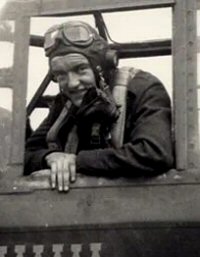  Flt Lt Don Briggs DFM Our estimated value of this signature : £45 Died : 2018 | Flt Lt Don Briggs DFM Don Briggs spent two years at RAF Halton qualifying as an engine fitter before serving on RAF flying units until he volunteered in December 1943 for the new aircrew trade of Flight Engineer. After a period of training he joined No.156 Squadron equipped with the Lancaster. The unit was part of Bomber Command's Pathfinder Force. The flight engineer was the pilot's mate who managed the engines, fuel systems and the ancillary equipment. He teamed up with Flying Officer Bill Neale and they were to complete sixty-two bombing operations together. Their first sortie was on June 11th, 1944 when Bomber Command was attacking targets in support of the Allied landings in Normandy. Railway marshalling yards, supply dumps and construction sites for the V-1 flying bombs and storage sites for the V-2 rocket were their primary targets. By late August, Bomber Command resumed its campaign against the industrial cities in Germany and Briggs attacked Russelheim, Kiel, Stettin and cities in the Ruhr. His crew marked targets with flares to allow the main force to mount accurate attacks. After the war, Briggs flew long-range transport sorties in York aircraft (based on the Lancaster) before spending three years at the Empire Test Pilot's School at Farnborough. In July 1951 he started training as a pilot and, after converting to jets, he joined the newly-formed No.10 Squadron to fly the twin-engine Canberra bomber. In August 1955 he trained on the first of the RAF's V-bombers, the Valiant. He joined the first squadron, No.138, and a year later he transferred to No.49 Squadron, which was being formed for the task of conducting the nuclear weapons trials in the Pacific. Operation Grapple was mounted in 1957 to test Britain's first thermonuclear megaton weapon, the Hydrogen Bomb. The site chosen for the test was Malden Island 400 miles south of Christmas Island in the South Pacific. Briggs was the second pilot in the crew of Squadron Leader Arthur Steele. They flew their Valiant bomber to the newly constructed airfield on March 18, 1957 and began a period of intensive training. On May 15th, No.49 Sqn's commanding officer, Wing Commander Ken Hubbard, dropped the first weapon successfully. For the second drop on May 31st, Steele, Briggs and their crew flew the reserve aircraft and for the third and final test, they were tasked for the sortie. On June 19th, they took off and climbed to 45,000 feet, and carried out a practice run over the target before clearance to drop the bomb was given. Fifty seconds after release, the bomb exploded at the pre-determined height of 8,000 feet. Steele and Briggs had erected the anti-flash screens in the cockpit of their aircraft before making a precisely executed turn away from the explosion and before the shock wave was felt in the aircraft. The drop was completely successful. A few days after their flight, the squadron returned to Wittering. By the end of the year, Briggs had completed a Valiant captain's course and he transferred to No.138 Squadron where he spent the next three years. This was followed by almost three years as a pilot instructor on Valiants and it was during this period he also converted to the Victor bomber. In 1964 he trained as a flying instructor and spent three years instructing trainee pilots at an RAF flying school near Newark. In January 1967 he converted to the third of the RAF's V-bombers, the Vulcan, and was to spend the next five years as an instructor on the iconic delta-wing aircraft before joining No 9 Squadron shortly before it moved to its new base in Cyprus. After 34 years service, he retired at the end of 1973. There were 88 Vulcan 2s produced and Briggs flew 57 of them during his seven years with the force. He spent 15 years at the Oxford Air Training School training pupils to become commercial airline pilots. He retired aged 65 when he joined the RAF Microlight Association at Halton where his RAF career had begun and where he became the chief flying instructor. Finally, at the age of 84 he decided to finish his flying career having flown 71 different types of aircraft and gliders. He died in July 2018. |
Squadron Leader Dick Haven Our estimated value of this signature : £25 | Squadron Leader Dick Haven Joining the RAF in 1951 he was a pilot on Canberras, Valiants and Vulcan B.2s serving with 27, 12, 101, 44, 9 and 35 Squadrons including time as Chief Flying Instructor. |
  Group Captain Ken Hubbard, OBE DFC AFC Our estimated value of this signature : £30 Died : 2004 | Group Captain Ken Hubbard, OBE DFC AFC On 15 May 1957 Valiant XD818 captained by Wg Cdr Ken Hubbard, OC No 49 Sqn, dropped Britain's first H-bomb at Christmas Island in the South Pacific. Awarded the DFC during WWII whilst flying Wellington bombers in Italy with No 70 Sqn, he later flew Liberators and commanded No 104 Sqn with Lancasters. He commanded RAF Scampton during the height of the V-Force build-up with the Blue Steel equipped Vulcan B2s and has flown numerous types including the Victor and Vulcan. He died 21st January 2004. A Clipped Signature is Available |
Squadron Leader Malcolm Laidlay DFC Our estimated value of this signature : £30 | Squadron Leader Malcolm Laidlay DFC Malcolm Laidlay joined the RAF in 1942 and trained in Canada. After volunteering to fly gliders, he was posted to India in 1944 and flew Hadrians; subsequently, during the Burma campaign, he flew Sentinel L.5s and also took part in supply-dropping from Dakotas. Demobilized in 1947, he rejoined the RAF in 1949. In 1950 he was posted to Hong Kong and detached to Japan, flying Sunderland flying boats on operations around Korea; later, his squadron was re-located to Singapore where he took part in operations over Malaysia. After flying Canberras as a flight commander in Cyprus in 1957/58, he then participated in the 'Intensive Flying Trials' for the MkII Vulcan at RAF Waddington. In 1961 he joined 101 Vulcan Squadron as a flight commander and, after participating in a ten-day, 24hr airborne alert flight-refuelled trial, he took part (in 1963) in 'Exercise Walkabout', the 18hr non-stop flight-refuelled flight of three Vulcan's from RAF Waddington to Perth (Australia). After leaving the RAF in 1976, he joined the Civil Service and retired in 1989. |
Air Vice-Marshal Eric Macey Our estimated value of this signature : £15 | Air Vice-Marshal Eric Macey Eric Macey joined the RAF in 1954 and, after graduating as a pilot, flew Hunter fighters with 263 and 1 Sqns. He next joined the rapidly-expanding V-Force, initially flying Valiants of 214 Sqn on in-flight refuelling trials, and completed the first non-stop flight to Singapore. Then followed a Vulcan captaincy with 101 Sqn on which, over the next several years, he served as Sqn Pilot, Training Officer and Sqn Cdr (and which formed part of his Wing when he was OC Waddington). Between times, he was Chief Instructor of the Vulcan OCU at Scampton and, for a short time, also Stn Cdr there. Posted to Germany in 1979, he flew the Wessex, Puma, Jaguar, Phantom and Harrier and later served as AOC (of the University Air Squadrons) and Commandant of the RAF College Cranwell where he re-qualified on the Jet Provost. His final tour as Director-General Training added another 15 aircraft types bringing his total flying hours to about 3400 (1900 on the Vulcan) and total types flown to 60. |
Squadron Leader Andrew Marson Our estimated value of this signature : £20 | Squadron Leader Andrew Marson Squadron Leader Andrew Marson joined the RAF in 1970. Served as a Navigator/Plotter on Vulcans from 1971 - 82, with an intervening 3-year period as Navigator Instructor. He amassed 2000 hours overall on the Vulcan. He transferred to Tornado GRI in 1983 and completed 1600 hours on the type, finishing as an instructor on the Tri -- National OCU in 1997. For the last 4 years he has served as QNI teaching low-level navigation, and is currently on his third season as navigator on the Lancaster and Dakota of The Battle of Britain Memorial Flight. He has a total of 5700 flying hours. On 18th October 2007, he flew in the historic flight of the first Vulcan to fly in 14 years. |
Squadron Leader Barry Masefield Our estimated value of this signature : £20 | Squadron Leader Barry Masefield Squadron Leader Barry Masefield (Retd) joined the Royal Air Force in 1959 as a Radar Technician Apprentice. After graduation he refrained as aircrew in 1963 and subsequently flew in Shackleton and Nimrod aircraft in Maritime Command until 1979. Commissioned in 1979 he was posted onto the Vulcan fleet where he served until the demise ofthe aircraft as a bomber in 1983. During this time he saw active service during the Falklands conflict as a crew member oil the Black Buck bombing sorties. In 1983 he was posted to the Victor tanker force again seeing active service during the Gulf war. In 1986 he was invited to join the Vulcan Display Fight and flew on the team until 1993 when the aircraft was sold into private ownership. Retiring from the Royal Air Force in 1994 he now runs his own business in Norfolk. On 18th October 2007, he flew in the historic flight of the first Vulcan to fly in 14 years. |
Air Commodore Alun Morgan Our estimated value of this signature : £15 | Air Commodore Alun Morgan Air Commodore Alun Morgan was called up for National Service in 1950, and was then selected for RAF College Cranwell, (1951-53). His first tour was on 81 Sqn in Singapore flying Meteor PR 10s and Pembroke's. He joined the V-Force in 1960, first as a co-pilot then as a captain on Vulcan Is and 1As. From 1967- 67 he was FIt Cdr on 83 Sqn at Scampton flying the Blue Steel Vulcan 11. A short tour in 1974 as OC the Vulcan Standardisation Sqn was followed by a tour at Akrotiri, Cyprus as OC Vulcan Bomber Wing. A desk tour at HQ 1 Group followed as Vulcan Operations, but he still managed two of the USAF Bombing Competitions in the USA, leading the Vulcan High Noon and Giant Voice detachments in 1975 and 1977. From 1978-81 he was the NATO Targeting Representative at Headquarters SAC at Offutt USA, and retired in 1986 as the UK National Military Representative at SHAPE, Belgium. He flew his last Vulcan sortie on 18 Nov 1982. |
Mike Pearson Our estimated value of this signature : £15 | Mike Pearson Former Vulcan AEO |
Wing Commander Michael M Pollitt Our estimated value of this signature : £15 | Wing Commander Michael M Pollitt Wing Commander Michael M Pollitt joined the RAF in 1974. It is with regret that he joined the Vulcan Force so late in the aircrafts life. As a young co-pilot he was trained by David Thomas and later completed his captain s course with Paul Milliken, finally being examined by Joe L Estrange; so enthusiastic display pilots always influenced his time on Vulcans. After leaving the Vulcan in 1981 having logged 780 hours, he became a qualified flying instructor on Jet Provost (JP), first at RAF College Cranwell for 4 years. Later he commanded the Central Flying School (CFS) JP and Tucano Sqn at Scampton and eventually returned to Scampton as Chief Flying Instructor of CFS in the mid-90s. His last command flying tour was as CC Flying at RAF Cranwell where he instructed on the Bulldog and Jetstream. He is currently CFSO at HQ STC. |
Marshall of the Royal Air Force, The Lord Craig of Radley, GCB OBE Our estimated value of this signature : £15 | Marshall of the Royal Air Force, The Lord Craig of Radley, GCB OBE Lord Craig entered the RAF in 1951and was a QFI and Hunter fighter pilot before joining No 35 Sqn in 1962 to fly the then brand new Vulcan B2. He commanded No 35 Sqn until 1965 and flew numerous other types during his distinguished career. He was Commander-in-Chief RAF Strike Command, Chief of the Air Staff, Chief of the Defence Staff and in 1991 was appointed a Life Peer. His affection for the Vulcan has remained undiminished and he has the unique distinction of having flown the Vulcan in every rank in the RAF from Squadron Leader to Marshall of the Royal Air Force. |
Squadron Leader John Reeve Our estimated value of this signature : £25 | Squadron Leader John Reeve Commanded the lead aircraft of Operation Black Buck 1, but was forced to return to base before reaching his objective when his aircraft suffered a pressurisation failure. Several days later he flew a near identical mission as Operation Black Buck 2 successfully targeted an Argentine airstrip at Port Stanley. He served with 9, 10 and 50 Squadrons. |
Sqn Ldr Dick Russell AFC Our estimated value of this signature : £10 | Sqn Ldr Dick Russell AFC Victor pilot 1962 - 1991. AAR pilot on Martin Withers Vulcan XM607, Black Buck One. |
Flight Lieutenant Rusty Russell Our estimated value of this signature : £35 | Flight Lieutenant Rusty Russell Serving with 31 Sqn on Photo Reconnaissance on Canberras he later moved to 230 OCU and 35 Sqn flying Vulcan B.2s and was a Captain at the height of the Cold War. |
Flight Lieuteant Martin Sharman Our estimated value of this signature : £10 | Flight Lieuteant Martin Sharman Martin Sharman was awarded an RAF Flying Scholarship and subsequently joined the RAF in 1970. Following flying training he flew operational tours on the Vulcan and Victor. In 1980 he became a qualified instructor and instrument rating examiner on the Jet Provost. After 18 months he was selected to fly the Hawk as an instructor and instrument rating examiner. He then moved to No 3(F) SQN flying the Harrier in RAF Germany, becoming the Squadrons Qualified Flying Instructor and Instrument Rating Examiner and flying operationally in Germany, Sardinia and Belize. He was then posted to the Harrier Operational Conversion Unit (233 OCU) as an Instructor. After completing his RAF career he joined British Airways and also displayed the Duxford based Catalina, he is currently a Captain on the Boeing 747-400. |
 Wing Commander Richard G B Summers Our estimated value of this signature : £50 Died : 2017 | Wing Commander Richard G B Summers Richard G B Summers was a navigator on Blenheims with 219 squadron at the age of 18. He fought throughout the Battle of Britain and after the cmapaign served in West Africa and Gibraltar. After the war he served on V-Bombers and received an OBE for gallant and distinguished service during the Mau Mau emergency in Kenya during the 1950s. Richard Gordon Battensby Summers was born on 18th October 1921 in Beverley, East Yorkshire and was educated at Ermysteds Grammar School at Skipton. In April 1939 Richard joined The Royal Air Force as a direct-entry Airman u/t Observer. On 26th June he went to the Bristol Flying School, Yatesbury for basic navigation training, moved to B&GS Warmwell on 30th September and then completed his training with an astro-navigation course at St. Athan in November. On 4th December 1939 Summers was posted to Church Fenton to join 242 Squadron, as a navigator at the age of 18. The squadron was equipped with Blenheims. He went to 219 Squadron at Catterick on 16th April 1940. Summers left the squadron on 28th September to go to the Ferry Pool and Defence Flight Takoradi, in West Africa. In early July 1941 Summers aircraft made a wheels-up forced-landing on a beach in Liberia. To escape internment he walked 48 miles in bare feet before putting out to sea and being picked up by a British merchantman on the 5th. For this incident, Summers was awarded the AFM (gazetted 1st January 1942). Commissioned in May 1942, he was posted back to the UK where he was appointed Bombing Leader on Hudsons at No. 1 (Coastal) OTU Silloth on 12th October. Summers was posted to 48 Squadron at Gibraltar on 22nd May 1943 as Bombing Leader. He returned to the UK and on 1st March 1944 became Bombing Leader at No. 1 APC Aldergrove. Summers went on a Specialist Armament Course on 19th April, firstly at 2 School of Technical Training Cosford and from late June at the Empire Air Armament School at Manby. He was appointed Armament Staff Officer at HQ 15 Group Liverpool on 17th November 1944 and he moved to RAF Lossiemouth on 7th August 1945 as Station Armament Officer. Staying in the postwar RAF, in October 1946 Summers was posted to the staff of ACAS (Training) at the Air Ministry as an Acting Squadron Leader. Pre-selected for the RAF Staff College in 1949, he graduated at the end of 1950 and was appointed Command Weapons Officer at HQ Bomber Command. From August 1953 until January 1956 Summers was Deputy Station Commander at RAF East Leigh, Kenya during the Mau-Mau Emergency. He was made an OBE (gazetted 6th March 1956) for 'gallant and distinguished services in Kenya'. Back in the UK, Summers returned to flying and commanded 109 Squadron at Binbrook. In December 1956 he was promoted to Acting Wing Commander and took command of No. 2 Wing RAF Cosford. In July 1959 he did a RAF Flying College Course at RAF Manby. In January/March 1960 Summers did a conversion course on Vulcans and was then appointed Wing Commander Operations at RAF Finningley, a Vulcan station. In December 1962 he was posted to the staff of SHAPE in Europe, for 'nuclear activities'. He returned to the UK in December 1966 and became a staff officer in the Department of the Chief of Defence Staff. Summers retired from the RAF on 18th October 1968 as a Wing Commander. He died on 7th May 2017. |
Wing Commander Adrian Sumner Our estimated value of this signature : £10 | Wing Commander Adrian Sumner Wing Commander Adrian Sumner joined the RAF in 1966. He first flew the Vulcan as a Co-pilot in Cyprus on IX Squadron in 1970; this was followed by a Captain's tour on 44 Sqn at RAF Waddington. After a brief sojourn at Central Flying School where he became a Qualified Flying Instructor (QFI) on the Bulldog, Adrian returned to RAF Waddington as a Vulcan Squadron Flight Commander and Q171 on 50 Squadron, where he displayed the aircraft during the 1980 Season. Adrian's final association with the Vulcan was as Officer Commanding the RAF Detachment at Offutt Air Force Base, Omaha, Nebraska, USA, where Vulcan's frequently detached for low level training. The rest of Adrian's Service career was mainly associated with Flying Training, both at Support Command Headquarters and as Officer Commanding Operations and Pilot Training Wing at RAF Finningley, where he flew the Dominie, and was Chief Instructor on the Jetstream. His final tour in the RAF was with NATO at SHAPE Headquarters, Mons, Belgium. After leaving the RAF in 1997, Adrian flew the BAe146 for 2 airlines, and he now works as a contract pilot and QFI flying Royal Navy Jetstreams at RNAS Culdrose. He is also a qualified Balloon Pilot. During his flying career Adrian has currently amassed 8500 flying hours, of which 2300 were on the Vulcan. |
Squadron Leader David Thomas Our estimated value of this signature : £15 | Squadron Leader David Thomas Squadron Leader David Thomas joined the Royal Air Force in 1962. His Service career has been evenly split between being a qualified flying instructor and the Vulcan. He has completed 5 tours of duty on the Vulcan, 3 of them as an instructor, and he first displayed the aircraft in 1973. In addition to the Vulcan, he has instructed on the Jet Provost, Tucano, Jetstream, DC3 and Lancaster. Squadron Leader Thomas currently serves at Royal Air Force College Cranwelland on The Battle of Britain Memorial Flight. |
Squadron Leader Martin Withers, DFC Our estimated value of this signature : £35 | Squadron Leader Martin Withers, DFC Joined the RAF in 1968. In 1971, he was posted to 44 Sqn at RAF Waddington as a Vulcan co-pilot, remaining there on 50 Sqn as a captain until 1976. After 3 years as a Jet Provost QFI at RAF Linton-on-Ouse, he returned to RAF Scampton as a QFI on the Vulcan Operational Conversion Unit. When the OCU closed, he moved again to RAF Waddington as Pilot Leader and Squadron QFI on 101 Sqn. The following year, during the Falklands War, he and his crew were selected to fly 2 of the 5 Black Buck missions. Martin Withers was the captain on XM607, the first Vulcan to bomb in anger during the Falklands War. On 1 May 1982, just one month after the Argentine invasion, Withers and his crew completed Black Buck One, the longest distance bombing mission in history until that time, and one of the most significant, attacking Port Stanley airfield during an 8,000 mile, 16 hour flight from their base at Ascension Island. for which he was awarded the DFC, with the other crewmembers being Mentioned in Dispatches. With the final demise of the Vulcan squadrons, he returned to No1 FTS at RAF Linton-on-Ouse, where he served as squadron commander and Deputy Chief Instructor, until leaving the RAF in 1991, having flown over 5500 hours (2000 on Vulcans). Since then he has accumulated a further 9500 hours on a variety of airliners, and is now flying the Boeing 767. |
| Vulcan Squadron details |
No.101 Sqn RAF Country : UK Known Codes : , SR, LU, MW, | No.101 Sqn RAF Mens agitat molem - Mind over matter |
No.27 Sqn RAF Country : UK Known Codes : , EG, PT, US, | No.27 Sqn RAF Quam celerrime ad astra - With all speed to the stars |
No.35 Sqn RAF Country : UK Disbanded 28th February 1982 Known Codes : , TL, WT, | No.35 Sqn RAF Madras Presidency Uno animo agimus - We act with one accord |
No.44 Sqn RAF Country : UK Disbanded 21st December 1982 Known Codes : , KM, JW, | No.44 Sqn RAF Rhodesia Fulmina regis justa - The Kings thunderbolts are righteous |
No.50 Sqn RAF Country : UK Disbanded 31st March 1984 Known Codes : , VN, ZN, QX, | No.50 Sqn RAF From defence to attack |
No.83 Sqn RAF Country : UK Disbanded 31st August 1969 Known Codes : , OL, QQ, | No.83 Sqn RAF Strike to defend |
No.86 Sqn RAF Country : UK Disbanded 25th April 1946 Known Codes : , BX, XQ, | No.86 Sqn RAF Ad libertates volamus - We fly to freedom |
No.9 Sqn RAF Country : UK Known Codes : , WS, KA, | No.9 Sqn RAF Per noctum volamus - Through the night we gly |
|
Contact Details |
Sign Up To Our Newsletter!
This website is owned by Cranston Fine Arts. Torwood House, Torwoodhill Road, Rhu, Helensburgh, Scotland, G848LE Contact: Tel: (+44) (0) 1436 820269. Email: cranstonorders -at- outlook.com
|


