|
|
|
|
|
|
|
|
|
Cranston Fine Arts  Aviation Art and Artists World War Two Aircraft More Aircraft Initials K to M Aviation Art and Artists World War Two Aircraft More Aircraft Initials K to M  Meteor Meteor |
[UP] - Kate - Ki44 - Ki64 Hein - Kittyhawk - La-7 - Lagg-5 - Lysander - Macchi 200 - Macchi C.202 - Manchester - Marauder - Maryland - Master - Mavis - MB210 - Me110 - Me163 - Me410 - Meteor - MiG3 - Mistel - Mitchell - Mohawk - Mustang (RAF) |
| Meteor Aviation Prints |
|
|
|
|
| Text for the above items : |
Meteoric Victory by Tom Marchant. (PC) 616 (South Yorkshire) Squadron Gloster Meteor Mk.1 EE218. Flown by Warrant Officer Sid Woodacre over Kent, August 1944. No.616 Sqn was chosen as the first unit to equip with the Gloster Meteor jet fighter - thus becoming the first RAF Jet Squadron. |
222 Sqn Meteors over the Forth Bridge by Ivan Berryman. Three Gloster Meteor F.Mk4s of 222 'Natal' Squadron are depicted on a training sortie over the Forth Bridge in the early 1950s. |
Gloster Meteor Mk F.1 EE227 YQ-Y. by M A Kinnear. Aircraft History: EE227 was 13th out of a batch of 15 F.1 aircraft delivered to 616 Squadron during 1944. Following service with 616, the aircraft was transferred to the Royal Aircraft Establishment and then to Rolls Royce, where it became the first aircraft to be fitted with turboprops (Rolls Royce Trents) It then went to the Aeroplane & Armament Experimental Establishment before returning to Rolls Royce and finally going back to the Royal Aircraft Establishment. After a distinguished career EE227 was struck off charge 27th June 1949. Squadron Leader Dennis Barry, Croix de Guerre Avec Palme: Born on 26th August 1921 in London Dennis Barry joined the Royal Air Force in October 1940. In 1941, following pilot training, he was posted to 504 County of Nottingham Squadron and flew both Hurricanes and Spitfires. In August 1943 he was sent on a flight leaders course at Charmy Down and posted to Ibsley as a Flight Commander in 616 South Yorkshire Squadron. In June 1944 with other 616 pilots he was sent to Farnborough for a conversion course to fly the new Gloster Meteor. During this period, USAAF daylight bombers were under attack by German Me262 jet fighters so, together with three other pilots, Dennis was attached to Debden, where they staed mock attacks against 180 bombers and fighters to help the Americans gauge the speed of jet aircraft. In July 1944 616 moved to RAF Manston and was involved with the interception of German V-1 flying bombs and on 29th August he flew EE227 on an operational sortie. In February 1945, Dennis took four meteors Mk III to Brussels/ Melsbroeck. To enable Allied ground forces to distinguish the Meteors from the German jet fighters, the aircraft were painted all white. Prior to the end of hostilities, as the Allies moved through Europe, 616 were involved with numerous attacks on airfields, road and rail traffic. They moved to Lubeck at the end of the war, from where Dennis Barry led the Squadron on a victory fly past at the Copenhagen air show. In May 1946 he was demobilised from the RAF and re-joined 616 Squadron Royal Auxiliary Air Force at RAF Finningley in March 1948, remaining with the squadron until July 1951. During this period on 8th January 1950 he probably became the only pilot to successfully bale out of a Meteor without the aid of an ejector seat. |
Meteors Over Castle Howard by Michael Rondot. No 72 Squadron Meteor F8 and NF14 fighters over Castle Howard, North Yorkshire. Initially based at RAF North Weald with Meteor F8s, No72 moved to Church Fenton in 1953 where, in 1956, it became an all weather squadron with meteor NF12s and 14s Castle Howard, set in more than 1,000 acres of Yorkshires finest parkland, was the magnificent location for the televison filming of Brideshead Revisited. |
| Top Aces for : Meteor | ||
| A list of all Aces from our database who are known to have flown this aircraft. A profile page is available by clicking the pilots name. | ||
| Name | Victories | Info |
| Tony Gaze | 12.50 | The signature of Tony Gaze features on some of our artwork - click here to see what is available. |
| Meteor Pilot and aircrew signature details |
  Squadron Leader Robert Beardsley DFC Our estimated value of this signature : £60 Died : 2003 | Squadron Leader Robert Beardsley DFC An RAFVR pilot, joining 610 Squadron at Biggin Hill at the peak of the Battle of Britain, in August 1940, Beardsley had three confirmed victories before the end of the Battle. Posted to 41 Squadron, Beardsley spent months with the Tangmere Wing in 1941, remembering Bader for his determination to operate the wing on every possible occasion and his calmness of the radio which compared favourably with some other Wing Leaders. Commissioned in June 1941, Beardsley remained with 41 Squadron until November. After a period instructing, he went to North Africa with 93 Squadron, covering the Allied invasion. After D-Day he went to France with 222 Squadron on Spitfires. Beardsley left the RAF in 1945 but rejoined in 1949, flying Meteors with 74 Squadron. He died on 17th October 2003. A Clipped Signature is Available |
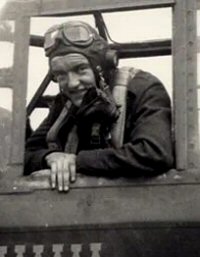  Flt Lt Don Briggs DFM Our estimated value of this signature : £45 Died : 2018 | Flt Lt Don Briggs DFM Don Briggs spent two years at RAF Halton qualifying as an engine fitter before serving on RAF flying units until he volunteered in December 1943 for the new aircrew trade of Flight Engineer. After a period of training he joined No.156 Squadron equipped with the Lancaster. The unit was part of Bomber Command's Pathfinder Force. The flight engineer was the pilot's mate who managed the engines, fuel systems and the ancillary equipment. He teamed up with Flying Officer Bill Neale and they were to complete sixty-two bombing operations together. Their first sortie was on June 11th, 1944 when Bomber Command was attacking targets in support of the Allied landings in Normandy. Railway marshalling yards, supply dumps and construction sites for the V-1 flying bombs and storage sites for the V-2 rocket were their primary targets. By late August, Bomber Command resumed its campaign against the industrial cities in Germany and Briggs attacked Russelheim, Kiel, Stettin and cities in the Ruhr. His crew marked targets with flares to allow the main force to mount accurate attacks. After the war, Briggs flew long-range transport sorties in York aircraft (based on the Lancaster) before spending three years at the Empire Test Pilot's School at Farnborough. In July 1951 he started training as a pilot and, after converting to jets, he joined the newly-formed No.10 Squadron to fly the twin-engine Canberra bomber. In August 1955 he trained on the first of the RAF's V-bombers, the Valiant. He joined the first squadron, No.138, and a year later he transferred to No.49 Squadron, which was being formed for the task of conducting the nuclear weapons trials in the Pacific. Operation Grapple was mounted in 1957 to test Britain's first thermonuclear megaton weapon, the Hydrogen Bomb. The site chosen for the test was Malden Island 400 miles south of Christmas Island in the South Pacific. Briggs was the second pilot in the crew of Squadron Leader Arthur Steele. They flew their Valiant bomber to the newly constructed airfield on March 18, 1957 and began a period of intensive training. On May 15th, No.49 Sqn's commanding officer, Wing Commander Ken Hubbard, dropped the first weapon successfully. For the second drop on May 31st, Steele, Briggs and their crew flew the reserve aircraft and for the third and final test, they were tasked for the sortie. On June 19th, they took off and climbed to 45,000 feet, and carried out a practice run over the target before clearance to drop the bomb was given. Fifty seconds after release, the bomb exploded at the pre-determined height of 8,000 feet. Steele and Briggs had erected the anti-flash screens in the cockpit of their aircraft before making a precisely executed turn away from the explosion and before the shock wave was felt in the aircraft. The drop was completely successful. A few days after their flight, the squadron returned to Wittering. By the end of the year, Briggs had completed a Valiant captain's course and he transferred to No.138 Squadron where he spent the next three years. This was followed by almost three years as a pilot instructor on Valiants and it was during this period he also converted to the Victor bomber. In 1964 he trained as a flying instructor and spent three years instructing trainee pilots at an RAF flying school near Newark. In January 1967 he converted to the third of the RAF's V-bombers, the Vulcan, and was to spend the next five years as an instructor on the iconic delta-wing aircraft before joining No 9 Squadron shortly before it moved to its new base in Cyprus. After 34 years service, he retired at the end of 1973. There were 88 Vulcan 2s produced and Briggs flew 57 of them during his seven years with the force. He spent 15 years at the Oxford Air Training School training pupils to become commercial airline pilots. He retired aged 65 when he joined the RAF Microlight Association at Halton where his RAF career had begun and where he became the chief flying instructor. Finally, at the age of 84 he decided to finish his flying career having flown 71 different types of aircraft and gliders. He died in July 2018. |
  Squadron Leader J R Cassels DFC* Our estimated value of this signature : £50 Died : 2008 | Squadron Leader J R Cassels DFC* Nos 14, 29, 98, 106, 125, 139 (Jamaica), and 162 Squadrons. April, 1941 - Enlisted in Edinburgh and accepted for pilot training. April 1941 to April 1942 - No 4 I.TW. Paignton, No 9 E.F.T.S. Ansty, Coventry, No 12 S.F.T.S. Spittlegate, Grantham, (22/01/1941 Received wings as Sgt. Pilot) No 14 O.T.U. Cottesmore flying Hampdens. April 1942 - No 106 Squadron, RAF Coningsby commanded by Wing Commander Guy Gibson, DSO, DFC. I was second pilot on Manchesters and did 4 operational sorties. Converted to Lancasters as first pilot and did 26 operational sorties, including Le Creusot raid on 17 October '42, between June and December 1942. Final sortie on 8 December 1942. December 1942 to March 1943 - Survived several attempts to turn me into a flying instructor. March 1943 - No 1485 Conversion Unit ie. No 5 Group Gunnery Flight training air gunners. October- November 1943 - No 1655 Mosquito Training Unit. November 1943 to June 1944 - No 8 Group, Pathfinder Force - No 139 (Jamaica) Squadron. H2S Mosquito Marking Squadron, RAF Wyton and Upwood. Completed 44 operational sorties before ending up interned in Sweden. 12 June 1944 to 20th September 1944 interned at Falun, Sweden. October 1944 to June 1945 - rejoined No 139 (Jamaica) Squadron at RAF Upwood after an air crew medical where a Group Captain M.0. told me that, as I was warm and my goolies didn't drop oftwhen I coughed, I was back to war. Completed 46 operational sorties before V.E. day. Total sorties on 139 squadron 90. June 1945 to July 1946 - Transport Command, No 162 Squadron flying Mosquitos (ALDS ic, Air Delivery Letter Service) RAF Blackbush. August 1946 to February 1950 - No's 14 and 98 Squadrons, No 139 Wing, RAFO, at RAF Wahn and Celle. February 1950 to August 1950 - abortive EIPS Course. August 1950 to October 1951 - Air Traffic Controllers Course and ATC Officer at RAFWest Raynham. November 1951 to October 1952 - No 29 Night Fighter Squadron, RAF Tangmere. Meteor NFXI. October 1952 to April 1953 - Air Ministry and All Weather Wing, RAF West Raynliam. April 1953 to November 1955 - No 12 Group Headquarters, Group Accidents Officer. November 1955 to April 1957 - No 125 Night Fighter squadron, RAF Stradishall, Meteor NFM and Venom NF. April 1957 to August 1959 - Eastern Sector Operations Centre, Recovery Executive. RAF Neatishead. October 1959 to July 1962 - Hg FEAF, Joint Intelligence Staff. Commissioner Generals Office and RAF Changi. July 1962 to March 1965 - No 3 Group Hg, OC HQ Unit and RAF Liaison Officer to USAF Mildenhall. Retired from RAF as Squadron Leader March 1965. Employed by Airwork Services Ltd, as pilot. March 1965. March 1965 to August 1970 - No 3 (Civilian Anti Aircraft Unit) Exeter Airport. Vampire TX1 and Meteor T=. September 1970 to April 1977 - FRADU ( Fleet Requirements Air Defence Unit) RNAS Yeovilton. Hunter GAII and Mk 8. September 1977. Aged 55. RN age limit for fast jet flying. September 1970. Commissioned in RA17VR M. September 1970 to May 1982 - No 4 AEF, Exeter Airport, Chipmunk. Retired from RAFVRM aged 60, May 1982. Total Flying Hours - 11,300 Ins. Sadly passed away 19th December 2008. |
  Flight Lieutenant J Castagnola DSO DFC Our estimated value of this signature : £50 | Flight Lieutenant J Castagnola DSO DFC Joining the RAF in 1941 he graduated as a pilot after completing his training in America. Returning to England he joined 51 Squadron in early 1943 flying from RAF Snaith. Born in 1922 in Islington, Cass as he was known to all, enlisted in 1941 and trained in North America. Returning to England he crewed up at OTU and after completing their HCU course the crew, captained by a newly commissioned Cass, joined 57 Squadron in December 1943 for their first tour of operations. They were to be blooded with a series of attacks against Berlin, completing three operations against this target in four nights during January 1944. In all Cass was to visit the Big City eight times during his tour. During the Nuremberg operation of 30/31 March 1944 his Lancaster's rear turret guns froze up but a burst from the mid-upper caused an approaching Me 210 to break away. On return his gunners also claimed one Ju 88 destroyed and another damaged. On 5 April 1944 the crew were one of six attached along with their aircraft to the Squadron at Woodhall Spa, to provide an H2S capability. After an initial trip as passenger with Fg Off Fearn for the attack against the Luftwaffe Depot at St Cyr on 10 April to observe the Squadron's methods, Cass found himself non-operational for a month as the Squadron trained intensively for Operation Taxable. Teamed up with Nick Knilans he completed the D-Day deception operation and three nights later he was operating against the Saumur railway tunnel. Unable to carry Tallboy, his H2S equipped aircraft was loaded with thousand pounders to be aimed at the adjacent railway bridge across the Loire. His next three trips were as an additional member of Knilans'crew. By July Cass had been posted back to 57 Sqn at East Kirkby and would complete his first tour with them.He was not away from Woodhall for long, arriving back on the Squadron on 15 August to start his second tour. This was to be much more satisfying. With his trademark 'operationally battered' cap, Cass and his crew soon proved themselves a popular and valuable asset to the Squadron. Starting with a trip to Brest on 27 August and now carrying Tallboy they were part of the high level force for the attack on the Kembs Dam, and took part in all three operations against Tirpitz, claiming a direct hit in the middle of the superstructure during the final attack. During the attack on Bergen on 12 January 1945 his aircraft came under fighter attack and Cass dived to within the range of the flak batteries; the fighter deigned to follow. Heading out to sea he spotted Ian Ross' aircraft at low level, on fire and under fighter attack. With his bomb aimer manning the front turret and without thinking of his own safety Cass dived to offer whatever assistance he could. He was successful in driving the fighter away, but Ross was forced to ditch, while Cass circled overhead dropping an emergency radio wrapped in Mae Wests when it was seen that Ross' dinghy had not deployed. Climbing to 500 feet they signalled the ditched Lancaster's position and remained in the area, seeking cloud cover when a German fighter came too close. With fuel running low he was eventually forced to leave the stricken crew to their fate. The remaining months saw a new routine develop, railway viaducts replacing U-boat pens as targets during February and March, before returning to April's target list, along with other naval targets during the last month of hostilities. After a total of 62 operations Cass' war came to an end on 19 April 1945 with an attack on the island fortress of Heligoland. The latter part of 1945 saw him as the Squadron's Inspector Pilot as they worked up for 'Tiger Force' – the RAF's projected contribution to the Pacific War but, with the squadron prepared to go overseas to India, in January 1946 he was posted to RAF Snaith, to conduct aircrew training. Having been awarded the DFC for his time on 57 Sqn, Cass was to receive a bar in March 1945 for his service with 617 and a further award of the DSO in October 1945.Awarded a permanent commission in 1947, he was posted to the Central Flying Establishment, RAF West Raynham, flying Mosquitos, Vampires and Meteors, before transferring to the Empire Test Pilots School, RAE Farnborough, in March 1950. After qualifying as a test pilot his experience was put to good use for four years at the Aeroplane and Armament Experimental Establishment, Boscombe Down. Cass transferred to fighters in April 1954 and served in the Middle East and Germany before becoming Officer Commanding No. 41 Sqn, Biggin Hill, flying the Hunter F 5. In keeping with a number of pilots following their fighter tour, at the beginning of 1958 he was sent on a radar control course prior to being posted to Neatishead radar station, Norfolk, as Control Executive. After a final tour as a Staff Officer with HQ No. 13 Group, at Ouston, he left the RAF in November 1961 as a Squadron Leader, joining British Airways as a captain on Comets and Tridents until his retirement in 1980. We have learned that James Castagnola has died, but have no information as to when. |
Squadron Leader A M Charlesworth DFC Our estimated value of this signature : £25 | Squadron Leader A M Charlesworth DFC Joined the RAF straight from school just before his 18th birthday in the summer of 1940 with the sole purpose of becoming a fighter pilot. After training, at age just 18, he was posted to RAF Ibsley, Hampshire, to 118 Sqdn, flying Spitfire 2Bs. Here he took part in his first scramble. After a month he was posted where the action was thickest, to a 11 Group Station, RAF Kenley, where he joined 602 Sqdn. His Squadron Commander was Al Deere, by this time a highly decorated ace; Al was 23 then and had already been shot down nine times. 602 Squadron was equipped with the more advanced Spitfire VBs which had two 20mm cannons, firing at 1200 rounds a minute, plus four very useful Browning 50mm machine guns firing at an even higher rate per minute. Al Deere was eventually posted to another squadron and Paddy Finucane took over - 'possibly the finest fighter pilot I came across', Max. Charlesworth continues, 'I remember him trying to get his 21st victory before his birthday and I often flew No. 2 to him. These were twitchy and tiring days when three sweeps a over occupied France day were the norm, to be met each time by several hundred Me 109s and Focke Wolf 190s, at our maximum range, where hectic dog fights ensued. We were normally outnumbered and a day could last from an early morning call at 3.30am to the last landing at 10.30pm in the semi-dark of the long summer of 1941. The average age of the approximately 30 pilots on the squadron was always about 19.' During this period they were scrambled to search for and attack the German battleships Scharnhorst and Gneisenau (although they did not know it at the time) which, with escorting vessels had slipped up the Channel from Brest. The weather was awful and Max flew straight across the German battle cruiser Hipper thinking it was a Royal Navy cruiser. The Hipper opened up at Max with guns blazing but he was fortunate to escape with just a hole in one wing. In April 1942 Max was posted to a secret unit called MSFU (Merchant Service Fighter Unit) where he flew Hurricanes from catapults on merchant ships attached to convoys of anything up to fifty merchant men a time. The ships were mainly bringing supplies from America and taking them to Murmansk and Archangel, the hard-pressed Soviets and Gibraltar. Max recalls this as a highly physical and uncomfortable task, apart from also being very scary. The ships were constantly attacked by U Boat packs and aircraft. When they were in range of the latter, if they launched the Hurricane they knew they would ultimately have to bail out and hope to be picked up by either a friendly escort vessel or a sunken ships lifeboat. 'The North Atlantic route to Canada, north of Iceland and down the Greenland coast at an average sped of six knots in appalling seas was not our idea of a holiday cruise', Max vividly recalls. Having survived this posting Max was then moved to 124 Sq. at West Malting, Near Maidstone, Kent. The squadron was equipped with the much more powerful Spitfire IXs. Their task here was mainly escorting USAF and RAF bombing raids into Europe. With longrange tanks fitted they were able to reach Hamburg and Ludwigshafen; later on they were able to refuel from liberated bases in France. These ops. required them to fly as Top Cover at over 30,000 feet for up to three hours, where it was so cold the pilots returned to base hardly able to climb out of their cockpits. On February 9th 1945 Max was the Senior Flight Commander on 124 Squadron during their move to Cottishall. Here they adapted the Spitfire Ks to dive-bombing. The Spitfires carried either a 500lb. bomb under the fuselage and two 250lbs. under each wing or, a 90-gallon fuel tank under the fuselage and a 250lb. bomb under each wing. Their mission was to destroy V2 sites in Holland - mainly situated in small parks near the centre of the Hague. These V2 sites were launching rockets on London in ever increasing numbers. As well as attacking the V2 sites they were to destroy railway lines used by the Germans to transport V2s into the area. These were dangerous times as the V2s sites were heavily defended by 88mm guns down to 20mm. 'The flak was horrendous and we lost many' recalls Max. As Senior Flight Commander, Max often led the squadron, though identifying targets from 12,000 feet was difficult. After the war Max was one of the first pilots to convert to the Meteor twin-engined jet, later to move on to Vampires and Canberras. His flying career was completed in June 1961 when he was posted to Warsaw, Poland as the Assistant Air Attache. He finally retired from the RAF in 1966. |
Wing Commander Hank Costain MBE Our estimated value of this signature : £10 | Wing Commander Hank Costain MBE Hank Costain was born in Horton on the Gower Coast and was educated at Christ College Brecon. He joined the RAFVR for pilot training in September 1940. He trained in the USA in Arizona at Thunderbird Field and Falcon Field, returning to the UK in 1941 to complete operational training at 53 OTU on Spitfire Mk1s. He flew with No 154 Squadron (Motor Industries Squadron) Spitfire Vbs in the Hornchurch Wing. The Squadron was withdrawn from 11 Group to prepare for the invasion of North Africa, operation Torch. He flew with the Squadron throughout the North African campaign and moved with the Squadron to Malta to prepare for the invasion of Sicily, operation Husky. After moving to Lentini East in Sicily his tour was completed and he was posted back to The Canal Zone 73 OTU Abu Sueir as an instructor. Having completed his instructors tour the Far East were calling for experienced Spitfire pilots and he found himself en route to No 615 Squadron (County of Surrey) R.Aux.A.F. in Burma. He baled out of a Spitfire MkVIII while operating with 615 Squadron and spent several months in hospital in Calcutta before being invalided home. Fit again he became an instructor at 61 OTU Keevil on Spitfires and Mustangs. The next tour was with 245 Squadron at Horsham St Faith flying Meteor 3s. This tour was cut short, as there was a call for the two Spitfire Squadrons in Japan to be reinforced. At the end of 1946 he found himself on No 11 Squadron at Miho in Japan as part of the BCAIR element of BCOF (British Commonwealth Occupation Force). Returning from Japan in 1948 he spent a period ferrying with No 20 Maintenance Unit followed be an appointment as Unit Test Pilot at No9 MU. He completed the CFS Course in 1952 and became Training Officer of No602 (City of Glasgow) Squadron R.Aux.A.F. Promoted to Squadron Leader in 1953, a tour as Chief Ground Instructor and OC Gunnery Squadron at 226 OCU was completed. When 226 OCU was disbanded he took command of No608 (NR) Squadron R.Aux.A.F. at Thornaby on Tees, flying Vampires. He completed his RAF career in Guided Weapons. A tour of Woomera evaluating the Bloodhound Mk2 SAM missile. Then CO of No 33 (SAM) Squadron at Butterworth in Malaysia followed by appointment as CO of No 25 (SAM) Squadron at North Coates and RAF Germany. |
Wing Commander R C Dick Cresswell Our estimated value of this signature : £55 Died : 2006 | Wing Commander R C Dick Cresswell Wing Commander Richard 'Dick' Cresswell, leading Australian Figher Ace. On December 2nd 1942 over Darwin, Cresswell shot down a Japanese heavy bomber. In total Cresswell logged over 450 hours flying hazardous operations as the leader of an Australian fighter squadron in two wars - WWII and Korea. He was three times Commanding Officer of 77 Squadron, his second stint was at Kamiri Airstrip on Noemfoor Island. The squadron were fying the Kittyhawk fighter. Cresswell handed over command on 23rd Secember 1944 to Squadron Leader W R C McCullough. Because of his distinguished service leading 77 Squadron he was known as 'Mr Double Seven'. He continued his service with 77 Squadron during the Korean War. Sadly Wing Commander R. C. (Dick) Cresswell DFC passed away on the 12th December 2006. |
  Jimmy Dell OBE Our estimated value of this signature : £50 Died : 2008 | Jimmy Dell OBE Jimmy Dell joined the RAF in 1942 and after the war flew F-86Es and the first radar equipped F-86D with the USAF. He was the first RAF Lightning Project Test Pilot and later became Chief Test Pilot at English Electric/BAC test flying Lightning, TSR 2 and Jaguar. One of a unique breed of aviators who have achieved great career success as a fast jet test pilot within both military and commercial environments. Probably best known for his work on the English Electric Lightning, Jimmy Dell has used his skill, courage and intimate knowledge of aerodynamics to reach the very top of a highly demanding profession. Joining the RAF in 1942, Jimmy Dell did his initial pilot training in Southern Rhodesia. By 1944 he had already become a Flying Instructor for advanced trainers. After the war Jimmy performed various training and test flying roles on aircraft such as Spitfires, Meteors, Venoms and Hunters. He also led test flight teams to the USA and France to work on aircraft such as the F-100, F-104, F-105, F-106, Mystere 4 and Mirage 3. In 1960 he joined English Electric on the Lightning development programme and was Chief Test Pilot from 1961 to 1970. Jimmy also worked on the TSR2 programme and flew 12 of the aircraft's 24 test flights, before its untimely cancellation in 1965. He worked on the French / UK Jaguar programme, and finally became Director, Flight Operations with responsibility for all Tornado test flight activities across the three participating countries. Jimmy Dell retired in 1989. Amongst his awards was the OBE for services to test flying. Sadly, Jimmy Dell died on 25th March 2008. A Clipped Signature is Available |
  Group Captain Byron Duckenfield AFC Our estimated value of this signature : £50 Died : 2010 | Group Captain Byron Duckenfield AFC Byron Duckenfield started at Flying Training School on 25th November 1935 in a Blackburn B2 at Brough. As a Sergeant, he joined No.32 Sqn at Biggin Hill on 8th August 1936 and flew Gauntlets and Hurricanes. He joined 74 Squadron at Hornchurch on 11th April 1940, flying Spitfires, and on 5th May was posted to 501 Squadron flying Hurricanes at Tangmere. On the 11th of May at Betheniville, he survived a crash in a passenger transport Bombay aircraft in an aircraft in which he was a passenger, While comin ginto land the aircraft at 200 feet the aircraft stalled and the aircrfat fell backwards just levelly out as it histhe ground. 5 of th epassengers were killed when the centre section collapsed and crushed them. Duckenfield was fortunate as he had moved position during the flight. as the two passengers sitting each side of where he was sitting had died in the crash. (it was found later that the Bombay had beeb loaded with to much weight in the aft sectiion. ) recovering in hospital in Roehampton. On 23rd July 1940, he rejoined No.501 Sqn at Middle Wallop, then moved to to Gravesend two days later, scoring his first victory, a Ju87, on the 29th of July 1940. During August and September he scored three more victories. After a spell as a test pilot from 14th September 1940, he was posted to command 66 Squadron on 20th December 1941, flying Spitfires. On 26th February 1942 he took command of 615 Squadron flying Hurricanes from Fairwood Common, taking the squadron to the Far East. In late December 1942 he was shot down in Burma and captured by the Japanese. He remained a POW until release in May 1945. After a refresher course at the Flying Training School in November 1949, he took command of No.19 Squadron flying Hornets and Meteors from Chruch Fenton. After a series of staff positions, he retired from the RAF as a Group Captain on 28th May 1969. Duckenfield would write later his details : Burma At first light, 12 Hurricanes IIC aircraft of 615 Squadron, myself in the lead, took off from Chittagong for central Burma to attack the Japanese air base at Magwe, 300 miles away on the banks of the River Irrawaddy. Arriving at Yenangyaung, we turned downstream at minimum height for Magwe, 30 miles to the South and jettisoned drop tanks. Just before sighting the enemy base, the squadron climbed to 1200 feet and positioned to attack from up sun. On the ramp at the base, in front of the hangers, were 10 or 12 Nakajima KI - 43 Oscars in a rough line up (not dispersed) perhaps readying for take. These aircraft and the hangars behind them were attacked in a single pass, before withdrawing westward at low level and maximum speed. A few minutes later perhaps 20 miles away form Magwe, I was following the line of a cheung (small creek), height about 250 feet, speed aboput 280 mph, when the aircraft gave a violent shudder, accompanied by a very lound, unusual noise. The cause was instantly apparent: the airscrew has disappeared completely, leaving only the spinning hub. My immediate reaction was to throttle back fully and switch off to stop the violently overspeeding engine. Further action was obvious: I was committed to staying with the aircraft because, with a high initial speed, not enough height to eject could be gained without the help of an airscrew. So I jettisoned the canopy and acknowledged gratefully the fact that I was following a creek; the banks of either side were hillocky ground, hostile to a forced landing aircraft. Flying the course of the creek, I soon found the aircraft to be near the stall (luckily, a lower than normal figure without an airscrew) extended the flaps and touched down wheels-up with minimum impact ( I have done worse landings on a smooth runway!) My luck was holding, if one can talk of luck in such a situation. December is the height of the dry season in that area and the creek had little water, it was shallow and narrow at the point where I came down: shallow enough to support the fusalage and narrow enough to support wing tips. So I released the harness, pushed the IFF Destruct switch, climed out and walked the wing ashore, dryshod. The question may occur -Why did not others in the squadron see their leader go down? - the answer is simple, the usual tatctic of withdrawal from an enemy target was to fly single at high speed and low level on parallel courses until a safe distance from target was attained. Then, the formation would climb to re-assemble. Having left the aircraft, I now faced a formidable escape problem? I was 300 miles from friendly territory: my desired route would be westward but 80% of that 300 miles was covered by steep north-south ridges impenetrably clothed in virgin jungle; these were natural impediments, there was also the enemy to consider. Having thought over my predicament, I decided the best I could do - having heard reports of mean herted plainspeope - was to get as far into the hills as possible and then find a (hopefully sympathetic) village. I suppose I may have covered about 15 miles by nightfall when I came upon this small hill village and walked into the village square. Nobody seemed surprised to see me (I suspect I had been followed for some time) I wa given a quiet welcome, seated at a table in the open and given food. Then exhaustion took over, I fell asleep in the chair and woke later to find myself tied up in it. Next day I was handed over to a Japanese sergeant and escort who took me back to Magwe and, soon after that, 2.5 years captivity in Rangoon jail. Sadly we have learned that Byron Duckenfield passed away on 19th November 2010. |
Group Captain Ed Durham Our estimated value of this signature : £10 | Group Captain Ed Durham After Meteor, Javelin and Hunter tours, Ed Durham flew Lightnings with No.74 23 and 92 Sqns and took part in the first trans-Atlantic Lightning flights. In 1977 he commanded No.92 Sqn, the last Lightning F2A unit in RAF Germany. |
  Group Captain William Farquharson DFC Our estimated value of this signature : £35 Died : 2012 | Group Captain William Farquharson DFC William Farquharson was a pilot with 115 Squadron and flew Lancasters with 195 Squadron. William Farqharson was born om September 28th 1919 in Malacca, Malaya. His father was a police officer in the Colonial Service. His early schooling was in Malaya and Australia, and he completed his education at Harris Academy, Dundee, and later went to the Birmingham Central Technical College. In January 1941 William Farqharson enlisted in the Royal Air Force to become a pilot. William Farqharson joined No 115 Squadron in July 1942 and flew his first bombing operations in the Wellington before the squadron converted to the four-engine Stirling. Farqharsons first sorties were to drop mines in the Kattegat, the Baltic and off the French Biscay coast. Farquharson also bombed targets in Germany and in northern Italy, the latter involving very long flights over the Alps. On April 20 1943 he and his crew attacked Stettin at low level in full moonlight. Dissatisfied with the first attempt, he made a second bombing run despite heavy opposition. His Stirling was badly damaged, but he then made a third run to photograph the results of his attack before turning for the long flight home. He was awarded his first DFC. After a period training bomber crews, Farquharson returned to operational flying in October 1944 when he joined No 195 Squadron. Bomber Command was concentrating on attacks against the German oil industry and he bombed many targets in the Ruhr. Farquharson and his crews also wre involved in Operation Manna these humanitarian operations which saw them dropping food to the starving population in the Netherlands and also took his Lancaster to Belgium and France for Operation Exodus to pick up prisoners of war recently released form German PoW camps. In total William Farqharson completed 63 operations as a pilot in Bomber Command. He recalled on one occasion the engine of his Wellington caught fire and he ordered his crew to bail out. As the last man left, he realised that the aircraft would be too low for him to survive a jump and he was forced to crash land into the tops of some trees before hitting a farm in the Cotswolds. The wings sheared off and he ended up, badly concussed, in the fuselage section. The farmer's son rushed into the house shouting, there's an aeroplane in the greenhouse. On another occasion his bomber was damaged by anti-aircraft fire. On landing he discovered a large piece of shrapnel embedded in the parachute he had been sitting on. Farquharson remained in the RAF and much of his early service was involved in training pilots. After attending the Central Flying School he commanded flying training squadrons and in 1953 led a large formation of aircraft in the Coronation Flypast. Later he was the chief instructor at an advanced flying school equipped with the Meteor jet fighter. After appointments in the Far East and as station commander at RAF Episkopi in Cyprus, Farquharson was appointed air attaché in Warsaw at the height of the Cold War. There all his activities were closely monitored by the secret police. Having shown no previous interest, he suddenly became an expert in birdwatching when he 'discovered' that the most interesting sites were close to military airfields. After retiring from the RAF in 1976, Farquharson worked in the sales division of a company manufacturing flight simulators and was for a period of time chairman of the Bomber Command Association. He was later made an honorary vice-president and worked hard seeking recognition for his fellow veterans. With his wife, a former WAAF operations officer on his bomber station, he was able to attend the unveiling of the Bomber Command Memorial by the Queen in July 2012. Sadly Group Captain Bill Farquharson, died on September 20th 2012. A Clipped Signature is Available |
Group Captain Ross H Glassop DFC* MID Our estimated value of this signature : £25 | Group Captain Ross H Glassop DFC* MID Joined the RAAF in March 1941 and trained in Australia. In November 1941, Sgt Glassop joined 22 Sqn and in January 1942 was posted to 24 Sqn based at Rabaul with Wirraways. He was en route to Townsville when 24 Sqn was decimated by the Japanese. Ross was attached to 76 Sqn at Townsville on 24th May and flew his first Kittyhawk that same day. Arriving at Milne Bay on 24th July, he shot down a Zero strafing No.1 strip on 24th August. Glassop participated in many successful strafing ops during the battle and remained with 76 until they withdrew to Australia on 22nd September. In March 1943 he was posted to 2 OTU as an instructor until November 1943. Ross joined 5 Sqn equipped with Boomerangs in June 1944 and in November moved to Bouganville until the end of the war. Flt Lt Ross Glassop was awarded the DFC in February 1945 and a bar and MID whilst serving in Korea flying Mustangs and Meteors with 77 Sqn RAAF. |
  Flight Lieutenant R G (Bob) Large, DFC, Legion d Honneur Our estimated value of this signature : £25 Died : 2015 | Flight Lieutenant R G (Bob) Large, DFC, Legion d Honneur Learned to fly in Scotland in 1940 and in 1941 joined 616 Squadron as part of the Tangmere Wing, commanded by the famous legless pilot Wing Commander Douglas Bader. The Squadron flew Fighter and Bomber sweeps over Northern France. The remains of Bobs Spitfire lie at the bottom of the sea ten miles off Hythe (where he now lives) after being bounced by eighty plus ME 109Gs over the English Channel. Having learned of the activities of 161 SD Squadron he was interviewed by the CO, Wing Commander Lewis Hodges, and joined the Lysander Flight. He then flew many important missions into occupied France in single, double and a memorable treble pickup when his excuse for being late at the rendezvous was that he had had a haircut in the firms time because it grew in the firms time! After D-Day he returned to Fighter Command and later flew Meteors. (Bobs dog, Patrick, became the first dog in the Allied Forces to fly in a jet which took place in a Meteor 3 on 11th May 1946 and is now recorded in the Guinness Book of Records!) We have learned that Bob Large died on 29th December 2015. |
  David Lockspeiser Our estimated value of this signature : £50 Died : 2014 | David Lockspeiser Joining the RAF in 1949 he flew with various fighter squadrons on many aircraft including Vampires and Meteors. After leaving the RAF in 1955 he joined Hawker Aircraft Ltd as a test pilot where he was instrumental in the development and production testing of the Hunter and also the Sea Fury and Buccaneer. On leaving Hawker in 1976 he joined BAC as a communications and test pilot and in 1977 was under contract to Lockheed, running all aspects of the fighter testing department for specific weapons, navigation and reconnaissance development. Whilst still test flying he formed Lockspeiser Aircraft Ltd serving as Managing Director, to develop his own design, the Land Development Aircraft (G-AVOR). The prototype was first flown in 1971 and he oversaw development to production configuration until 1989. In all he flew 7100 hours and 90 types of aircraft. He died on 23rd March 2014. A Clipped Signature is Available |
 Flight Lieutenant Joe C McCarthy Our estimated value of this signature : £70 Died : 1998 | Flight Lieutenant Joe C McCarthy In March 1943, a special Royal Air Force (RAF) unit, 617 Squadron, was created to try a new tactic--low altitude bombing using deep penetration bombs that weighed from 9,500 to 22,000 pounds. Their first targets were three dams in the Ruhr industrial area of western Germany: the Mohne, the Eder, and the Sorpe. These dams supplied water for Ruhr steel mills and hydroelectric power. Twenty Avro Lancaster bombers were specially modified for this mission to carry a new, rotating skip bomb that would bounce across the lake, sink, and then explode at the base of the dam. So secret was the dambusting mission, that the pilots and navigators were briefed only the day before as to the actual targets. The three dams were struck, and two were breached, on the night of 16 May 1943. 'Joe' McCarthy, from Long Island, New York, was an original member of 617 Squadron. He joined the Royal Canadian Air Force (RCAF) in 1941 and soon transferred with his crew to RAF Bomber Command. From 1941 until late 1944, he flew the Hampden, Manchester, Lancaster, and Mosquito bombers and compiled a total of 80 combat missions. As Officer Commanding, German Aircraft Flight, he tested and flew over 20 different German aircraft, which had been taken from captured German airfields back to Farnborough for extensive engineering evaluation. During this period, McCarthy flew the first British operational jet, the Meteor, and the experimental Windsor bomber. Upon returning to Edmonton, Canada, he continued flight testing a variety of aircraft for cold weather operations as well as the experimental Canadian flying wing. During 28 years in the RCAF, he flew 64 different British, American, German, and Canadian aircraft. Later assignments included base executive officer for an F-86 NATO installation in France; Commander, Flying Training School, RCAF Station Penhold, Canada; and Commanding Officer of the 407 Maritime Squadron, flying the P2V Neptune. From 1961 to 1962, he was Chief of Air Operations for the United Nations' forces in the Congo, and from 1963 to 1966, worked in plans and policy for CINCLANT/CINCLANTFLT. Wing Commander McCarthy's final assignment was as base operations officer for two maritime squadrons flying the Argus antisubmarine warfare aircraft in Nova Scotia. He retired from the RCAF in 1969 and, after a second career in real estate, fully retired in 1986. Passed away 6th September 1998. |
Hugh Merewether OBE Our estimated value of this signature : £50 Died : 2006 | Hugh Merewether OBE Born in South Africa, he joined the South African Navy during WWII and after secondment to the Royal Navy was taught to fly by the US Navy in 1944. From 1948 to 1953 he worked under Sir Barnes Wallis at Vickers Armstrong in research and development and during this time flew with 615 Squadron on Meteors. After spending a year as a freelance pilot he joined Hawker as a test pilot in 1954 where his aeronautical engineering background led to development flying of the Hunter. He had a deep involvement in a comprehensive inverted spinning programme and all aspects of the Hunter development. In 1967 he became Chief Test Pilot at Hawker and worked extensively on the P.1127 and its derivatives, the Kestrel and the Harrier. While test flying the P.1127 on 30th October 1962 the P.1127 suffered a catastrophic engine failure and fire over West Sussex. Rather than eject, he managed a high-speed glide landing at RAF Tangmere thereby allowing engineers to investigate the cause. In recognition of this feat, Merewether was awarded the Queen's Commendation for Valuable Service in the Air. and later a OBE in 1965. He retired in 1970. sadly Hugh Merewether past away on 13th September 2006. A Clipped Signature is Available |
Air Commodore Alun Morgan Our estimated value of this signature : £15 | Air Commodore Alun Morgan Air Commodore Alun Morgan was called up for National Service in 1950, and was then selected for RAF College Cranwell, (1951-53). His first tour was on 81 Sqn in Singapore flying Meteor PR 10s and Pembroke's. He joined the V-Force in 1960, first as a co-pilot then as a captain on Vulcan Is and 1As. From 1967- 67 he was FIt Cdr on 83 Sqn at Scampton flying the Blue Steel Vulcan 11. A short tour in 1974 as OC the Vulcan Standardisation Sqn was followed by a tour at Akrotiri, Cyprus as OC Vulcan Bomber Wing. A desk tour at HQ 1 Group followed as Vulcan Operations, but he still managed two of the USAF Bombing Competitions in the USA, leading the Vulcan High Noon and Giant Voice detachments in 1975 and 1977. From 1978-81 he was the NATO Targeting Representative at Headquarters SAC at Offutt USA, and retired in 1986 as the UK National Military Representative at SHAPE, Belgium. He flew his last Vulcan sortie on 18 Nov 1982. |
Air Marshal Sir John Nicholls KCB CBE DFC AFC Our estimated value of this signature : £30 Died : 2007 | Air Marshal Sir John Nicholls KCB CBE DFC AFC A Korean war veteran with 2 MiG kills in F-86 Sabres, in April 1952 Nicholls was sent to the US to convert to the F-86 Sabre before joining a USAF squadron in Korea. He was assigned to the 335th Fighter Interceptor Squadron operating from Kimpo airfield near Seoul and over the next six months he completed 100 operations On June 28th 1952 John Nicholls flew his first sortie, he flew every day and soon built up his experience. Two months later he was credited with damaging two MiGs on one sortie. He set one on fire before it disappeared into cloud and the other was seen damaged and with a lot of smoke as it made its escape across the Yalu River, an area Allied pilots were forbidden to fly over. On his 99th and penultimate operation, John Nicholls was a wingman to the Wing leader when they intercepted four MiGs just south of the Yalu. Nicholls chased one of the MiGs for some time and fired his cannons, scoring hits on the enemy fighter, which broke up and crashed. It was the first MiG to be shot down by an RAF pilot. On December 9th John Nicholls flew his last sortie in Korea and shortly afterwards was awarded a DFC to add to an American DFC and Air Medal. John Nicholls has flown every great fighter from the Spitfire to the Phantom, including the USAF century series. On his return to the RAF, Nicholls continued his career as a fighter pilot flying Meteors and Hunters before becoming a tactics instructor at the prestigious Day Fighter Leader's School. In 1959 he was attached to English Electric as RAF project test pilot on Lightnings. He commanded AFDS at RAF Binbrook where in 1963 Lightning vs Spitfire combat trials were flown and later, he commanded RAF Leuchars. He retired as Vice Chief of the Air Staff to become Director in charge, BAe Lightnings in Saudi Arabia. John Nicholls was appointed CBE (1967) and KCB (1978). Sadly, he died 17th May 2007, aged 80. |
F/Lt Ray Raby Our estimated value of this signature : £15 | F/Lt Ray Raby F/Lt Ray Raby jojned the RAFVR in 1940. His flying training began in the USA, where he was retained as an instructor with both USAF and RAF wings. He qualified on his return for an Air Navigators Certificate. He was posted to 519 Squadron, Wick, on Spitfires prior to joining 542 Squadron, Benson PRU with Jerry Fray as Flight Commander. In 1943, he was posted to Benson and survived 58 operational sorties until he was demobbed in 1946. In 1947 he joined 605 (County of Warwick) Wsquadron, Raux AF, Honiley on Vampire and Meteor jet aircraft as flight commander until disbandment in 1957. His total hours flown are 3265. |
 Alan Rawlinson Our estimated value of this signature : £35 Died : 2007 | Alan Rawlinson Alan Rawlinson was born on 31st July 1918 in Fremantle, Western Australia. Alan Rawlinson was a keen aviator and at the age of 19 in 1937 received a private pilots licence while learning to fly in DH60 Gypsy Moths. In 1938 Alan Rawlinson enlisted in the RAAF and in 1939 graduated as a Pilot Officer and was posted to 3 Squadron at Richmond, New South.Wales. When World War ll broke out 3 squadron was posted to the Western Desert and Pilot Offcier Alan Rawlinson was involved in combat flying in September 1940 to April 1941. From May 1941 to August 1941 he was stationed at Cyprus then returning to the Western Desert , Rawlinson became commanding Officer of 3 squadron soon after. It was while he served in the western desert that Rawlinson received the DFC. He returned to Australia in 1942 as Chief Flying Instructor at Mildura and was promoted to Squadron Commander and Wing Leader in 1943 and served in the Pacific campaign. In 1947 Alan Rawlinson transferred to the RAF flying the new jet aircraft Vampires and Meteors, finally retiring in 1961. Alan Rawlinson passed away 28th August 2007. |
Group Captain Dave Seward AFC Our estimated value of this signature : £10 | Group Captain Dave Seward AFC Dave Seward flew RAF Meteors, Canberras and Javelins and USAF F-86, F-102 and F-106 fighters. In 1961, as C.O. of No.56 Sqn he led the 'Firebirds' Lightning aerobatic team and later Commanded the Lightning OCU and Battle of Britain Flight, flying the Lancaster, Hurricane and Spitfire. |
Flight Lieutenant George Sheppard Our estimated value of this signature : £40 Died : 2007 | Flight Lieutenant George Sheppard Volunteering initially in October 1940 and called up in January 1941, George Sheppard learnt to fly in America and graduated and was commissioned in April 1942. He stayed on as an instructor in America returning to England in March 1943. He joined 198 Typhoon Squadron and after the invasion moved to Normandy in July 1944. He stayed with the squadron all the way through to Germany, becoming a flight commander in February 1945. He flew a total of 84 operational sorties. He felw Meteors with 74 Squadron and Spitfires with 263 Squadron in Italy before demob in May 1946. He would pass away on the 3rd of March 2007. -- At the time of the Falaise battle we were operating from B7 Martragny and checking my log book I flew 16 ops during this time. The targets in and around Falaise were troop concentrations, tanks, trucks, armoured vehicles and gun positions. A flight which I was in, claimed many tanks, trucks etc, these being the ones that could be identified. One did not hang around after firing rockets and cannons to check results of attacks as the flak was intensive. In our flight we lost 2 pilots killed, 2 baled out but returned to base. Many planes were damaged by flak. I was hit and lost my brakes. Crash landed back at B7. I was also hit by 88mm flak on July 31st and forced landed over our lines at Cuverville, near Caen. After the battle a few of us went down to the Falaise area in our Commer 15 cwt truck. The destruction was incredible, burnt out vehicles, tanks, dead animals in the fields and dead Germans on the roadside. The smell was overwhelming. I thought at the time what it must have been like on the ground being under constant attack from the air. It was the first time I had seen on the ground the destruction caused by rockets, bombs and 20mm cannon fire. |
  Duncan Simpson OBE Our estimated value of this signature : £55 Died : 2017 | Duncan Simpson OBE Educated at the De Havilland Aeronautical Technical School he joined the RAF in 1949 and completed a tour with 222 Squadron. He then served with the Central Fighter Establishment flying Vampires, Meteors, Venoms, Swifts, Sabres and Hunters. Joining Hawker Aircraft Ltd as a test pilot in 1954 he became involved in development and production test flying of the Hunter. From 1964 he was part of the P.1127 Kestrel - Harrier Squadron and became responsible for the conversion of the Kestrel Tripartite Evaluation Programme pilots. In 1969 he repeated this with the first RAF Harrier training team. Awarded the Queens Commendation in 1969 he became Hawker Chief Test Pilot in 1970 and continued on the Harrier dvelopment, making the first flight in the Hawk aircraft in 1974. Retiring from flying in 1978 he became Deputy Director of the Society of British Aerospace Companies until he finally retired in 1992. He died on 7th December 2017. A Clipped Signature is Available |
| Meteor Squadron details |
No.1 Sqn RAF Country : UK Known Codes : , JX, NA, | No.1 Sqn RAF In Omnibus Princeps - First in all things |
No.124 Sqn RAF Country : UK Disbanded 1st April 1946 Known Codes : , ON, | No.124 Sqn RAF Baroda Danger is our opportunity |
No.125 Sqn RAF Country : UK Disbanded 10th May 1957 Known Codes : , VA, | No.125 Sqn RAF Newfoundland Nunquam domandi - Never to be tamed |
No.164 Sqn RAF Country : UK Disbanded 31st August 1946 Known Codes : , FJ, UB, | No.164 Sqn RAF Argentine British Firmes Volamos - Firmly we fly |
No.167 Sqn RAF Country : UK Disbanded 15th September 1958 Known Codes : , QO, VL, | No.167 Sqn RAF Gold Coast Ubique sine mora - Everywhere without delay |
No.19 Sqn RAF Country : UK Known Codes : , QV, WZ, | No.19 Sqn RAF Possunt quia posse videntur - They can because they think they can |
No.222 Sqn RAF Country : UK Disbanded 30th June 1964 Known Codes : , CZ, ZD, | No.222 Sqn RAF Natal Pembili bo |
No.234 Sqn RAF Country : UK Known Codes : , AZ, FX, | No.234 Sqn RAF Madras Presidency Ignem mortemque despuimu - We spit fire and death |
No.245 Sqn RAF Country : UK Disbanded 18th April 1963 Known Codes : , DX, MR, | No.245 Sqn RAF Northern Rhodesia Fugo non fugio - I put to fight, I do not flee |
No.257 Sqn RAF Country : UK Disbanded 31st December 1963 Known Codes : , DT, A6, FM, | No.257 Sqn RAF Burma Thay myay gyee shin shwe hti - Death or glory |
No.263 Sqn RAF Country : UK Disbanded 30th June 1963 Known Codes : , HE, | No.263 Sqn RAF Ex ungue leonem - From his claws one knows the lion |
No.264 Sqn RAF Country : UK Disbanded 30th November 1962 Known Codes : , PS, VA, | No.264 Sqn RAF Madras Presidency We defy |
No.266 Sqn RAF Country : UK Disbanded 30th June 1964 Known Codes : , UO, FX, ZH, | No.266 Sqn RAF Rhodesia Hlabezulu - The stabber of the sky |
No.29 Sqn RAF Country : UK Known Codes : , RQ, YB, RO, | No.29 Sqn RAF Impiger et acer - Energetic and keen |
No.43 Sqn RAF Country : UK Known Codes : , FT, NQ, SW, | No.43 Sqn RAF Gloria finis - Glory is the end |
No.46 Sqn RAF Country : UK Disbanded 31st August 1975. Known Codes : , FH, PO, RJ, XK, | No.46 Sqn RAF Uganda We rise to conquer |
No.500 Sqn RAF Country : UK Disbanded 10th March 1957 Known Codes : , MK, RAA, SQ, S7, | No.500 Sqn RAF County of Kent (Auxiliary) Qua fata vocent - Whither the fates may call |
No.501 Sqn RAF Country : UK Disbanded 10th March 1957 Known Codes : , SD, RAB, ZH, | No.501 Sqn RAF County of Gloucester, City of Bristol (Auxiliary) Nil time - Fear nothing |
No.504 Sqn RAF Country : UK Disbanded 10th March 1957 Known Codes : , TM, AW, | No.504 Sqn RAF County of Nottingham (Auxiliary) Vindicat in ventis - It avenges in the wind |
No.54 Sqn RAF Country : UK Known Codes : , KL, DL, HF, | No.54 Sqn RAF Audax omnia perpeti - Boldness to endure anything |
No.541 Sqn RAF Country : UK Disbanded 6th September 1957 Known Codes : , ES, WY, | No.541 Sqn RAF Alone above all |
No.56 Sqn RAF Country : UK Known Codes : , US, LR, ON, | No.56 Sqn RAF Punjab Quid si coelum ruat - What if heaven falls |
No.600 Sqn RAF Country : UK Disbanded 10th March 1957 Known Codes : , BQ, LJ, MV, | No.600 Sqn RAF City of London (Auxiliary) Praeter Sescentos - More than six hundred |
No.602 Sqn RAF Country : UK Disbanded 10th March 1957 Known Codes : , LO, ZT, DU, | No.602 Sqn RAF City of Glasgow (Auxiliary) Cave leonem cruciatum - Beware the tormented lion |
No.605 Sqn RAF Country : UK Disbanded 10th March 1957 Known Codes : , UP, HE, NR, | No.605 Sqn RAF County of Warwick (Auxiliary) Nunquam dormio - I never sleep |
No.609 Sqn RAF Country : UK Disbanded 10th March 1957 Known Codes : , PR, BL, | No.609 Sqn RAF West Riding (Auxiliary) Tally ho! |
No.610 Sqn RAF Country : UK Disbanded 10th March 1957 Known Codes : , DW, JE, | No.610 Sqn RAF County of Chester (Auxiliary) Alifero tollitur axe ceres - Ceres rising in a winged car |
No.611 Sqn RAF Country : UK Disbanded 10th March 1957 Known Codes : , FY, AF, | No.611 Sqn RAF West Lancashire (Auxiliary) Beware, beware |
No.612 Sqn RAF Country : UK Disbanded 10th March 1957 Known Codes : , DJ, WL, 8W, | No.612 Sqn RAF County of Aberdeen Vigilando custodimus - We stand guard by vigilance |
No.613 Sqn RAF Country : UK Disbanded 10th March 1957 Known Codes : , QJ, Q3, RAT, SY, ZR, | No.613 Sqn RAF City of Manchester (Auxiliary) Semper parati - Always ready |
No.614 Sqn RAF Country : UK Disbanded 10th March 1957 Known Codes : , 7A, LJ, YX, | No.614 Sqn RAF County of Glamorgan Codaf I geislo - I rise and search |
No.615 Sqn RAF Country : UK Disbanded 10th March 1957 Known Codes : , KW, RR, V6, | No.615 Sqn RAF County of Surrey (Auxiliary) Conjunctis viribus |
No.616 Sqn RAF Country : UK Disbanded 10th March 1957 Known Codes : , QJ, RAW, YQ, | No.616 Sqn RAF South Yorkshire (Auxiliary) Nulla rosa sine spina - No rose without thorns |
No.63 Sqn RAF Country : UK Disbanded September 1992 Known Codes : , NE, ON, UB, | No.63 Sqn RAF Pone nos ad hostem - Follow us to find the enemy |
No.66 Sqn RAF Country : UK Disbanded 20th March 1969 Known Codes : , LZ, HI, RB, | No.66 Sqn RAF Cavete praemonui - Beware, I have given warning |
No.74 Sqn RAF Country : UK Known Codes : , GM, JH, 4D, ZP, | No.74 Sqn RAF Trinidad I fear no man |
No.77 Sqn RAAF Country : Australia | No.77 Sqn RAAF |
No.79 Sqn RAF Country : UK Disbanded (renumbered) 1st January 1962 Known Codes : , AL, NV, | No.79 Sqn RAF Madras Presidency Nil nobis obstare potest - Nothing can stop us |
No.81 Sqn RAF Country : UK Discarded 16th January 1970 Known Codes : , FL, G, FV, WK, | No.81 Sqn RAF Non solum nobis - Not for us alone |
No.87 Sqn RAF Country : UK Disbanded 3rd January 1961 Known Codes : , LK, PD, | No.87 Sqn RAF United Provinces Maximus me metuit - The most powerful fear me |
No.91 Sqn RAF Country : UK Disbanded 31st January 1947 Known Codes : , DL, | No.91 Sqn RAF Nigeria We seek alone |
No.92 Sqn RAF Country : UK Disbanded 1st October 1994 Known Codes : , GR, QJ, DL, 8L, | No.92 Sqn RAF East India Aut pugna aut morere - Either fight or die |
|
Contact Details |
Sign Up To Our Newsletter!
This website is owned by Cranston Fine Arts. Torwood House, Torwoodhill Road, Rhu, Helensburgh, Scotland, G848LE Contact: Tel: (+44) (0) 1436 820269. Email: cranstonorders -at- outlook.com
|


